Introduction
Stunning furniture designs often fail in the real world. They warp, crack, or wobble, turning a beautiful vision into a frustrating reality. True quality is not just about looks; it’s about the hidden engineering that makes it last.
The world’s best furniture producers are not just designers; they are master engineers. They create top-quality furniture by using invisible internal structures, achieving micron-level precision in joining different materials, and applying advanced surface treatments to ensure a beautiful design lasts for decades, especially in demanding commercial projects.
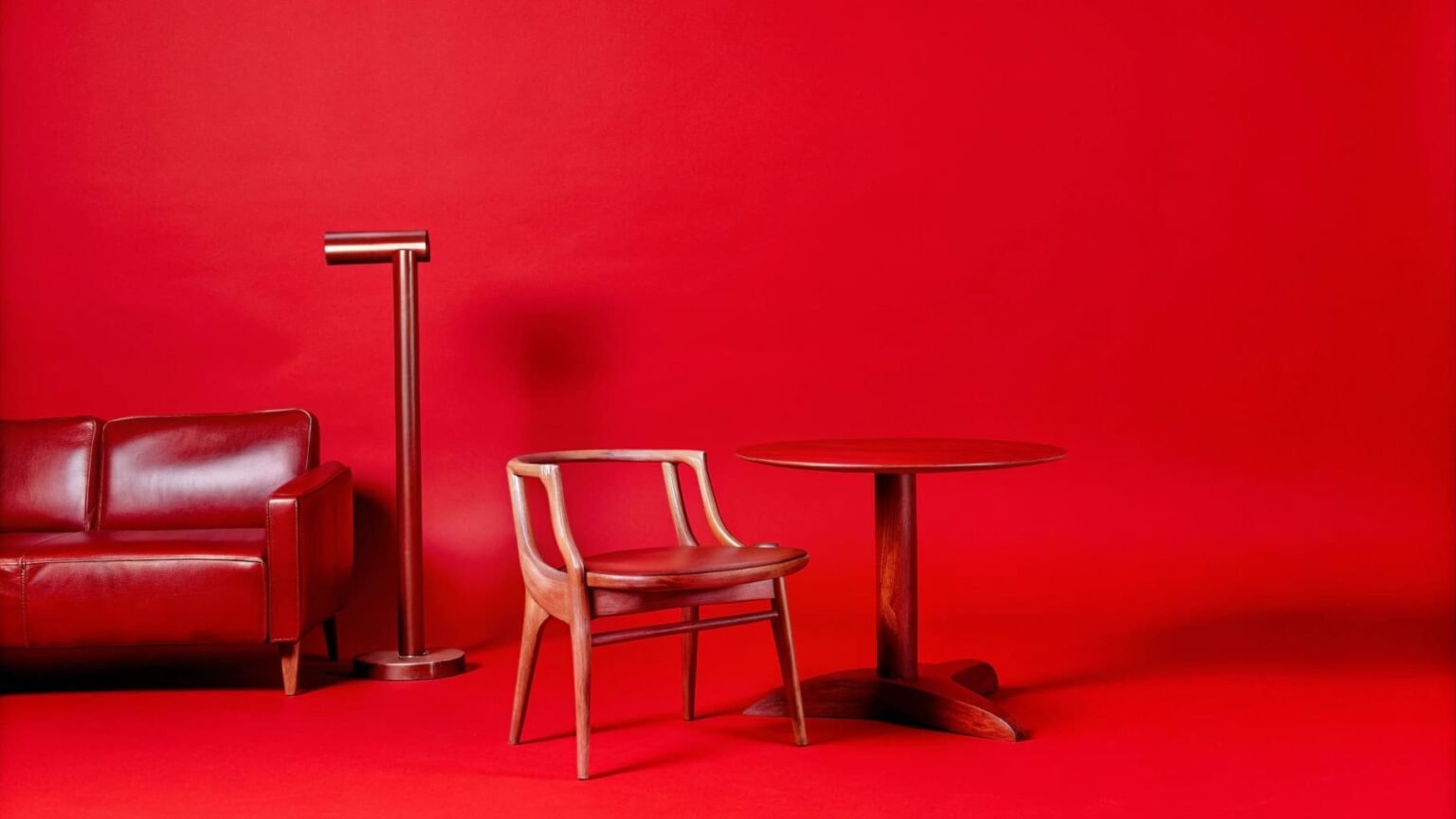
As someone who has spent years turning architectural drawings into physical furniture, I’ve learned that the most beautiful designs are often the hardest to build. The true mark of a top-tier manufacturer isn’t in the initial “wow” factor, but in the unseen details that ensure a piece of furniture stands the test of time. Let’s move past the surface and explore the four key pillars that truly define top-quality production. These are the secrets that separate the best from the rest.
How do minimalist designs defy gravity without failing?
You love the look of an impossibly thin tabletop or a long, floating shelf. But you worry that over time it will start to sag. The best manufacturers have a secret weapon to prevent this from ever happening.
Top manufacturers embed hidden steel sub-frames inside thin profiles of wood, stone, or upholstery. This internal skeleton is engineered to handle all the weight and structural stress, ensuring the design remains perfectly flat and stable for years
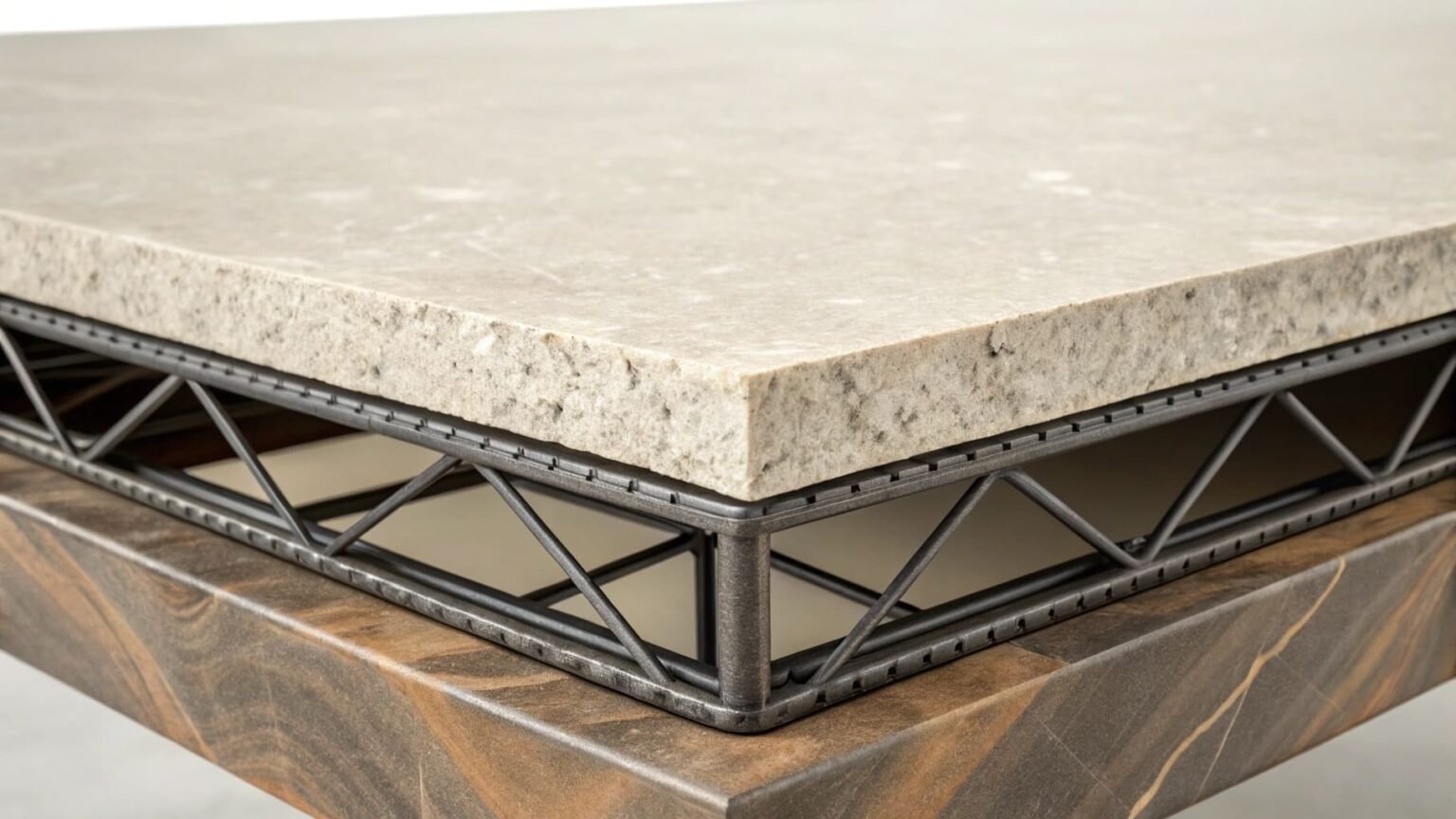
I’ve seen it many times: a designer brings me a drawing of a breathtakingly minimalist table. It’s long, super thin, and seems to float on delicate legs. My first thought isn’t about the beauty, but about gravity. Without the right approach, that beautiful table will be a disaster within a year. This is where true manufacturing expertise comes in. We call it invisible structural engineering.
The Challenge: Visual Lightness vs. Physical Weight
A minimalist design’s goal is to look effortless and light. However, materials like marble, solid wood, and even MDF are incredibly heavy. Over a long span, they are guaranteed to bend under their own weight. A mediocre factory might try to build the design as-is, resulting in a product that sags, cracks at the joints, or wobbles under daily use.
The Solution: The Hidden Steel Sub-frame
To solve this, we don’t change the design; we reinforce it from the inside. We build a heavy-duty carbon steel frame—a sub-frame—that acts as the true skeleton of the piece. This frame is precisely engineered to carry the entire load and resist any bending or twisting forces. We then skillfully hide this “heavy-industry skeleton” inside the slim profile of the finished material, whether it’s a thin stone top or a sleek wood panel. The result is a piece that achieves the designer’s visual intent while offering industrial-grade stability. It can withstand decades of use and remain perfectly level, just as it was on day one.
What's the secret to seamlessly blending metal, stone, and wood?
Mixing materials like metal, stone, and leather looks incredible in renderings. But in the real world, ugly gaps and misaligned edges often appear. The best producers, however, achieve perfection right down to the seams.
The key is controlling manufacturing tolerances to a microscopic level. Top companies use advanced 5-axis CNC machines to manage the different ways materials expand and contract, keeping the gap at every junction to within ±0.15mm for a flawless, touchable finish.
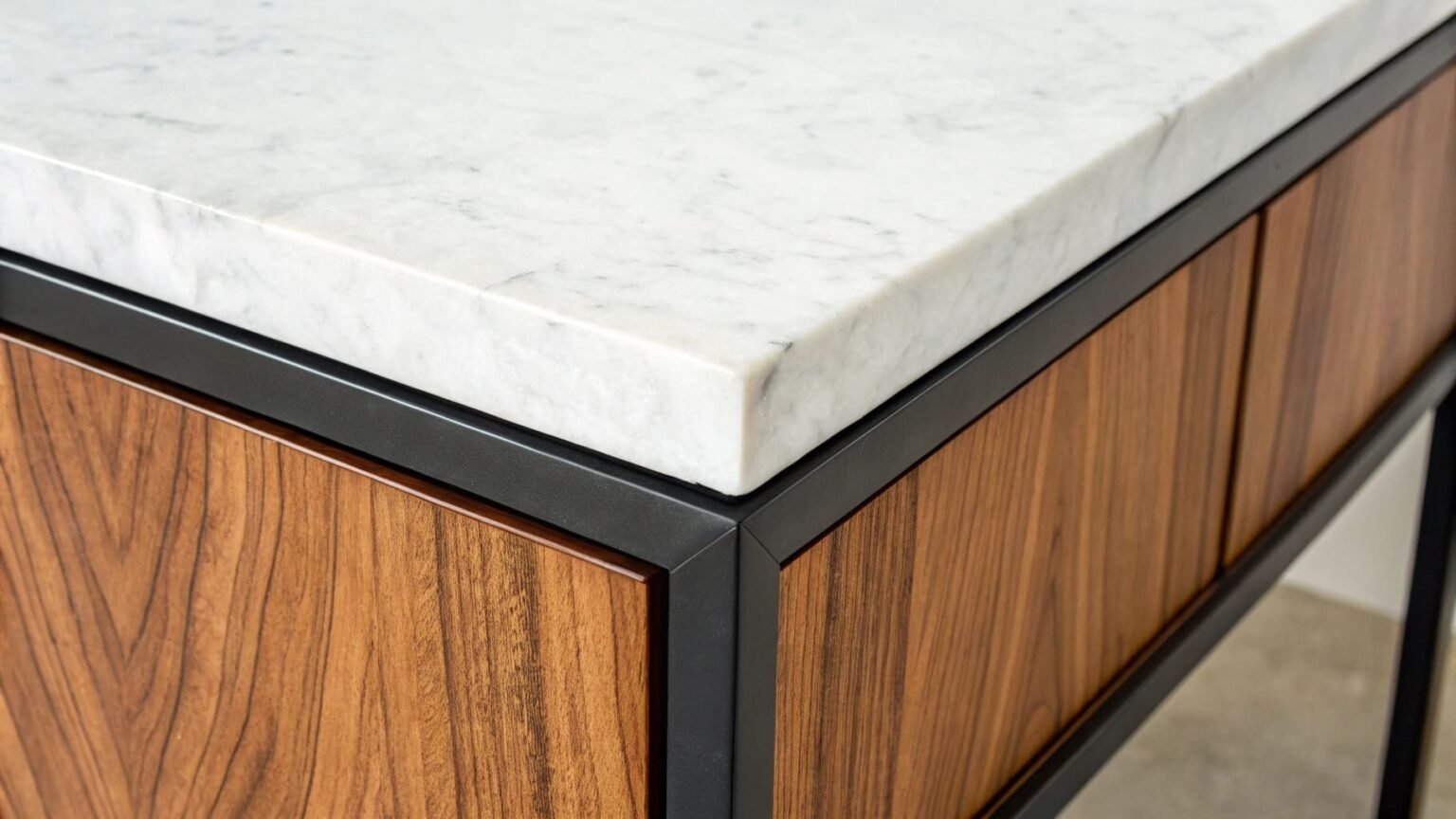
One of the defining features of modern luxury furniture is the artful combination of different materials. Think of a brass frame around a marble tabletop that joins a wooden cabinet. It’s beautiful, but it’s also an engineering nightmare if you don’t know what you’re doing. The secret to making it work lies in a concept that separates the true masters from everyone else: micron-level tolerance control.
The Problem: Every Material Moves Differently
Every material—wood, metal, stone, glass, leather—reacts to changes in temperature and humidity differently. Metal expands and contracts with heat. Wood swells and shrinks with moisture. If you join these materials without accounting for their unique properties, you’ll soon see the consequences. Gaps will open up, surfaces will become uneven, and the entire piece can warp or even break. This is why a simple approach to assembly just doesn’t work for high-end furniture.
The Process: Micron-Level Precision
Top-tier manufacturers solve this problem with technology and expertise. We use 5-axis CNC (Computer Numerical Control) machines that can cut and shape components with incredible precision. We program these machines to create joints that are so tight—often with a tolerance of just ±0.15mm—that they feel like a single, continuous surface. This process accounts for each material’s natural movement, ensuring that even as they expand and contract over the years, the seams remain perfect. When you run your hand over a joint between metal and stone on one of our pieces and can’t feel the transition, you’re feeling the result of this “craftsmanship aura.”
How does showroom furniture stay perfect after years of use?
A piece of furniture can look stunning in the showroom, but daily life is harsh. Sunlight, fingerprints, spilled drinks, and cleaning supplies can quickly ruin a beautiful finish. Top quality means the furniture is built to last, not just to display.
It’s not about a simple coat of lacquer. Leading manufacturers use aerospace and automotive-grade surface treatments. This includes advanced PVD coatings with nano anti-fingerprint layers for metals and special UV-resistant, chemical-resistant finishes for wood and stone to prevent aging and minimize maintenance.
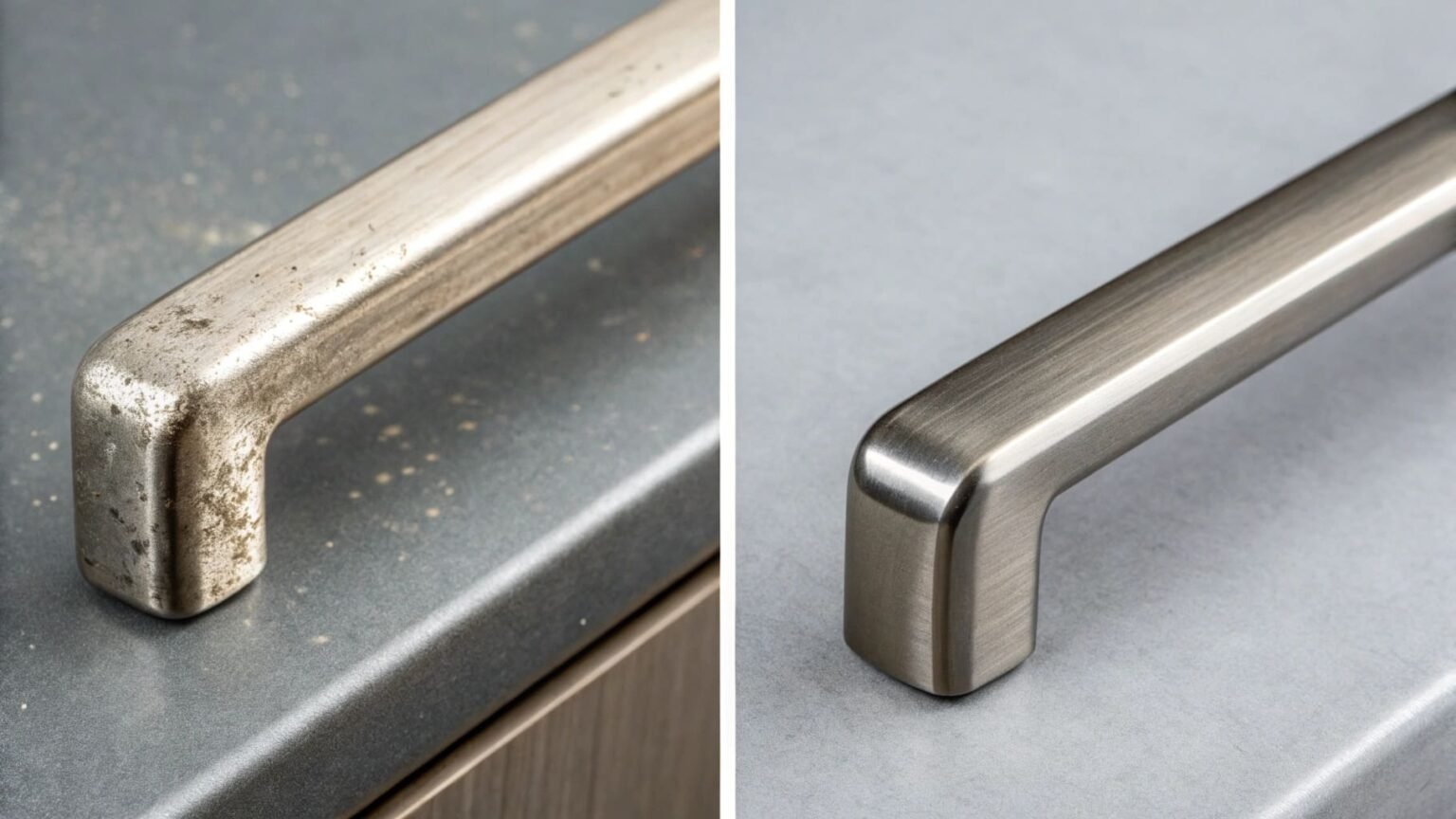
A common disappointment for many clients is seeing their beautiful new furniture lose its luster after just a few months of real-world use. The metal tarnishes, the wood fades, and the surfaces are covered in smudges. This happens when manufacturers focus on looking good for the sale, not on lasting for a decade. At NEXTOP, we believe in building for the long term, which requires a deep investment in surface protection engineering.
The Enemy: Daily Wear and Tear
The enemies of a perfect finish are everywhere. UV rays from sunlight bleach wood and fade colors. The natural oils on our hands leave fingerprints on shiny metal. Cleaning agents, perfumes, and even the humidity in the air can cause corrosion, discoloration, and degradation. A standard finish, like a simple lacquer or basic electroplating, offers very little protection against this daily assault.
The Shield: Advanced Surface Engineering
To combat this, we turn to technologies from industries that demand extreme durability, like aerospace and automotive. For metals like stainless steel, we use a process called Physical Vapor Deposition (PVD). This isn’t a simple coating; it’s a process done in a vacuum that fuses a thin layer of ceramic material to the metal at a molecular level. This makes the surface incredibly resistant to scratches and corrosion. We then add a nano-coating to resist fingerprints. For wood and stone, we use specialized finishes that contain UV blockers and are formulated to withstand chemical cleaners without damage. This ensures the aesthetic lifespan of the furniture matches its structural lifespan.
Why do top hotel projects choose custom workshops over big retail brands?
You have a unique design vision for a large-scale project, like a boutique hotel or luxury villa. You quickly realize that standard furniture from retail brands won’t work. You need a partner who can execute complex, custom plans perfectly and consistently.
This is because true top-tier suppliers offer a high-flexibility, contract-grade supply chain. [1, 2, 6] They are built to decode detailed architectural drawings (Shop Drawings), meet strict commercial durability and safety standards like BS 5852, and deliver 100% customized solutions for large-scale projects.
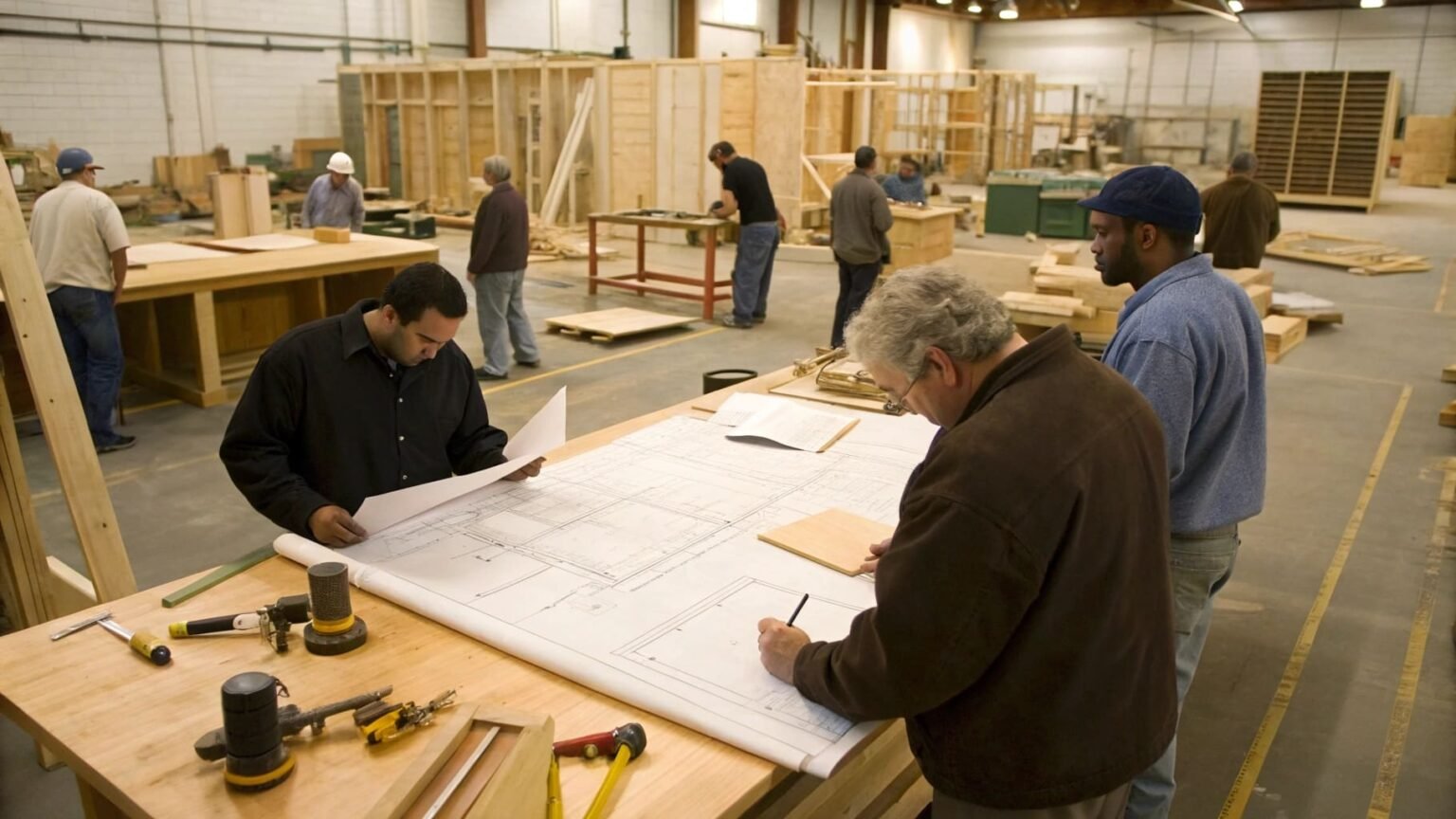
When I talk with interior designers and architects working on major hospitality or commercial projects, they all share a common frustration. They love the designs from famous retail brands, but when it comes to outfitting an entire 200-room hotel, those brands are often not an option. Why? Because they are built for retail, not for high-volume, high-stakes contract work. This is where the “invisible champions” of the furniture world—the contract-grade manufacturers—come in.
The Limit of Retail: One Size Does Not Fit All
Retail brands excel at creating standardized products for the home. Their production lines are optimized for efficiency, not flexibility. They typically cannot handle requests for custom dimensions, materials, or finishes, especially on a large scale. Furthermore, their products are often not built to withstand the heavy, daily use of a commercial environment like a hotel lobby or restaurant.
The Power of Custom: Industrial Precision for Bespoke Designs
Lorem ipsum dolor sit amet, consectetur adipiscing elit. Ut elit tellus, luctus nec ullamcorper mattis, pulvinar dapibus leo.
Contract-grade suppliers like us are the opposite. Our entire system is built around customization and durability.
- We Speak Your Language:We work from professional `Shop Drawings`, translating an architect’s vision into precise manufacturing plans.
- We Meet Global Standards: Our products are engineered to pass rigorous international safety audits, especially for fire resistance, like the British Standard BS 5852 or the American CAL 133, which are often required for public spaces.
- We Prove Our Quality:Before full production, we create full-scale mock-ups for review. This allows the client to see, touch, and test the exact product, ensuring everything from the material finish to the structural integrity is perfect.
This ability to combine industrial-level precision with bespoke, non-standard customization is the real engine that drives the world’s top design projects.
Conclusion
True quality in design furniture is more than meets the eye. It lies in the hidden engineering, precise material integration, durable surfaces, and flexible, contract-grade execution that turns a beautiful idea into a lasting reality.