Introduction
Searching for a reliable furniture manufacturer in China feels overwhelming. You worry about shoddy work, project delays, and if your investment will even survive the shipping journey.
The best custom furniture manufacturers in China are not just factories; they are comprehensive partners. They are defined by their deep engineering capabilities (DFM), integrated multi-material production, transparent quality control, and mastery of export logistics, ensuring your design vision is executed flawlessly and delivered safely.
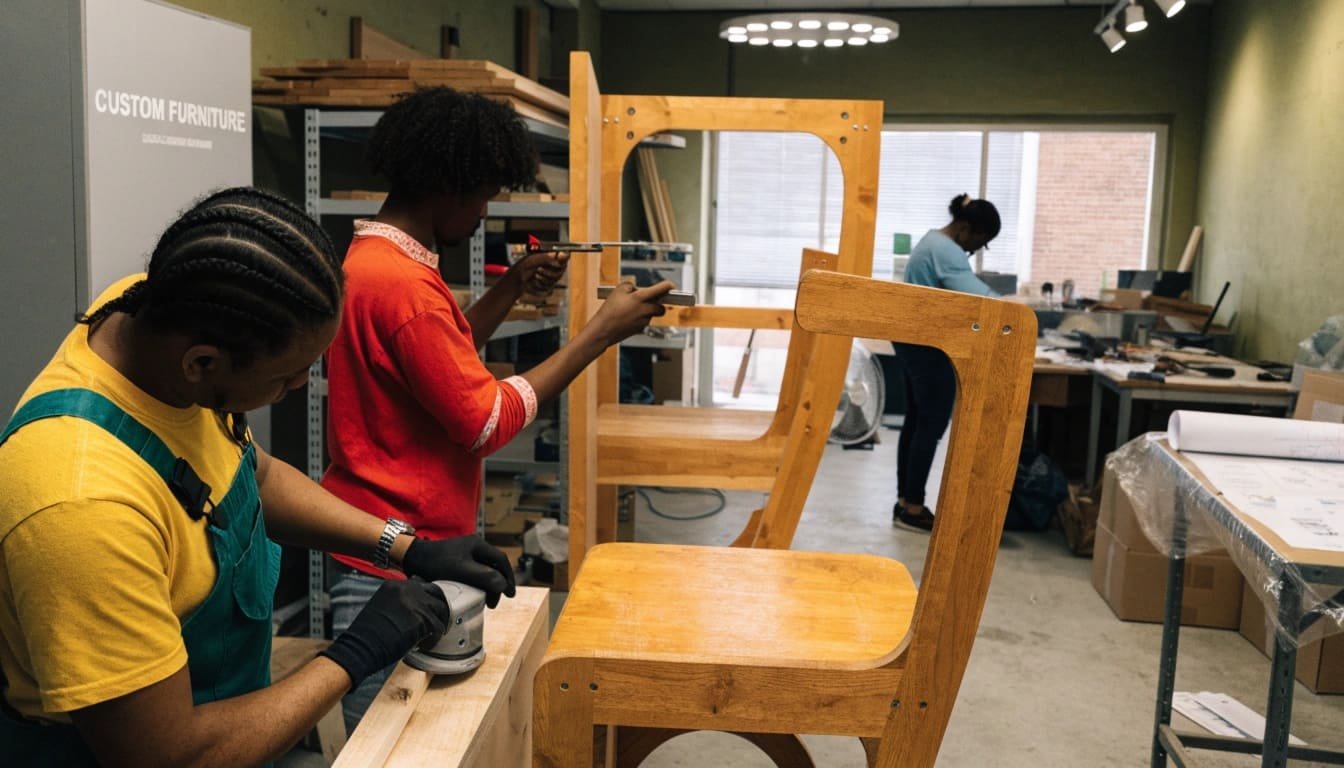
I’ve been in the custom furniture business for over a decade. In that time, I’ve seen countless international buyers—from hotel groups to design firms—start their search with a simple question: “Who are the top manufacturers?” But that’s the wrong question. A “top 10” list doesn’t tell you who can actually solve your problems. The real question is, “Who has the capability to deliver my project without causing headaches?” The biggest names aren’t always the best partners. What you truly need is a supplier with proven, on-the-ground execution skills. Let’s explore the four core capabilities that separate the true experts from the rest.
How do top manufacturers turn your design into a reality without compromise?
Your design looks incredible on the screen. But you’re worried that a factory will either say it’s impossible or build a version that breaks under pressure.
Top manufacturers close the gap between design and reality using Design for Manufacturing (DFM). They don’t just copy drawings; they analyze and refine them to ensure the final piece is beautiful, strong, and buildable, preventing costly failures before they happen.

Design for Manufacturing (DFM) is about making a product’s design easier and more cost-effective to manufacture. It’s a critical conversation between your design intent and the factory’s real-world production knowledge. I remember a project for a luxury hotel where the designer envisioned a stunning, oversized headboard with intricate details. The drawing was a work of art, but it was structurally unsound. A basic factory would have just built it as-is, and it would have inevitably warped or cracked after installation. Instead, we used DFM principles. Our engineering team collaborated with the designer to add hidden reinforcements and adjust joinery techniques without altering the aesthetic. The goal of DFM is to streamline production and improve quality by integrating manufacturing knowledge right from the start. This proactive approach is what turns a beautiful concept into a durable, lasting piece of furniture.
From Blueprint to Reality: A Comparison
Aspect | Standard Factory | Top-Tier DFM Partner |
Drawing Review | Assumes drawing is perfect and ready for production. | Analyzes the drawing for structural integrity, material compatibility, and potential weak points. |
Problem Solving | Reports problems as they arise, causing delays. | Proactively identifies and solves engineering challenges before a single piece of wood is cut. |
Final Product | A literal copy that may have hidden structural flaws. | An optimized product that honors the original design while being engineered for longevity and real-world use. |
Why is handling multiple materials in one factory a game-changer?
Your new collection features wood, aged metal, and marble. The thought of managing three to five different suppliers gives you a headache, with endless coordination and mismatched finishes.
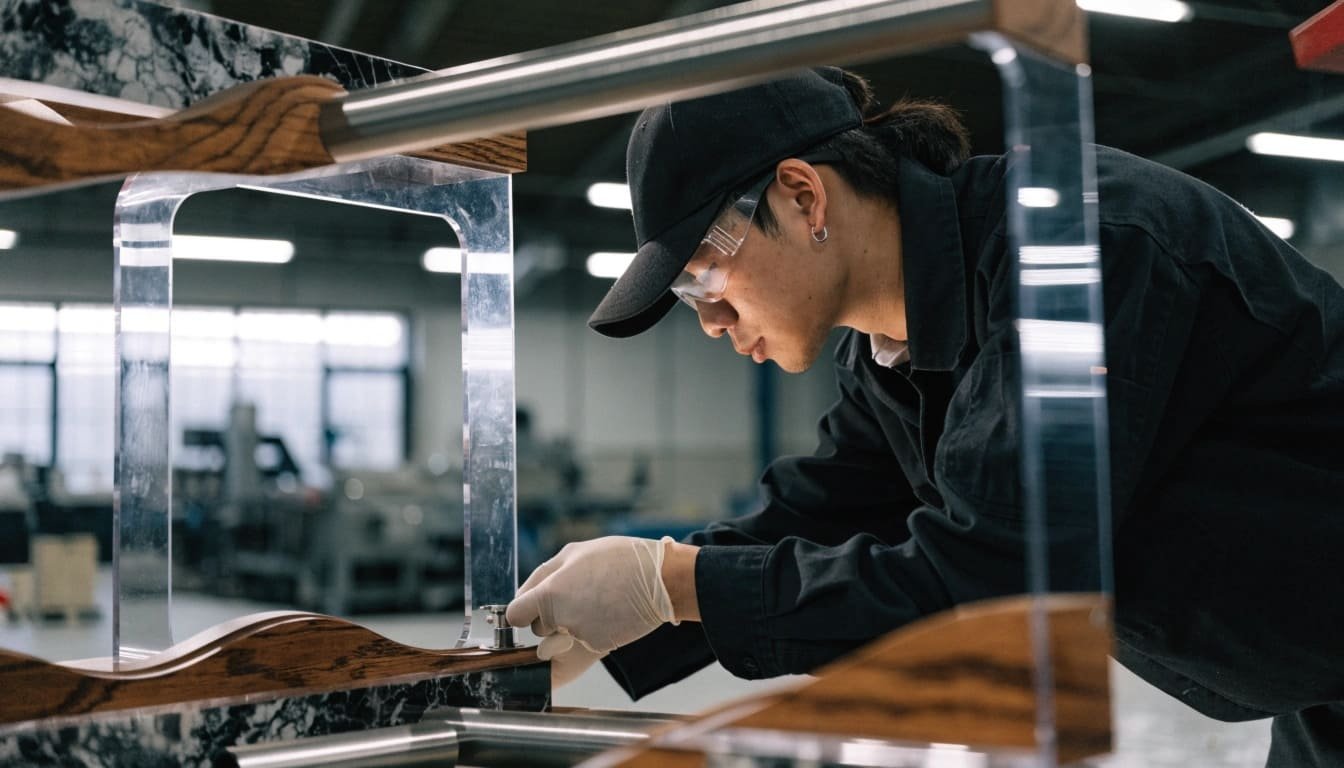
A top-tier manufacturer with multi-material synergy handles everything—wood, metal, stone, and leather—under one roof. This provides you with a single point of contact, guarantees finish consistency, and eliminates the logistical chaos of coordinating multiple specialist vendors.

The trend in high-end design is all about mixing materials to create depth and texture. You might have a reception desk with a stone top, a brass inlay, and a wood veneer base. For a buyer, coordinating this is a nightmare. You send drawings to a woodworker, a metal fabricator, and a stone mason. Then you pray everything fits together perfectly on-site six months later. From a manufacturing viewpoint, joining different materials like wood and metal is an engineering challenge, as they expand and contract at different rates. An integrated manufacturer understands this. I’ve seen projects saved because the factory could engineer a “floating” connection system between a teak tabletop and its steel frame, allowing for natural movement and preventing cracks. This is a level of detail you only get when one team controls the entire process. This unified production system means we handle the engineering, sampling, and finishing for all materials. It avoids delays and ensures that the aged bronze on a table leg perfectly matches the bronze trim on an adjacent cabinet—a detail that multiple suppliers often get wrong.
The Workflow Difference
The Old Way (Multi-Supplier Chaos)
- Source and vet separate suppliers for wood, metal, and stone.
- Send drawings and manage three different communication channels.
- Coordinate timelines and hope all parts are produced correctly.
- Pay for shipping from three different factories.
- Discover on-site that the metal bracket is 2mm off and doesn’t fit the wood panel.
The Integrated Way (One-Stop Execution)
- Engage a single manufacturing partner with your design.
- They engineer and prototype all components to work together.
- They conduct a “dry-fit” assembly in the factory to guarantee a perfect fit.
- You receive a single, consolidated shipment.
- Installation is smooth and efficient because all the problem-solving was done beforehand.
How can you ensure your bulk order looks as good as the first sample?
The approved prototype was flawless. But now you’re worried that the quality will dip across an order of 500 chairs, leaving you with inconsistencies and defects.
True top-tier manufacturers guarantee consistency from the first sample to the final container. They use rigorous quality control (QC) systems, including in-process checks and full pre-shipment assembly trials (dry-fits), to identify and eliminate issues before they ever leave the factory.
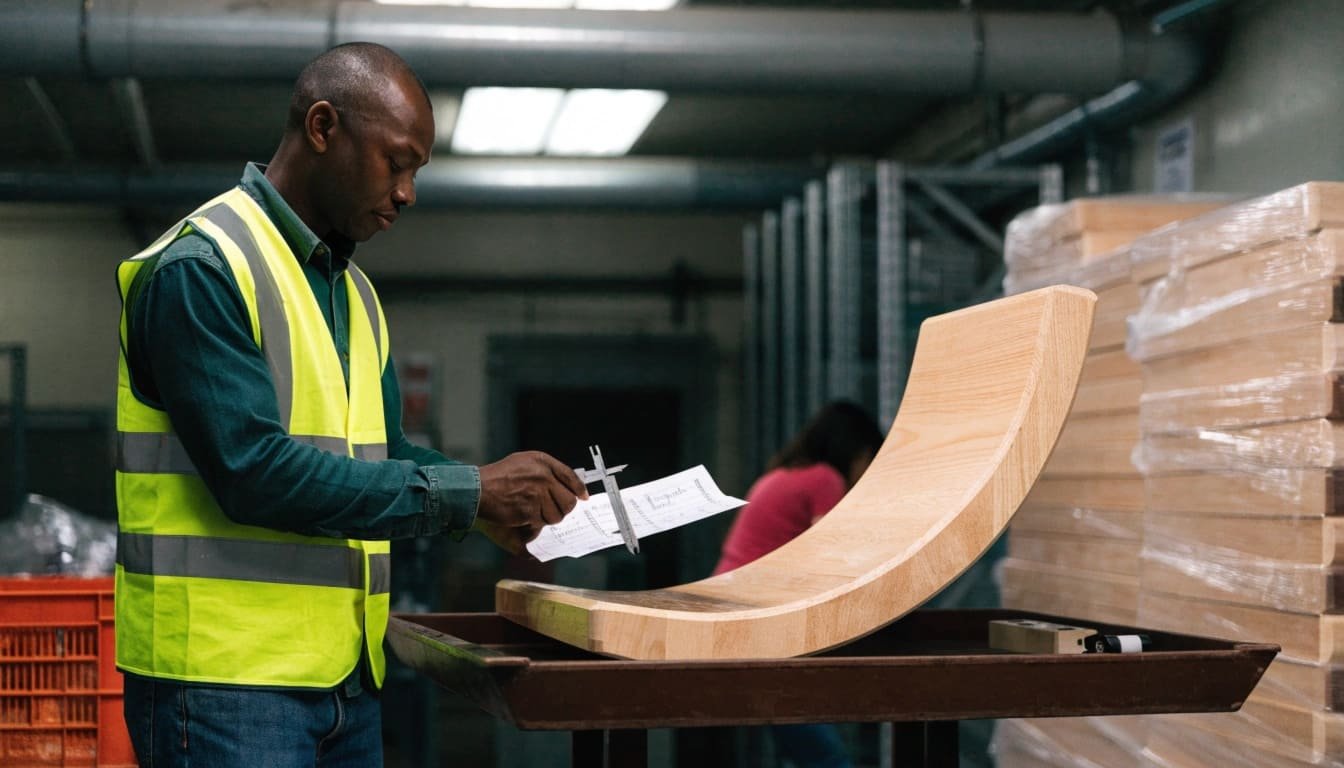
“Good enough” is never good enough in hospitality projects. A single wobbly chair or a drawer that doesn’t close smoothly can damage a hotel’s reputation. That’s why a robust quality control checklist is non-negotiable. It’s not about a single check at the end; it’s a multi-stage process. At my company, this starts with raw material inspection—checking the moisture content of wood and the consistency of veneers. Then, during production, we perform in-process checks to ensure dimensions are precise and assembly is flawless. But the most critical step is the dry-fit. For a hotel room, we will assemble the entire set—bed, nightstands, desk, wardrobe—in our workshop. We test every door, every drawer, and every joint. This allows us to catch any misalignment or functional issue that would be a disaster to discover at the project site. This process, combined with transparent photo and video reporting, gives our clients complete confidence that what they approved is what they will receive.
The Core of Quality Control
QC Stage | What It Accomplishes | Why It Is Crucial for You |
Material Inspection | Verifies that all raw materials meet the project’s quality and durability standards from day one. | Prevents future failures like warping wood or easily scratched surfaces. |
In-Process Checks | Ensures precision during cutting, assembly, and finishing, maintaining consistency across hundreds of units. | Guarantees that the 500th chair is identical in quality to the first one. |
Dry-Fit Assembly | Tests how all components fit and function together before they are packed for shipping. | Eliminates the risk of costly on-site installation problems and delays. |
Final Inspection | Confirms aesthetics, finishes, and hardware are flawless and match the approved sample perfectly. | Ensures the final product meets the brand’s aesthetic standards without exception. |
What good is perfect furniture if it arrives damaged?
Your custom furniture is finally manufactured to perfection. But you have a nagging fear that the long ocean journey will expose it to humidity, impact, and breakage.
The best manufacturers are also experts in export packaging and logistics. They protect your investment with custom solutions like moisture-proof wrapping, reinforced wooden crates, and shock-absorbing cushioning, ensuring your furniture arrives in pristine condition and is easy to install.
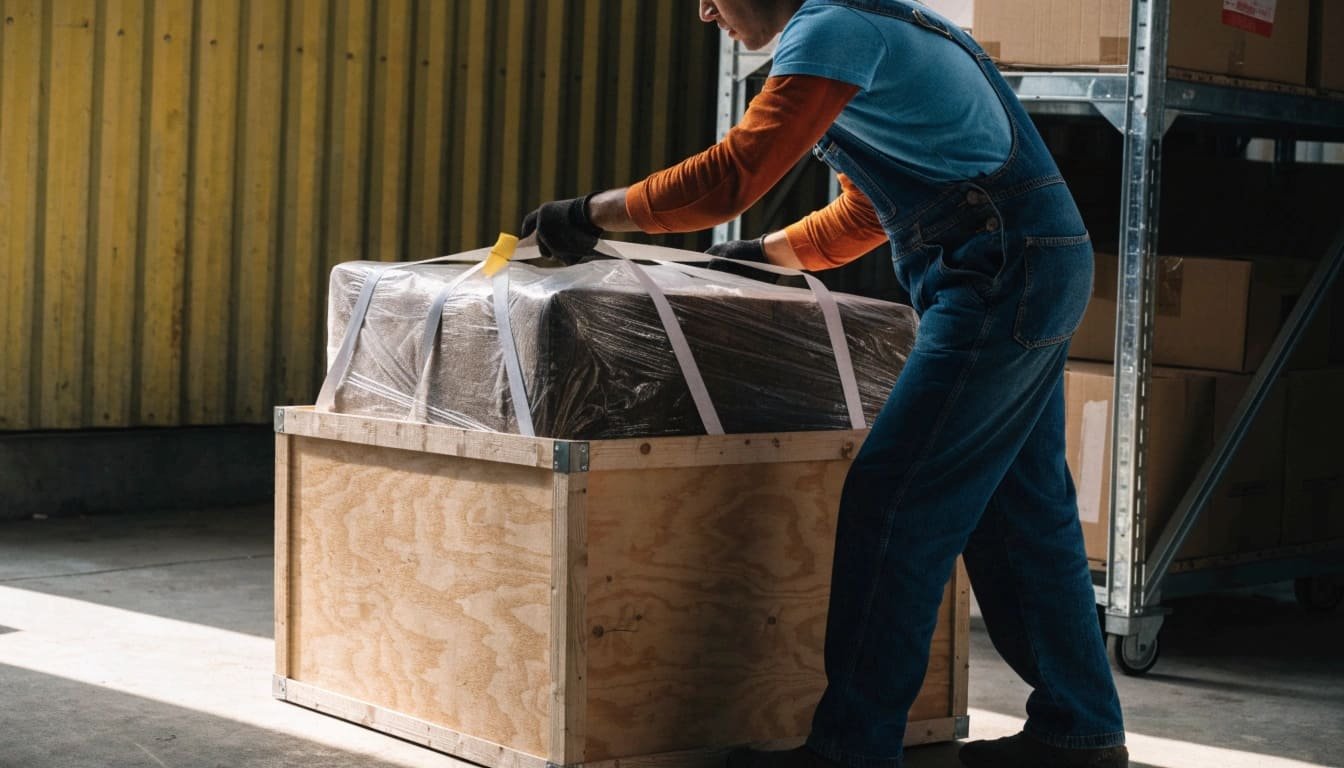
I’ve seen it happen: six-figure orders ruined by moisture because the supplier used cheap plastic wrap. The damage rate for improperly packaged furniture can be as high as 15%. It’s heartbreaking and completely avoidable. Proper export packing isn’t just about putting things in a box; it’s a science. It starts with assessing the risks of the specific shipping route. We use different strategies for a humid route to Southeast Asia versus a colder one to North America. Standard practice should include double-wall corrugated cartons, EPE foam protectors, and desiccant packs to absorb moisture. For high-value items, we insist on custom-built wooden crates, which offer near-complete protection. Furthermore, these wooden materials must be treated and stamped according to ISPM 15 standards to avoid being rejected by customs. Just as important is what happens upon arrival. Each box is clearly labeled with the product code, room number, and contents, and we provide detailed installation drawings. This saves the on-site team countless hours and turns a complex installation into a simple, efficient process.
A Checklist for Bulletproof Packaging
- Inner Protection:Is the furniture wrapped in a dust cover and moisture-resistant film? Are fragile surfaces and corners protected with foam?
- Outer Protection:Is the carton strong enough for the item’s weight (e.g., double-wall or triple-wall corrugated)? For high-value or fragile pieces, is a custom wooden crate being used?
- Moisture Control: Are desiccant packets included inside the packaging to absorb humidity during ocean transit?
- Clear Labeling:Is every box clearly marked with its contents, final destination (e.g., “Room 302”), and handling instructions?
- Documentation:Does the packaging comply with international standards like ISPM 15 for wood, and are all shipping marks correct?
Conclusion
Ultimately, the “top” manufacturer is the one who eliminates risk. Look beyond factory size and focus on partners who provide engineering depth, multi-material integration, transparent quality control, and expert export logistics.