Introduction
Choosing a furniture supplier feels overwhelming. You worry that what looks good in a photo will quickly fall apart, turning your investment into a costly mistake. It’s time to look beyond brand names.
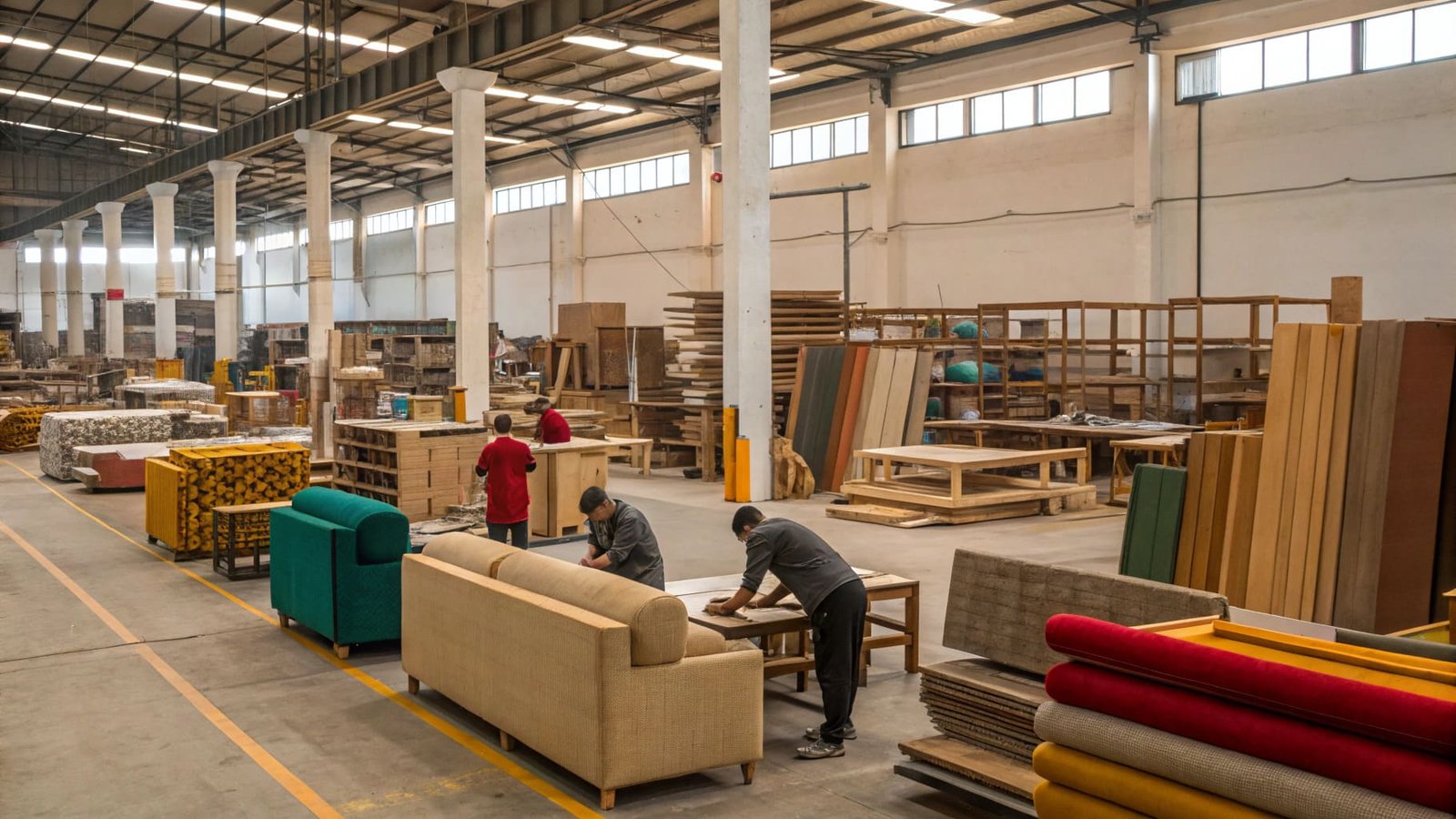
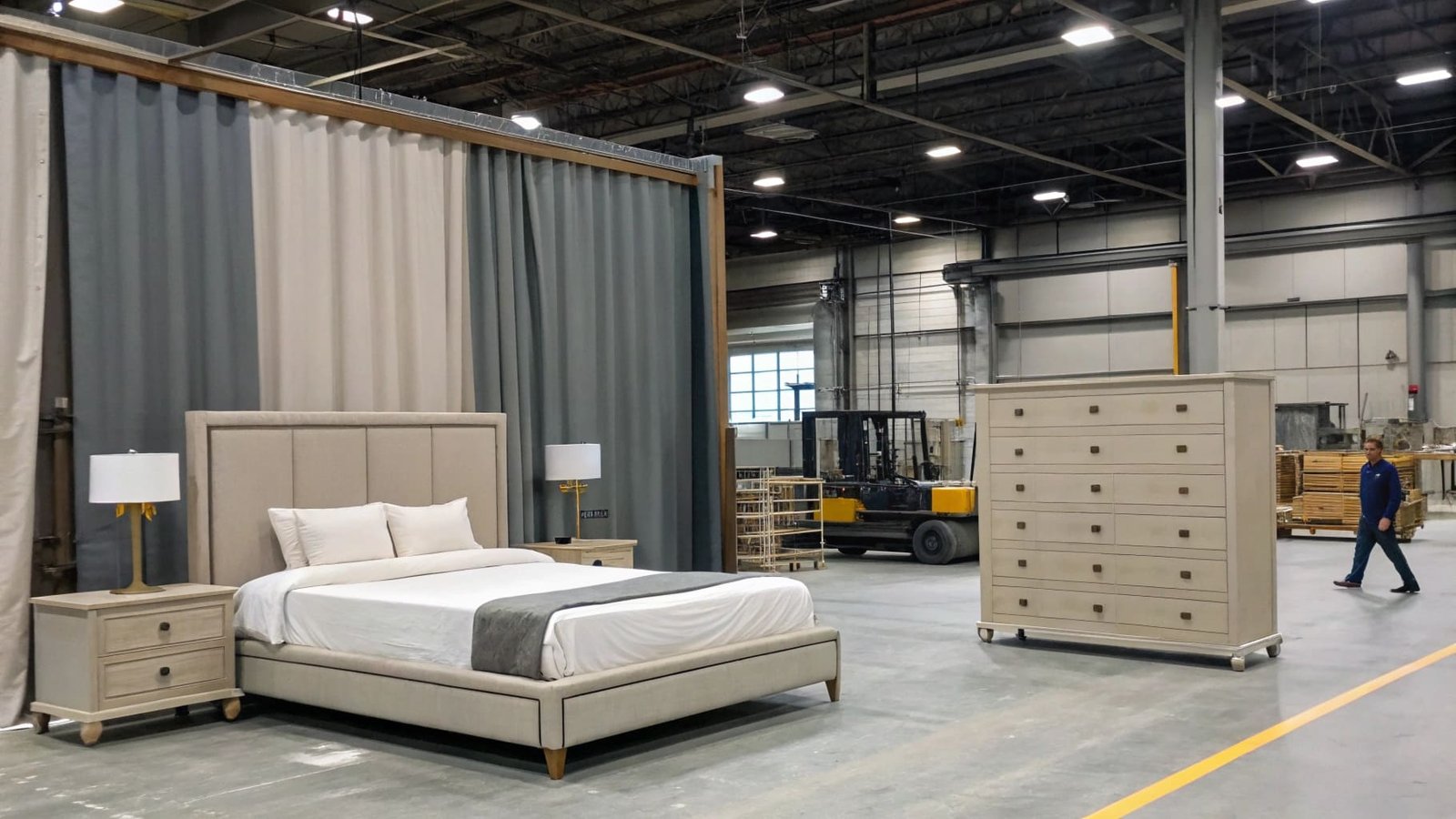
The best furniture manufacturers aren’t defined by their labels, but by their core manufacturing strengths. True top-tier suppliers excel in structural engineering, multi-material integration, global compliance, and value engineering. These four pillars ensure you receive furniture that is durable, precise, safe, and cost-effective.
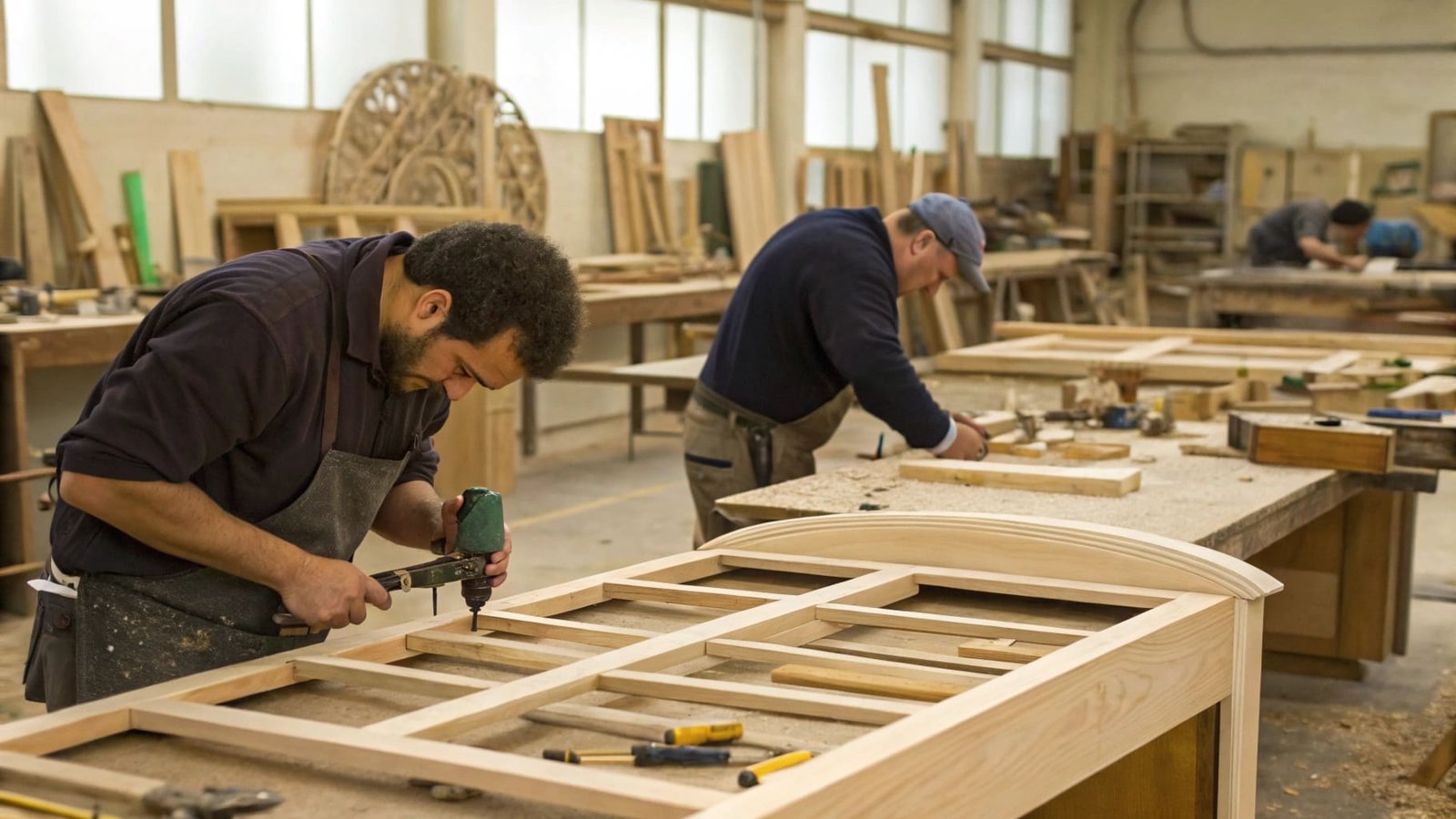
For years, I’ve worked with designers, architects, and developers on complex projects. I’ve seen firsthand what separates an average supplier from a true manufacturing partner. It isn’t the logo on the box. It’s the invisible engineering, precision, and problem-solving skills that bring a design to life without compromising quality. Let me walk you through what really matters.
How Do Top Manufacturers Ensure Furniture Lasts a Lifetime?
You’ve invested in beautiful furniture for a high-traffic lobby or hotel, but it quickly shows wear. This means frequent, costly replacements and a space that looks tired and cheap.
Top manufacturers build furniture to last by focusing on its “invisible skeleton.” They conduct a structural audit during the shop drawing phase and use a matrix of superior materials like kiln-dried hardwood, reinforced steel, high-density foam, and supportive springs to ensure longevity, even under heavy use.
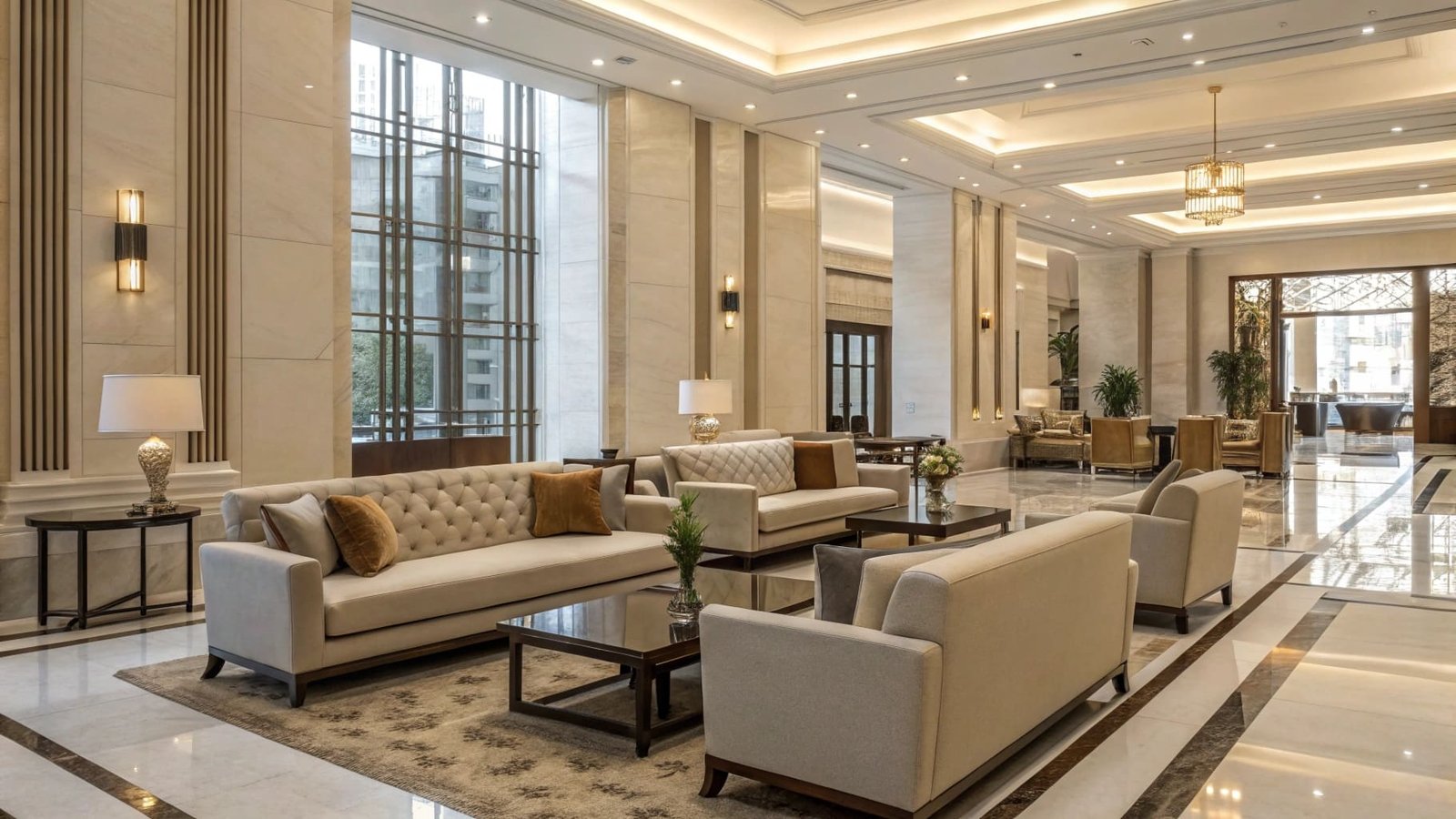
When I work with clients on hospitality projects, the first thing I explain is that what you can’t see is more important than what you can. A regular factory might match a design’s appearance, but a top manufacturer ensures it’s structurally sound. I remember a hotel project where the lobby sofas were expected to see thousands of guests a year. Instead of just building to the picture, we performed a structural audit to analyze the load and stress points. This preemptive evaluation helps identify and eliminate potential risks in the production process. The final approved shop drawings included a composite frame of kiln-dried hardwood and an embedded carbon steel structure. Using kiln-dried wood is essential because the process reduces moisture content, which prevents warping, cracking, and decay. This makes the frame dimensionally stable and strong. For the seating, we specified high-density cold-cured foam over a high-elasticity serpentine spring system. This combination is engineered to withstand hundreds of thousands of dynamic impacts with virtually zero sagging or noise. This is what I call the “invisible anti-fatigue matrix.” It’s the difference between furniture that lasts two years and furniture that lasts for decades.
Feature | Standard Manufacturing | Top-Tier Manufacturing |
Wood Frame | Air-dried or improperly dried wood | Kiln-dried solid hardwood (6-8% moisture) |
Internal Support | Basic plywood or particleboard | Reinforced with carbon steel inserts |
Cushioning | Low-density foam | High-density, cold-cured foam |
Springs | Basic coil or no-sag springs | High-elasticity serpentine springs |
Engineering | Build-to-look | Structural audit & lifetime engineering |
Why Is Seamless Multi-Material Integration So Difficult?
Modern designs often combine metal, stone, wood, and leather. But when these materials are poorly joined, you see ugly gaps, cracks, or warping as temperatures change, ruining the high-end look.
The core challenge is managing how different materials expand and contract. Top manufacturers use 5-axis CNC machines for micron-level precision and incorporate hidden stress-relief fasteners to maintain seamless joints, ensuring the piece remains flawless regardless of environmental changes.
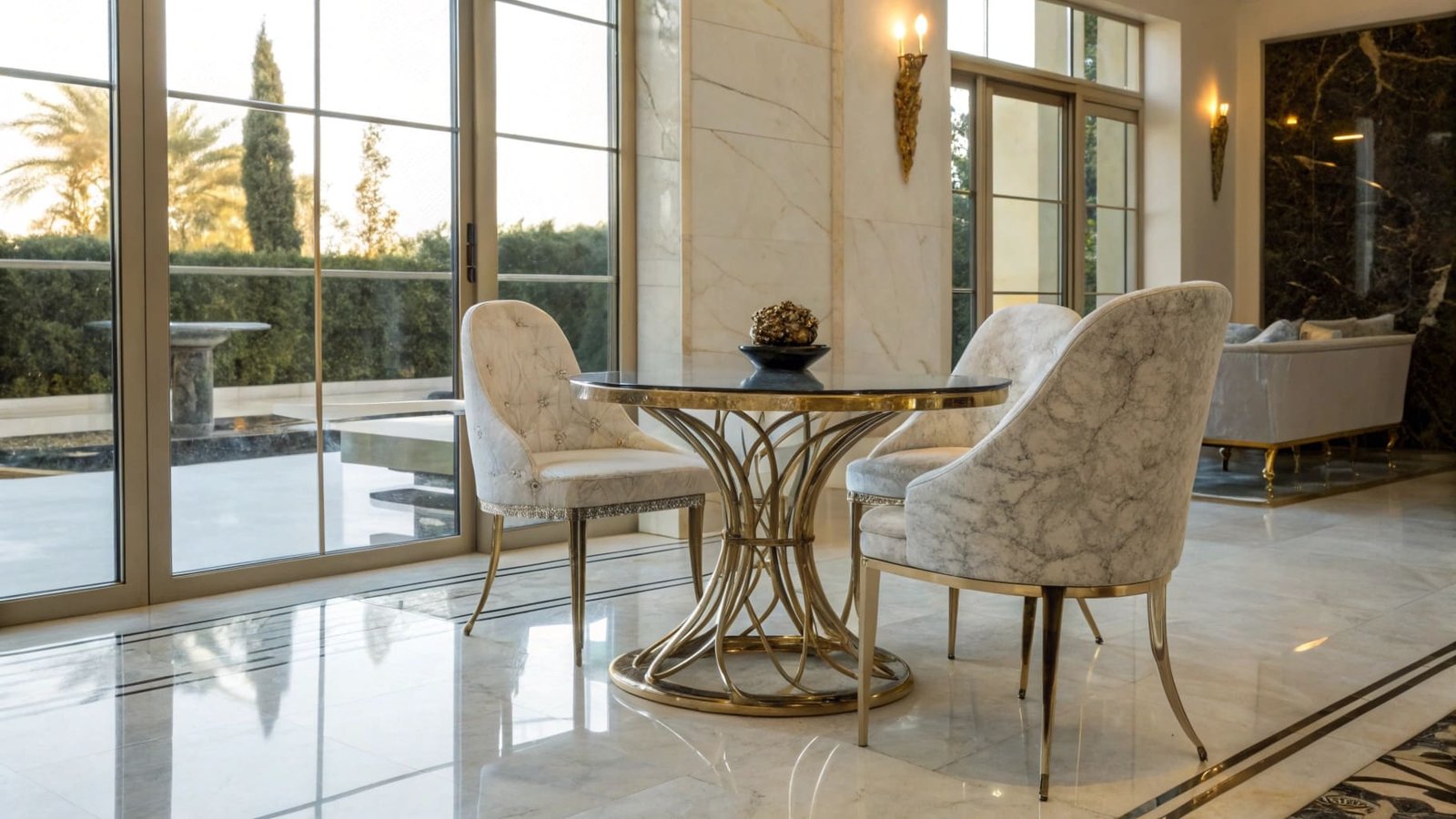
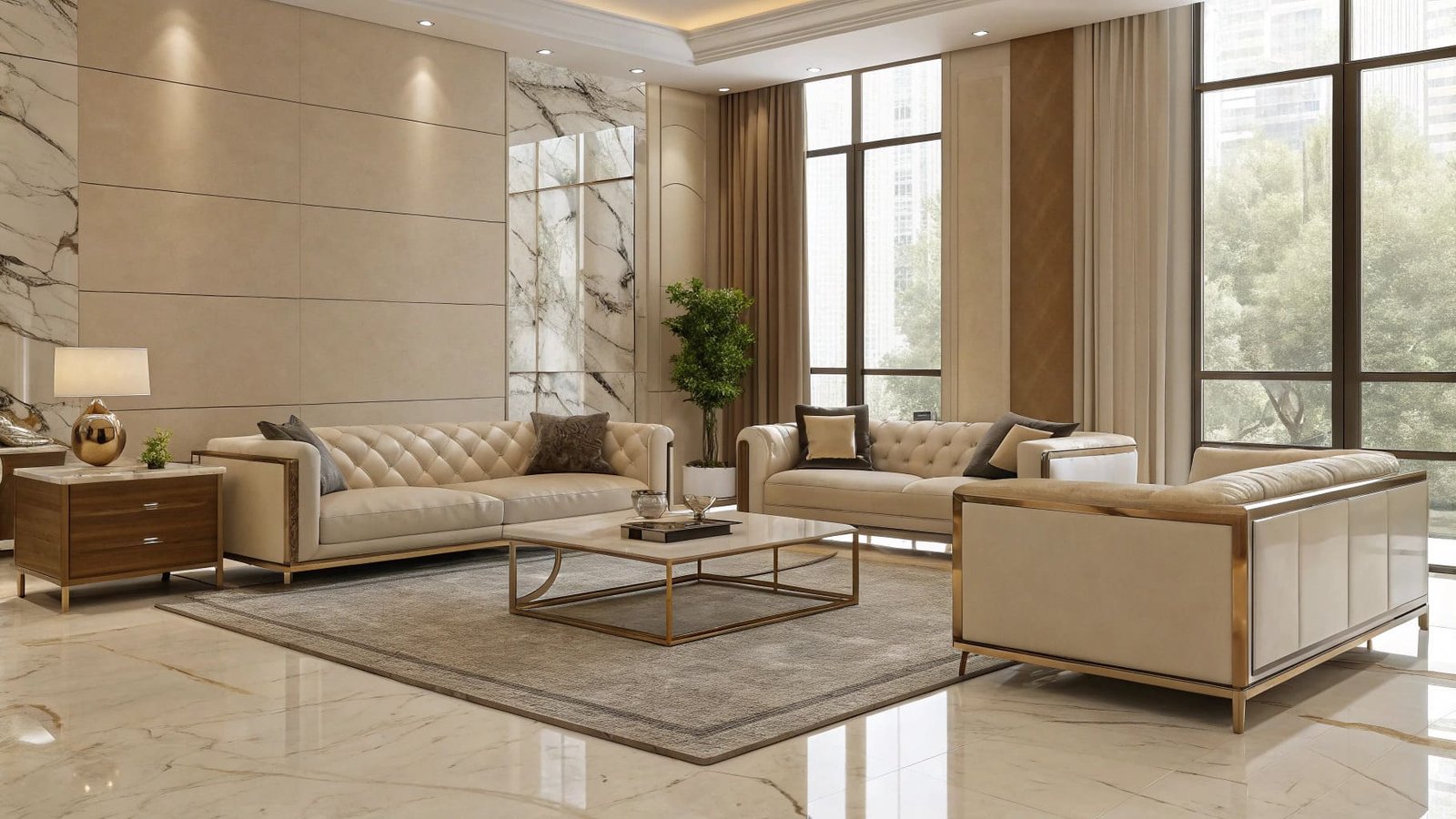
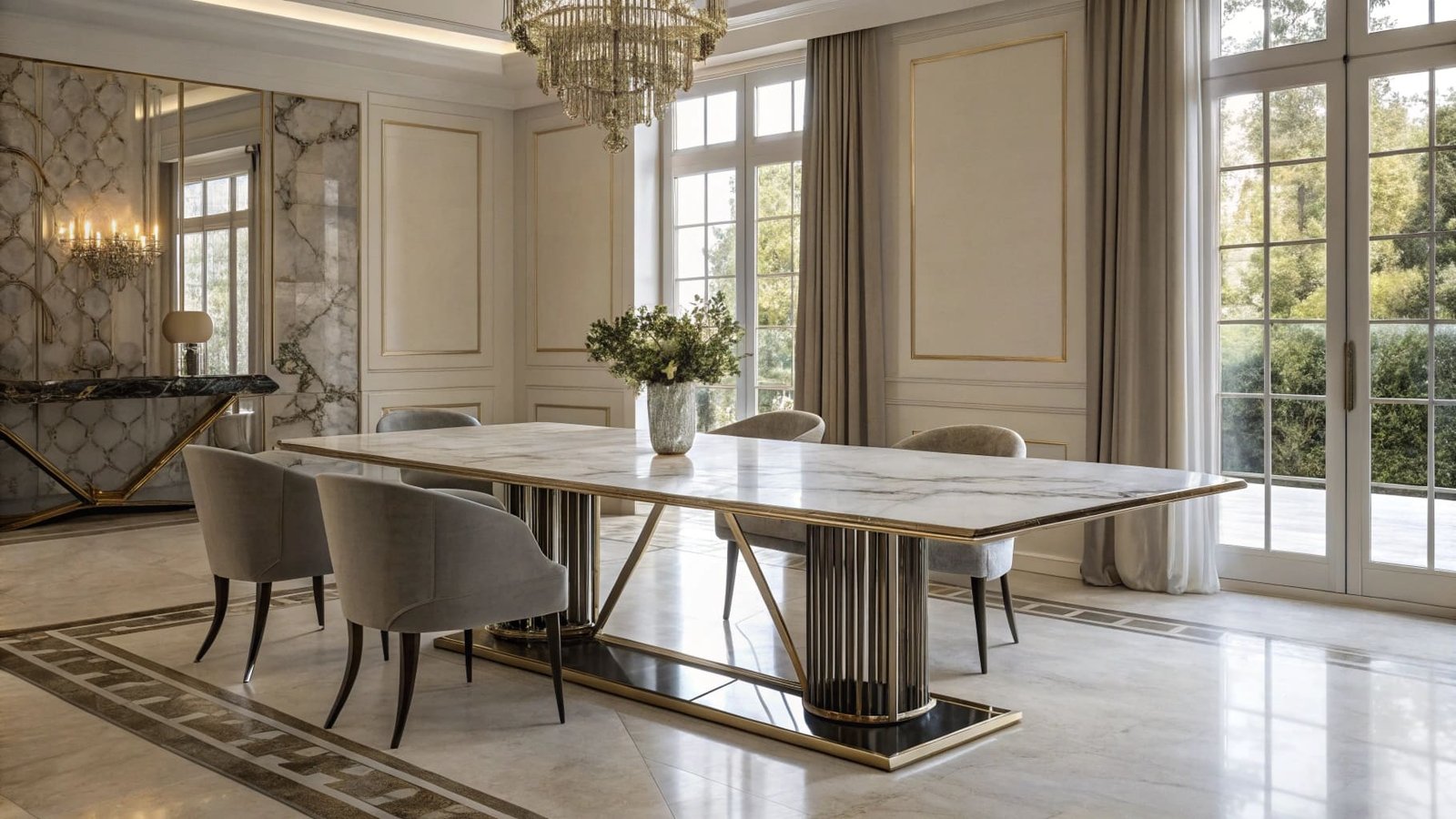
The pinnacle of modern luxury furniture is often found in pieces that harmoniously blend diverse materials—think of a grand lobby table with a stone top, metal base, and wood accents. However, this is where many manufacturers fail. The real test of skill lies in controlling the joint tolerances where different materials meet. I was once tasked with a project for a penthouse that included a massive executive desk made of polished metal, natural marble, and fine leather. The designer’s vision was a single, monolithic piece. The challenge is that metal, stone, and wood all react to heat and humidity differently. To achieve this, we relied on our 5-axis CNC machines, which allow for incredible precision. We were able to cut and shape each component with a tolerance of ±0.15mm, ensuring a near-perfect fit from the start. But precision cutting is only half the battle. We also engineered hidden stress-relief fasteners and expansion joints within the desk’s sub-structure. These components are invisible to the eye but allow the materials to “breathe” and shift naturally without putting pressure on each other. This prevents the stone from cracking or the wood from warping over time, which is a common issue in less precisely engineered furniture.
Material | Primary Challenge | Top-Tier Solution |
Natural Stone | Brittleness, thermal expansion | CNC cutting for precision, stress-relief joints |
Metal | Thermal expansion/contraction | Precision machining, flexible fasteners |
Wood | Swelling/shrinking with humidity | Kiln-drying [2], engineered joints |
Glass/Leather | Precise fit and finish | CNC-cut substrates for perfect alignment |
Is Your Furniture a Legal Liability?
You’ve sourced beautiful furniture for a commercial project, but it fails the fire or safety audit. This is a non-negotiable deal-breaker, causing project delays and creating a massive legal and financial risk.
Top-tier manufacturers provide “zero-risk” compliance by ensuring their products meet global commercial-grade standards. This includes durability testing like BIFMA, stringent fire certifications such as BS 5852 or CAL 133, and green building certifications like LEED/WELL for zero VOC emissions.
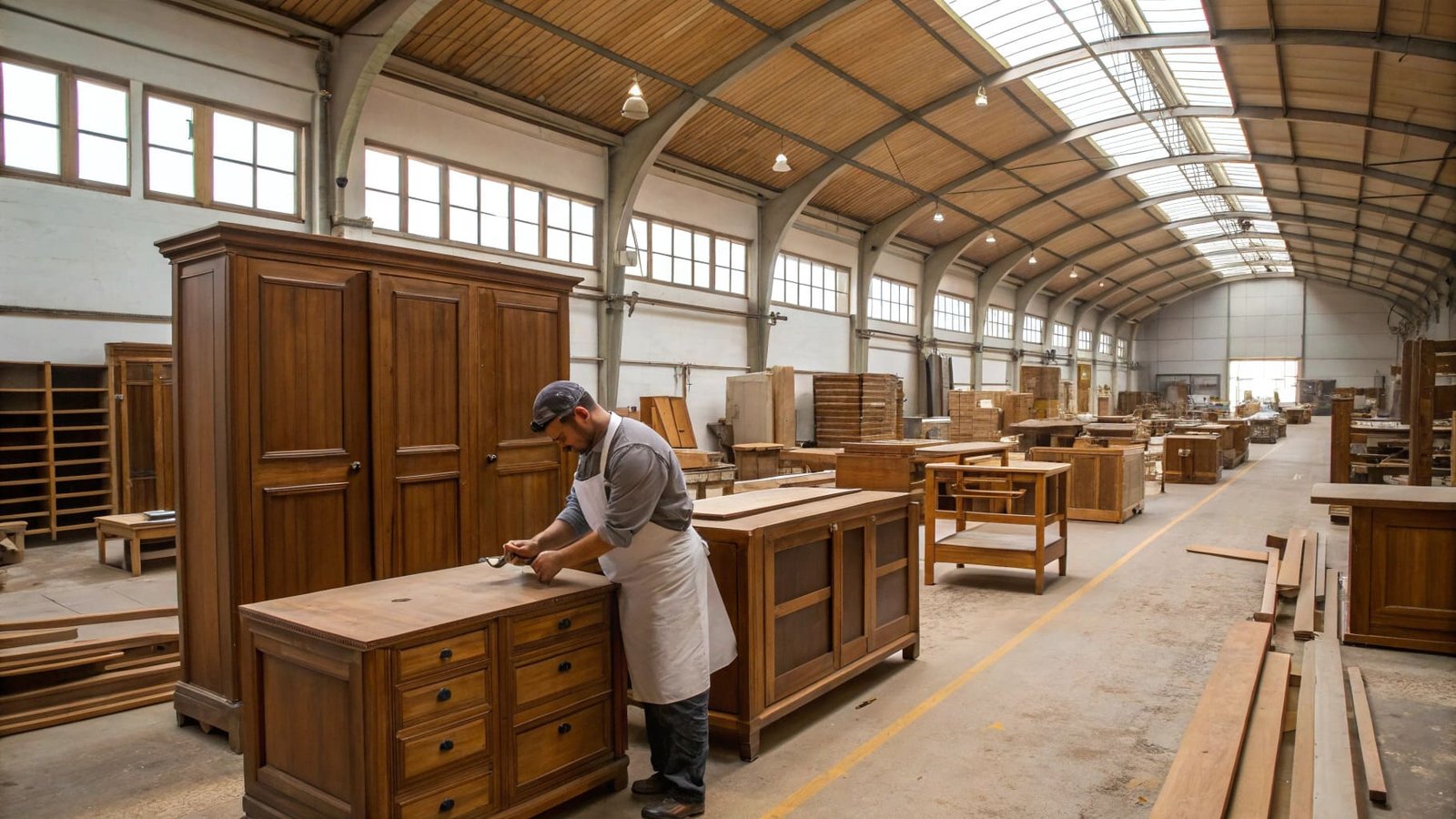
For any commercial project—be it a hotel, office, or public venue—compliance is not optional; it’s a pass/fail test. Many retail furniture brands, while stylish, are simply not built to meet these stringent requirements. A top manufacturer for commercial projects provides what I call a “compliance firewall.” Their products are specifically engineered for commercial use and have passed tests for safety and durability. I remember working with a developer for a new international hotel chain. Their primary concern was ensuring every piece of furniture would pass inspections in multiple countries. We provided a full documentation package showing compliance with key standards. This is crucial because it protects designers and developers from legal issues. For seating and desks, this meant passing BIFMA tests, which simulate heavy use to ensure products won’t tip or collapse. For upholstery, it meant meeting fire safety standards like Britain’s BS 5852, which tests ignition resistance from sources like cigarettes or matches, and California’s CAL 133, a full-scale test for furniture in public buildings. Finally, with the rise of green building, we also had to prove compliance with LEED and WELL standards by showing near-zero VOC (Volatile Organic Compound) emissions.
Certification | What It Covers | Why It Matters |
BIFMA | Durability, structural integrity, and safety for office/commercial furniture. | Ensures furniture can withstand heavy public use without failing. |
BS 5852 / CAL 133 | Flammability and fire resistance of upholstery. | A legal requirement in many regions to prevent rapid fire spread in public spaces. |
LEED / WELL | Low or zero VOC emissions from materials and finishes. | Crucial for indoor air quality and achieving green building certifications. |
How Can You Achieve a High-End Look Without an Unlimited Budget?
A designer presents a stunning concept, but the cost to produce it is astronomical. You feel stuck, forced to either abandon the vision or slash the budget, compromising the entire project’s quality.
This is where Value Engineering (VE) becomes critical. A top manufacturer acts as an engineering partner, analyzing the design to find cost-saving opportunities—like material substitutions or structural optimizations—that don’t sacrifice the aesthetic, saving you money while preserving the vision.
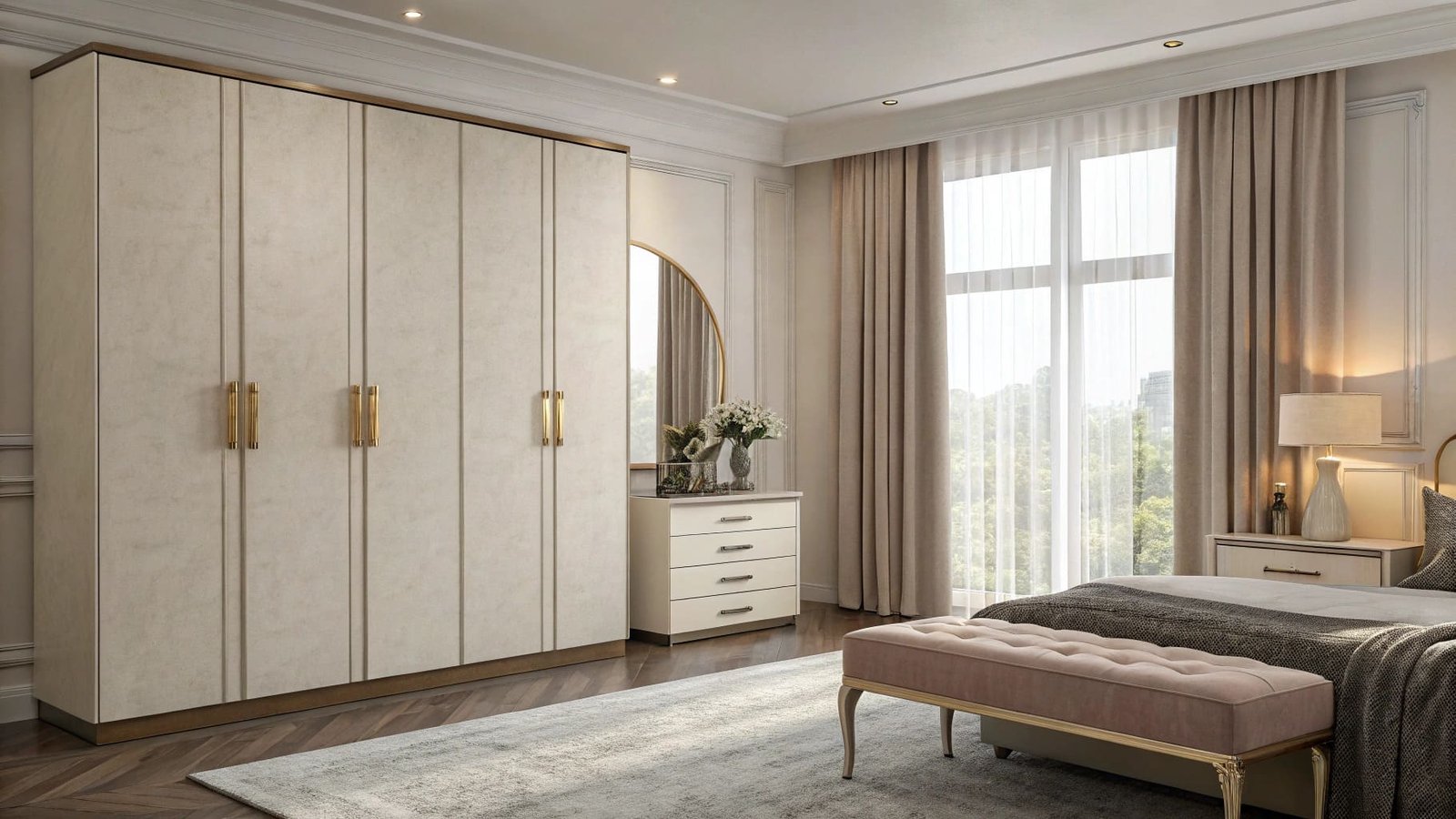
A top manufacturer is more than just a fabricator; they are an “engineering translator” for the designer. I’ve seen many incredible designs that were either structurally unfeasible or prohibitively expensive to produce. This is where we introduce Value Engineering (VE). It’s not about making things cheaper; it’s about making them smarter. For instance, a designer once sketched a series of large, sculptural public-area tables that were beautiful but would have cost a fortune in both materials and shipping. Instead of just quoting the high price, our engineering team collaborated with the designer. Through VE, we proposed several optimizations. We kept the original silhouette but redesigned the internal structure to be a knock-down (KD) assembly. This dramatically reduced shipping volume and cost. We also identified a high-performance composite material that offered the same visual effect and durability as the specified solid surface but at a fraction of the cost. By making these clever changes, we maintained the design intent while significantly reducing project expenses. This collaborative process optimizes the design for manufacturing and logistics, ultimately bridging the gap between a grand vision and a realistic budget.
VE Strategy | Description | Benefit |
Material Substitution | Swapping an expensive specified material for a cost-effective alternative with similar performance and appearance. | Lowers material cost without sacrificing aesthetics or durability. |
Structural Optimization | Redesigning the internal frame or assembly method (e.g., Knock-Down design). | Reduces manufacturing complexity and shipping costs. |
Process Efficiency | Adjusting a design to better fit standard manufacturing processes or material sizes. | Minimizes material waste and labor time, speeding up production. |
Conclusion
Ultimately, the best manufacturers are not just suppliers; they are engineering partners. They deliver lasting value through structural integrity, precision craftsmanship, guaranteed compliance, and smart, cost-effective solutions that bring your vision to life.