Introduction
Are you trying to source custom furniture from China but worried about the final quality? It’s a common fear: your beautiful designs could become wobbly, poorly-made pieces that cause major project delays. The solution is to look beyond price and start auditing a supplier’s technical skill.
The secret to finding a top-tier furniture supplier in China is to shift your focus from simply “finding a factory” to conducting a “technical audit.” The best partners demonstrate deep engineering capabilities through detailed shop drawings, have integrated manufacturing for complex materials, and offer transparent review processes.
Finding a great manufacturing partner might seem complex, but it really comes down to knowing what questions to ask. I’ve learned over the years that you can avoid most problems by focusing on a few key areas. You need to look past the sales pitch and dig into their actual process. Let me break down the four essential things you need to audit to find a supplier that will turn your vision into a reality, without the headaches.
How do you verify a supplier's real production power?
Many suppliers will look at your design and say, “no problem.” But if they lack real engineering skill, you could face structural failures and on-site disasters. The only way to be sure is to audit their ability to translate your design into a buildable plan.
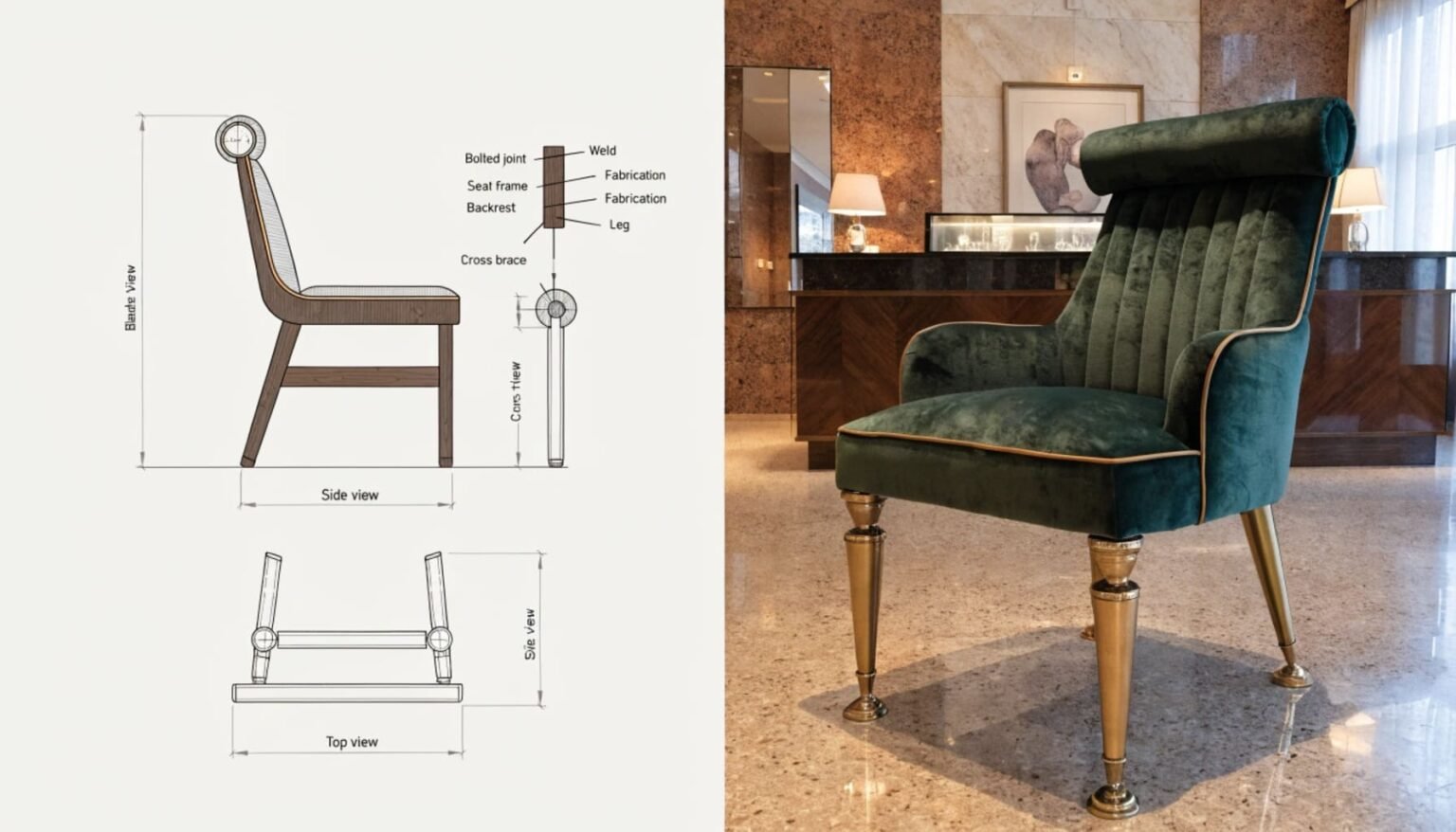
The most important indicator of a top-tier supplier is their ability to produce detailed shop drawings and conduct a structural audit *before* production begins. They don’t just copy your render; they re-engineer it. This means they transform your artistic concept into a 100% safe and functional engineering solution.
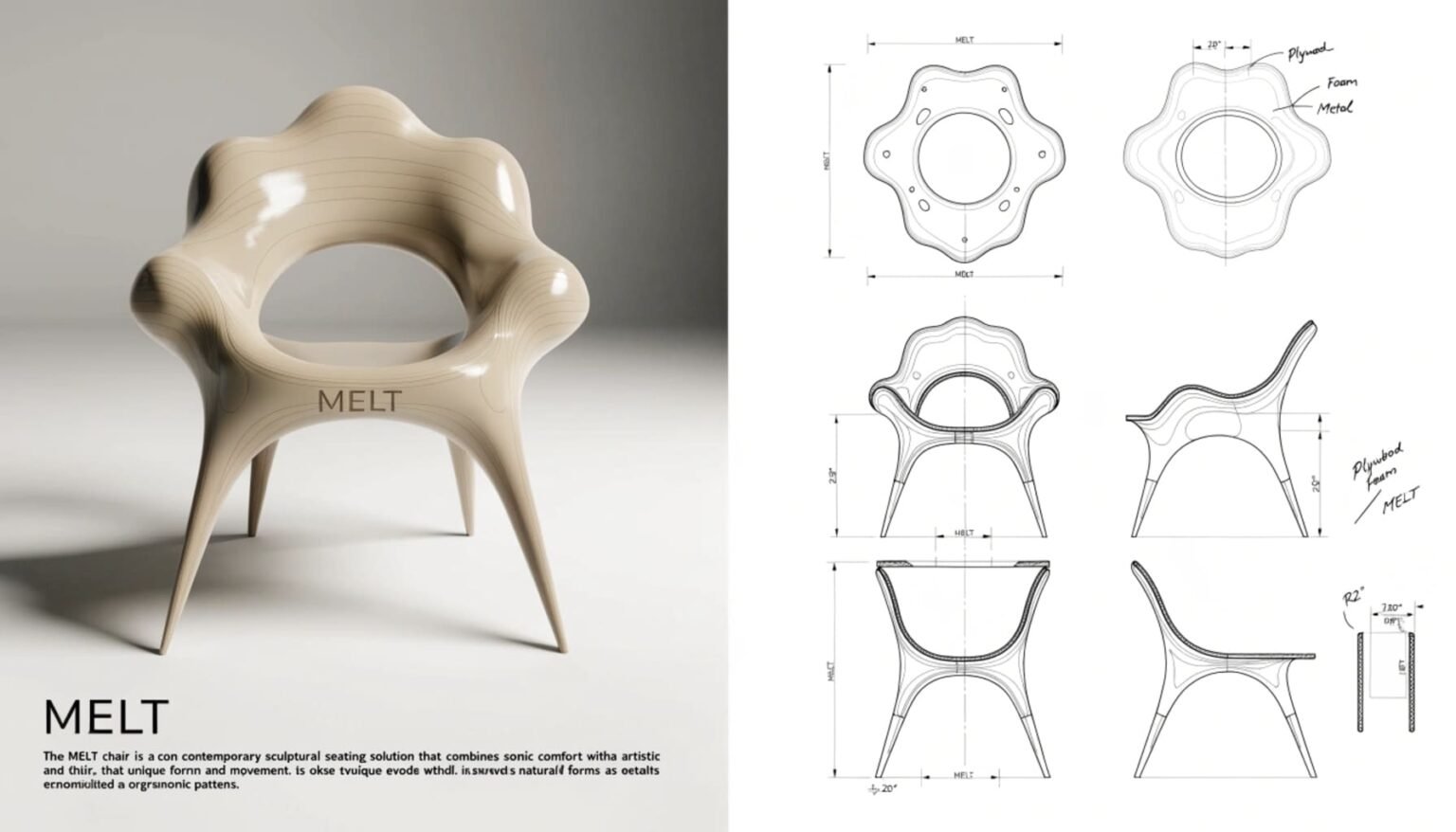
Shop drawings are the technical blueprints for manufacturing. I learned this the hard way years ago. A client came to us after another factory produced lounge chairs for a hotel that started to wobble within a month. The supplier had just copied the visual design from a 3D render without understanding the structural forces. They had no shop drawings, just a pretty picture. We had to re-engineer the entire chair, starting with proper drawings that specified the internal steel frame, the joint construction, and the density of the foam. A true manufacturing partner does this work upfront. They will audit your design for structural integrity—for example, calculating the support frame needed for a cantilevered table or specifying the right hidden fasteners for wall panels. They even analyze the long-term performance of materials, like the compression and rebound rate of foam in a sofa, to ensure it holds its shape for years. This is the difference between a picture-maker and a product-builder.
Can the supplier handle complex, multi-material designs?
Your latest design is stunning—it combines brushed brass, natural marble, and rich leather. But using separate suppliers for each material is a recipe for disaster, leading to mismatched parts and awkward gaps. You need one partner who can masterfully integrate them all.
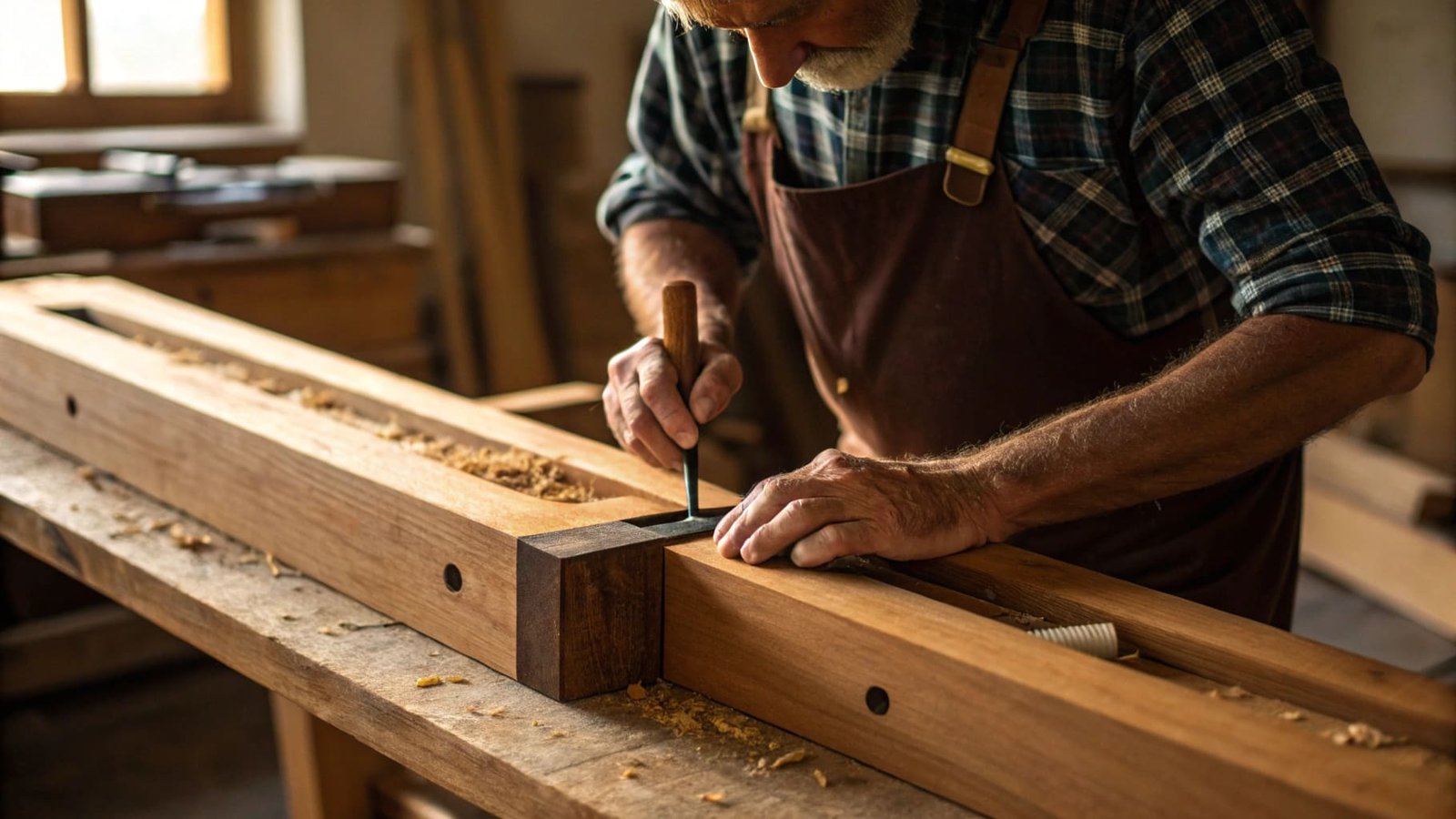
An excellent supplier has the machinery and expertise to manage multiple materials under one roof, controlling the final fit and finish to a high degree of precision. By using equipment like 5-axis CNC machines and high-pressure water jets, they can keep the tolerance at connection points extremely tight—often within ±0.15mm.
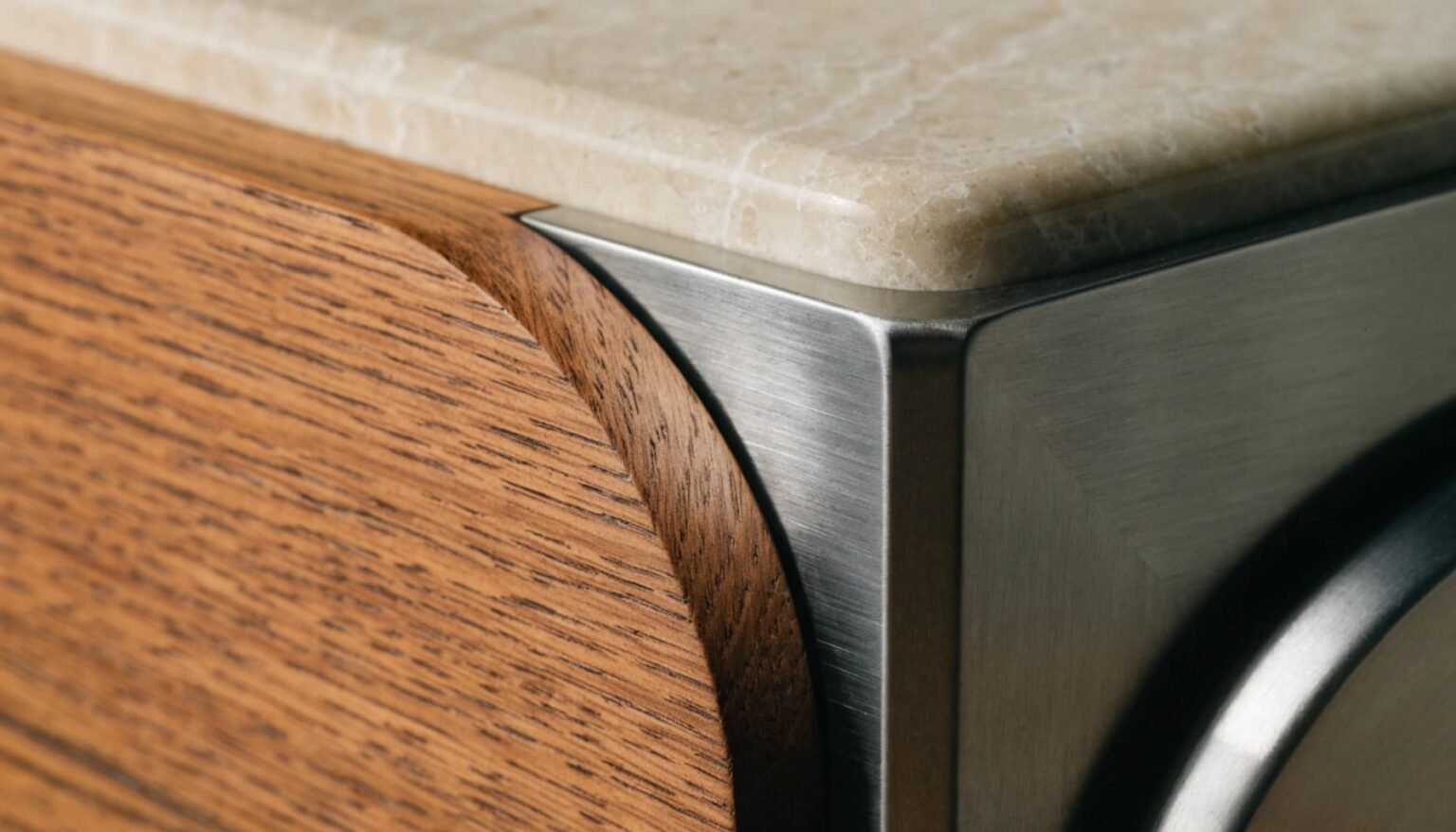
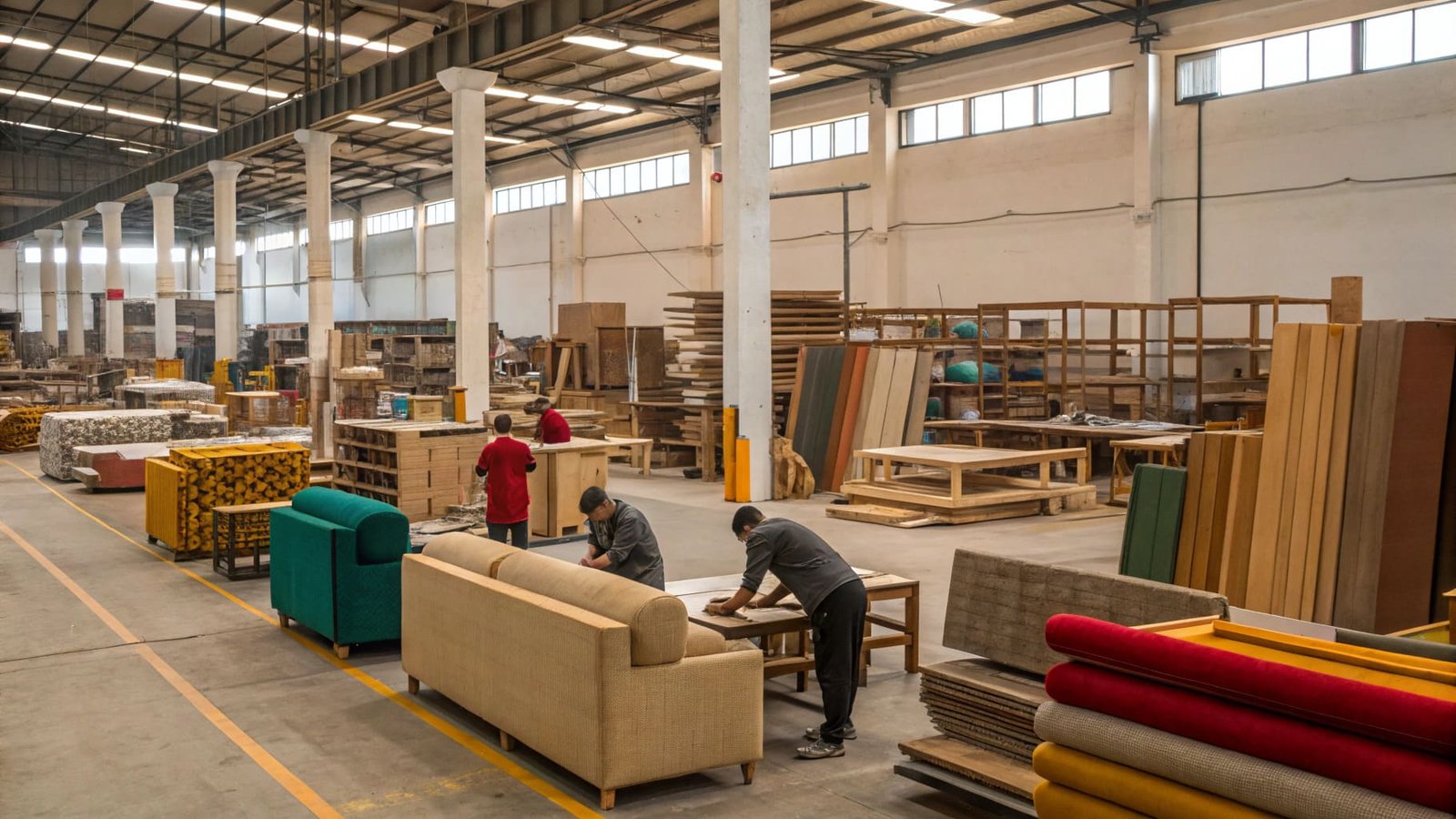
In today’s high-end hospitality and commercial projects, complex material combinations are the norm. Think of a hotel reception desk made of PVD-coated stainless steel, luxury stone, and solid wood millwork. If these components are made by different small factories and assembled on-site, the result is often disappointing, with visible gaps and misaligned surfaces. A premier supplier avoids this by handling all materials in-house. I remember a project for a hotel lobby that featured long banquettes with a brass plinth, a marble inlay, and an upholstered body. If the metal and stone had been outsourced, the parts would never have aligned perfectly. Because we controlled the entire process, we guaranteed the marble sat perfectly flush with the brass, creating the clean, monolithic line the designer envisioned. Top suppliers even plan for things like climate changes during shipping. They engineer hidden buffer seams in the structure, allowing wood to naturally expand and contract without cracking the stone or metal it’s joined to. This is the kind of deep engineering expertise that eliminates craft-related problems in minimalist designs.
How can you avoid bad surprises and high shipping costs?
Sourcing furniture from overseas can feel like a huge gamble. The biggest fears are that the products that arrive won’t match what you approved, and that shipping will destroy your budget. A professional supplier has a system to prevent both of these nightmares.
A reliable factory will build a full-scale, 1:1 mock-up of your furniture in their workshop for you to review. They will also engineer the product with a knock-down (KD) structure, which can save over 30% in shipping container volume and make on-site assembly fast and easy.
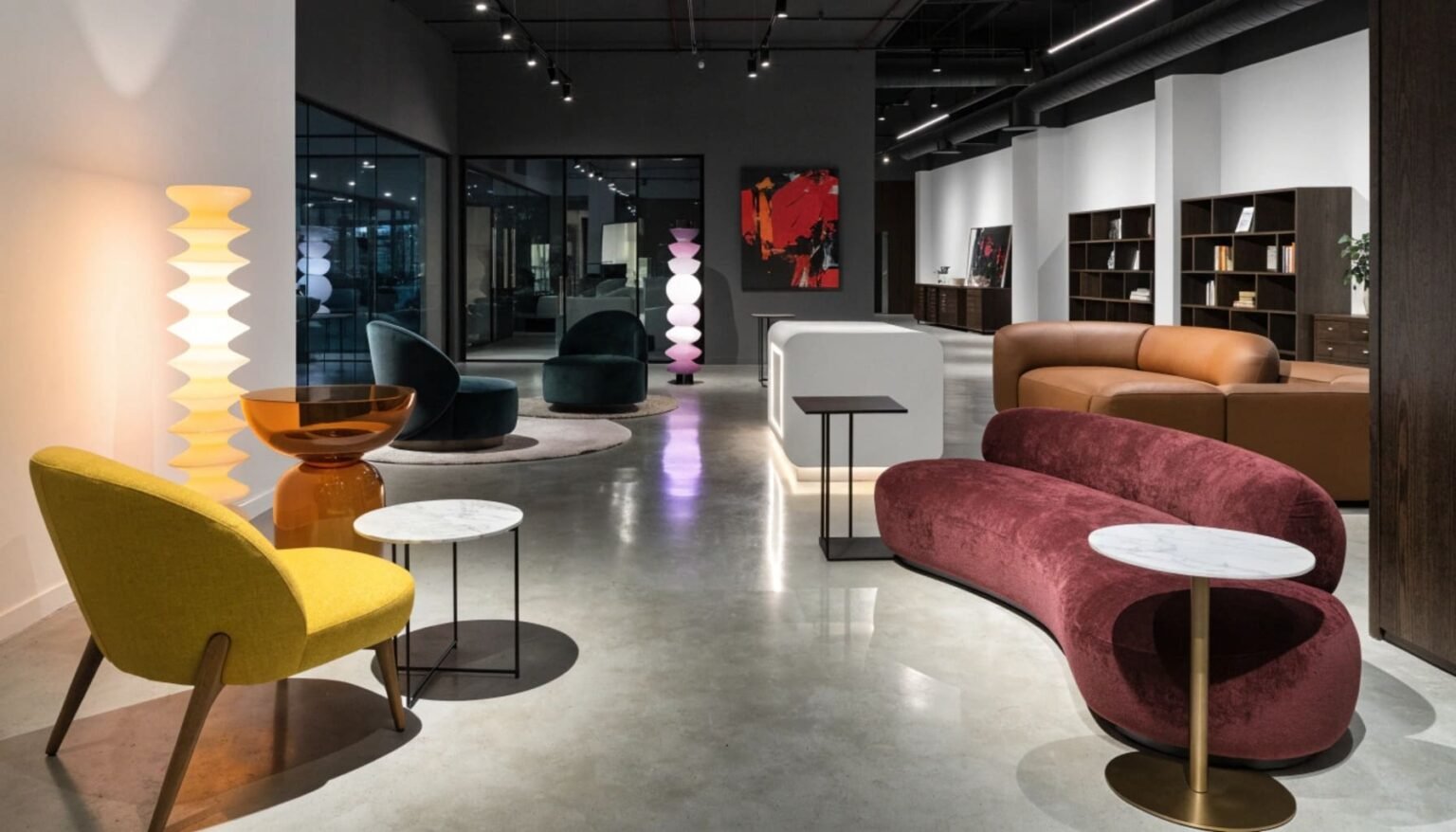
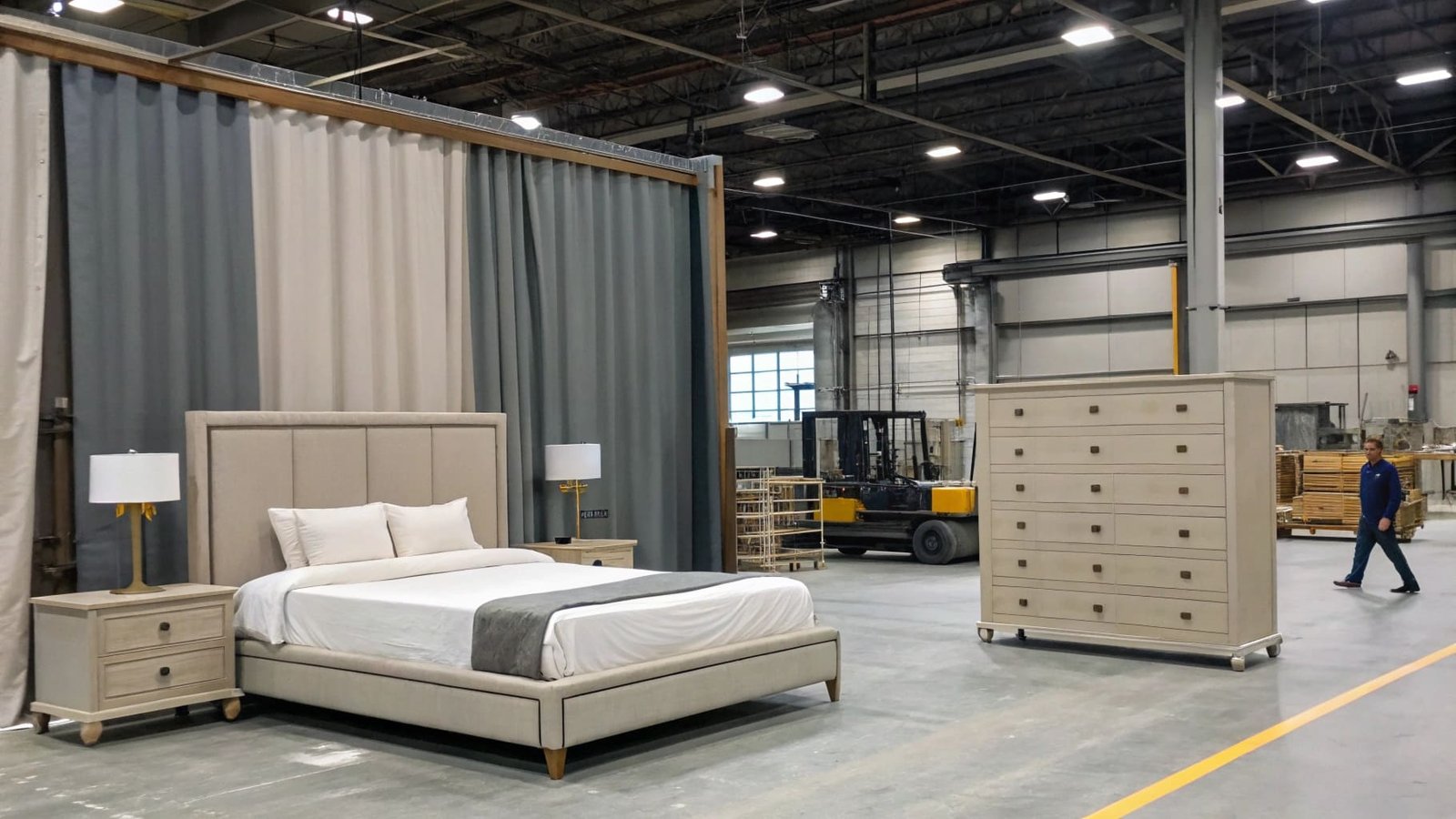
The mock-up review is a critical step for eliminating uncertainty. Before starting mass production, a professional supplier will build a complete physical sample—or even an entire sample room—in their workshop. You can then review it through high-definition video calls or by hiring a third-party inspection company like SGS. I once worked on a hotel project for a client in Dubai. We built an entire guest room in our China facility. The client “walked through” the room on a video call, checking every detail from the finish on the nightstand to the stitching on the headboard. Once they signed off, we moved to production with full confidence. At the same time, we optimize designs for shipping. By engineering furniture with a scientific knock-down (KD) structure, we make sure it can be packed flat. This significantly reduces container volume, but the bigger win is for the installation team. The furniture arrives ready for quick, dry assembly on-site, which means less labor, less mess, and a much faster project completion time.
How do you ensure your furniture meets international standards?
In commercial projects like hotels and public spaces, compliance with fire safety and environmental standards is not optional—it’s a requirement that can make or break your project. Many smaller factories simply cannot provide the authentic certifications needed to pass inspection.
A top-tier supplier acts as a “global compliance firewall” by providing a complete package of authentic, third-party test certificates with the shipment. This includes documentation for fire retardancy, low chemical emissions, and structural durability, ensuring your project passes inspection anywhere in the world.
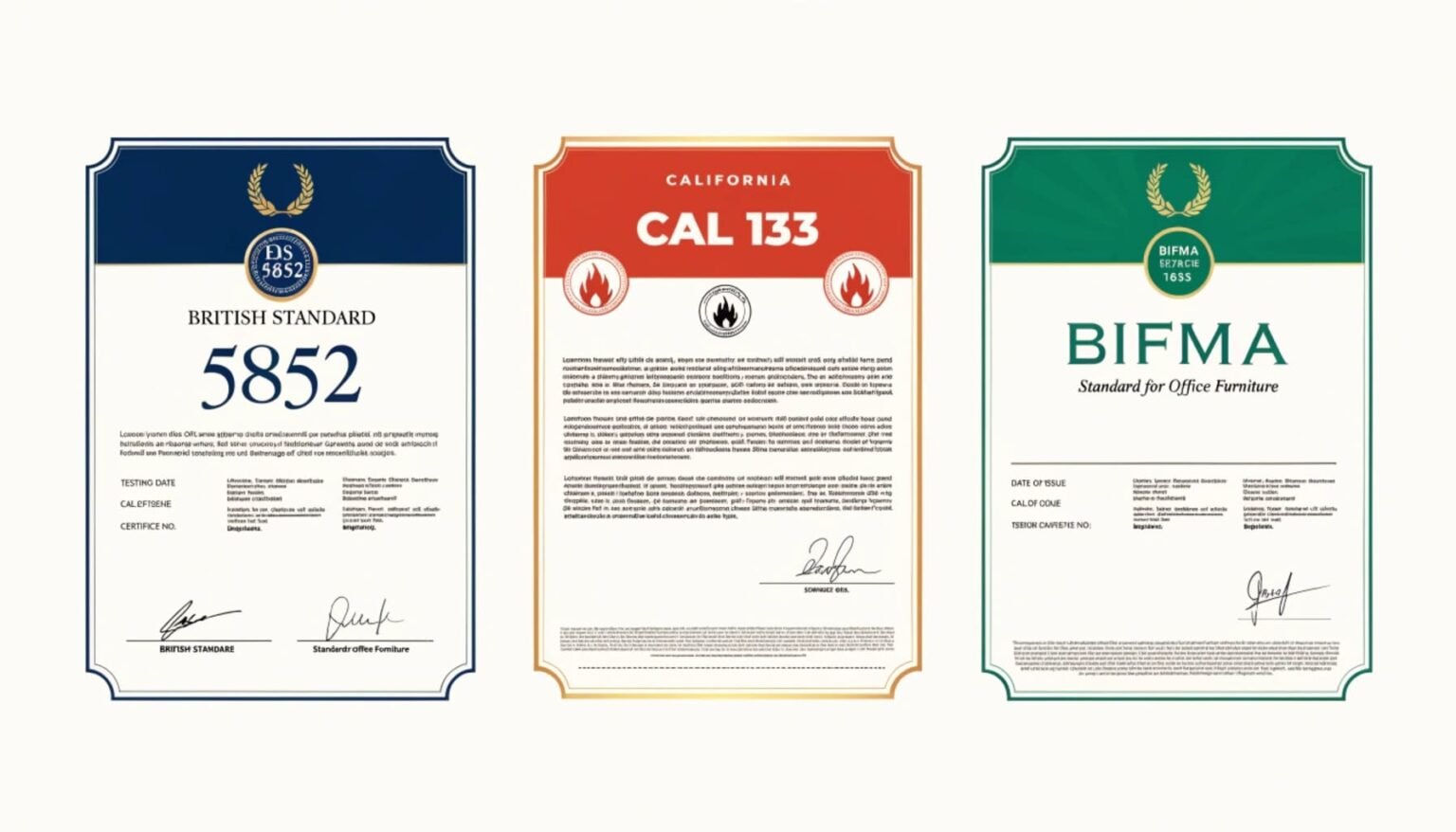
For international hotel groups and commercial developers, compliance is a pass/fail issue. I once got a panicked call from a designer whose furniture for a hotel was stuck at customs because the fire certificates were not valid for that region. It was a complete disaster for their timeline and budget. This is why a professional supplier treats certification as part of the product itself. The key certifications to look for include:
- Fire Retardancy: Standards like BS 5852(UK) and CAL 133 (US) are crucial. They test how the complete piece of furniture—including foam and fabric—reacts to an open flame, which is vital for public spaces. [3, 9, 14]
- Low Emissions: LEEDand CARB P2 certifications ensure that wood products and finishes have low VOC (Volatile Organic Compound) emissions, which is essential for indoor air quality.
- Structural Durability:BIFMA standards test the safety, durability, and performance of commercial furniture to ensure it can withstand heavy use.
A reliable partner integrates these requirements from the very beginning, selecting compliant materials and providing all the necessary documentation to guarantee a smooth and successful project handover.
Conclusion
Finding the right supplier in China is not about chasing the lowest price. It is about auditing for technical expertise, integrated manufacturing, risk management, and global compliance. It is about finding a true partner.