Introduction
Tired of suppliers who just don’t get it? It’s frustrating when your design vision gets lost in translation, leading to costly mistakes and delays. The right partner does more than just fabricate; they elevate your project.
The best FF&E suppliers are proactive problem-solvers. They act as expert partners who refine drawings for perfect execution, pre-assemble complex pieces to guarantee a flawless fit, use durable contract-grade finishes, and manage global logistics without a hitch. They eliminate risks before they become problems.

I’ve been in this business for a long time, and I’ve seen what separates the good suppliers from the truly great ones. It’s not just about making furniture; it’s about taking ownership of the outcome. The most sought-after suppliers have a specific mindset and a defined process. They anticipate needs and build trust by delivering excellence at every stage. Let me walk you through the four pillars of becoming an indispensable FF&E partner
How Can You Master Shop Drawings to Eliminate Design Flaws?
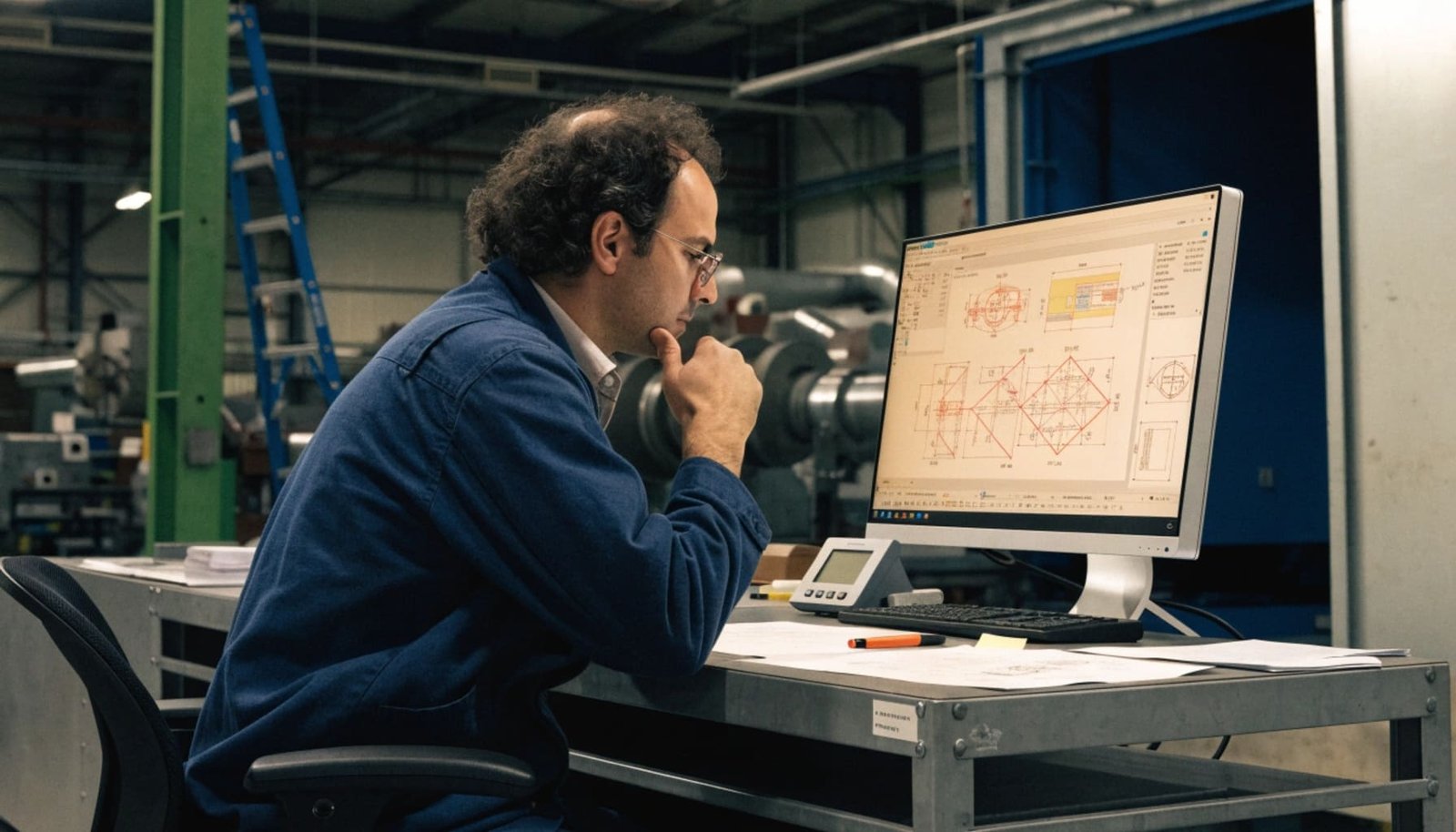
Receiving a designer’s drawing is the starting point. But many suppliers just forward it, creating huge problems down the line. To stand out, you have to become a “drawing brain” that sees every detail.
A top-tier supplier immediately creates micron-level shop drawings that translate design intent into a precise manufacturing plan. They define how different materials like metal, wood, and stone will join, ensuring a perfect fit and saving the designer from future headaches.
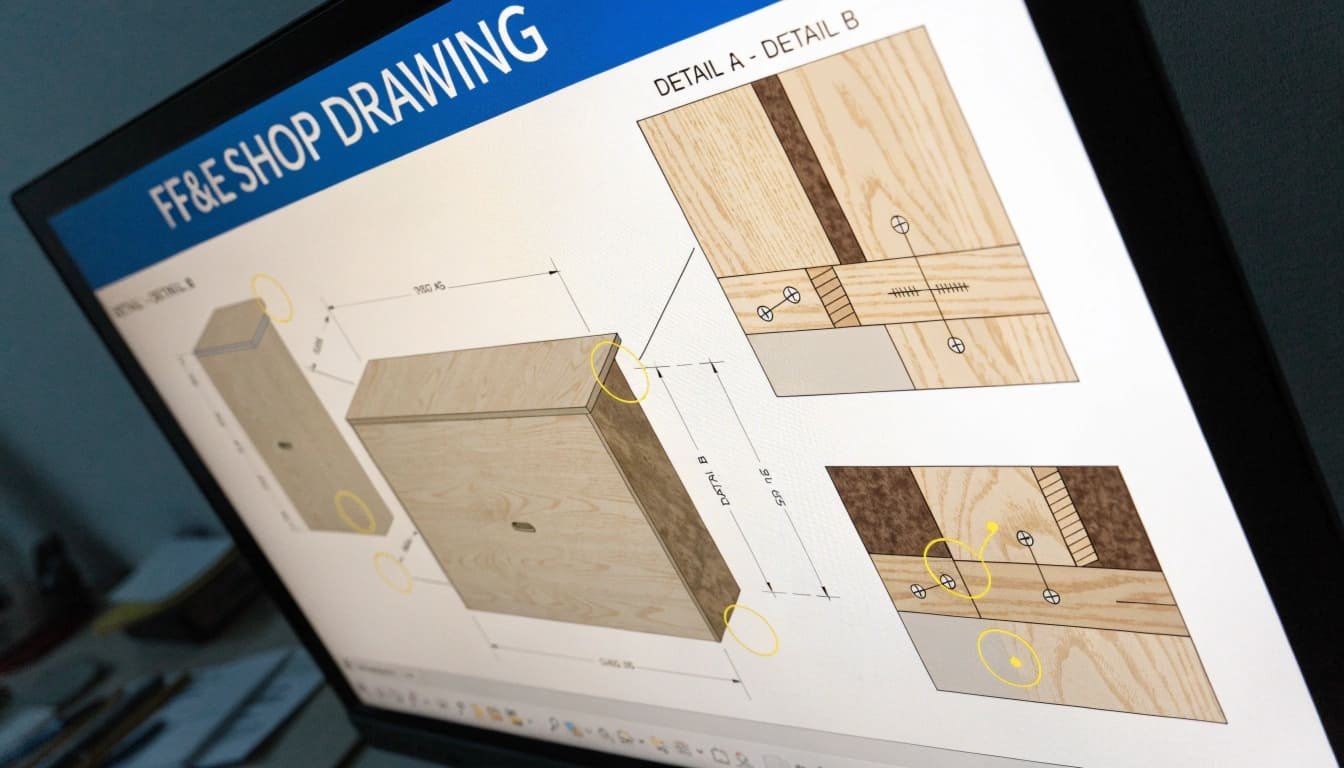
In my experience, the biggest point of failure is a lack of deep drawing analysis. Most purchasing agents and middlemen just pass files along. When something goes wrong on-site, they blame the designer’s concept. A true partner does the opposite. We take the design and produce our own shop drawings—these are the real fabrication documents. They show exactly how a component will be made and installed. This process forces us to think through every connection, every material transition, and every potential conflict. We control the tolerance between metal, millwork, stone, and leather down to ±0.15mm. We think about light reflection, pre-plan routes for wiring, and calculate wall-bearing loads. Before we even cut the first piece of material, we often provide 1:1 samples for a “Sample Review.” This gives the designer total confidence that what they see is what they’ll get. It’s about being a partner, not just a producer.
Aspect | Designer’s Drawing (Concept) | Our Shop Drawing (Execution) |
Purpose | Shows “what” to build (design intent) | Shows “how” to build it (fabrication plan) |
Detail Level | General dimensions, aesthetics | Micron-level precision, joinery, hardware |
Accountability | Design concept | Manufacturing and installation details |
Outcome | An idea | A flawless finished piece |
Why is a Dry-Fit Mockup Your Secret Weapon Against On-Site Disasters?
There’s no bigger nightmare than having custom pieces arrive on-site after weeks of shipping, only to find they don’t fit. Work stops, costs spiral, and the blame game begins. The solution is simple: pre-assemble everything before it leaves the factory.
A 1:1 factory pre-assembly, or Dry-Fit, is a non-negotiable step. It’s a practice run where we temporarily assemble complex and multi-material components without adhesives or permanent fasteners to test how they fit together before they ship. This guarantees that on-site installation is fast and seamless.
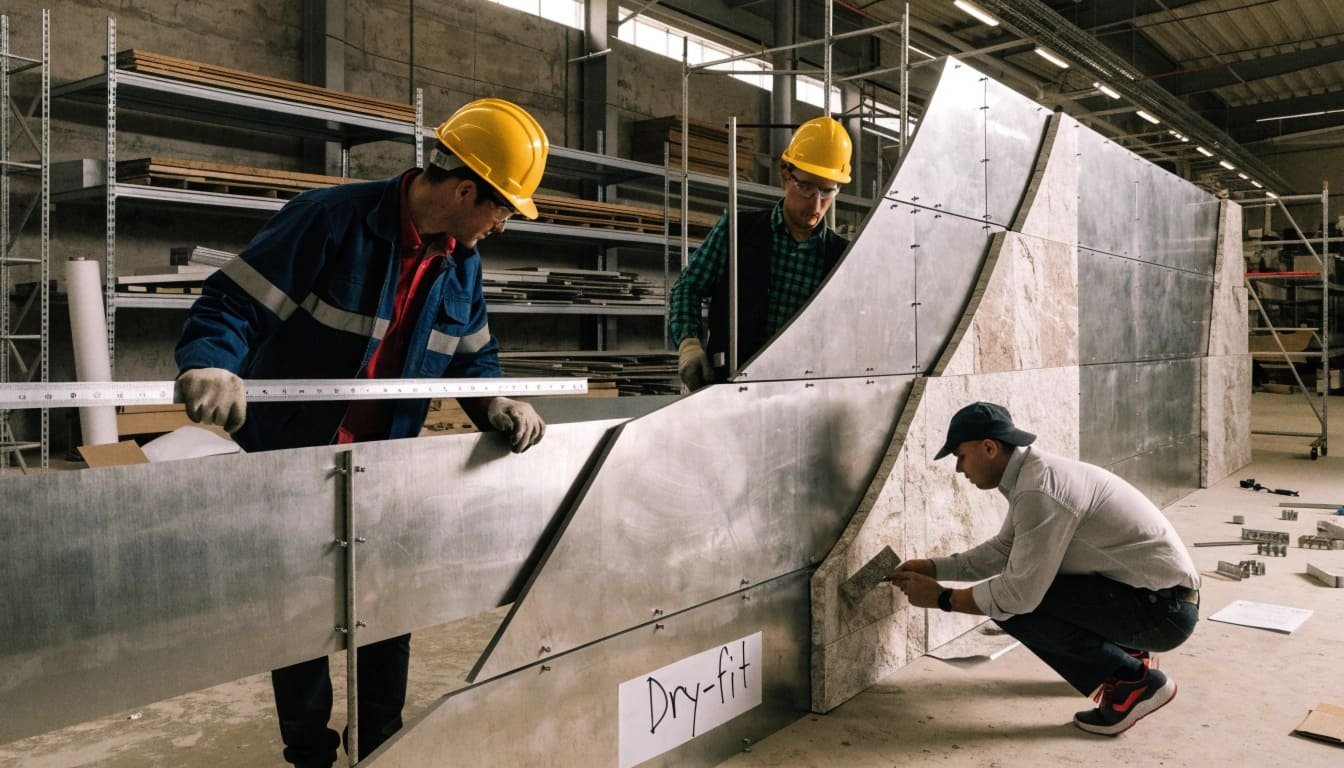
I’ll never forget the panic in a project manager’s voice when he called to say a metal screen and a stone feature wall wouldn’t align. The project was in another country, and his on-site team was trying to make crude cuts, risking damage to expensive materials. This is why we insist on a Dry-Fit Mockup. It’s the ultimate quality control measure that catches issues when they are easy and cheap to fix. For any complex or multi-material piece—like a large feature wall—we build it completely in our factory first. We use systems like the French Cleat, a reliable method for hanging heavy objects flush against a wall, to ensure a perfect fit with tolerances under 2mm. A French Cleat system uses two interlocking beveled brackets, one on the wall and one on the item, to distribute weight evenly and create a secure, hidden mount. We even record the trial assembly, so the installation team has a clear video guide. It turns a complex job into a simple, LEGO-like process.
How Does Contract-Grade Finishing Protect Your Design's Reputation for Years?
A project can look stunning on day one, but if the finishes can’t handle real-world use, that beauty quickly fades. When metals tarnish or surfaces stain, it reflects poorly on the designer and the property.
The solution is to reject residential-grade standards and build everything to a “Contract-Grade” level. This means using industrial finishes like PVD titanium plating and nano anti-fingerprint coatings that are engineered for high-traffic commercial environments.

Many suppliers use generic, residential-grade products that look great at the handover but fail quickly. In a hotel lobby or a busy restaurant, those finishes meet moisture, cleaning chemicals, and constant touching. I’ve seen beautiful brass fixtures turn dull and spotted in less than a year. That’s why we exclusively use a Contract-Grade manufacturing system. For our metalwork, this means two key processes. First, PVD (Physical Vapor Deposition) coating, which vaporizes a material like titanium and bonds it to the surface in a vacuum. This creates an incredibly durable finish that is highly resistant to scratches, corrosion, and fading. Second, we apply a nano anti-fingerprint (AF) coating. This is an invisible, molecule-thin layer that repels oils and smudges, making surfaces incredibly easy to clean. This isn’t just about looking good; it’s about delivering long-term value and eliminating high maintenance costs for the client.
How Can You Guarantee Flawless Delivery Across Continents?
Shipping damage and delays are the two silent killers of an FF&E project’s timeline and budget. A supplier’s responsibility doesn’t end when the truck leaves. If goods arrive damaged, it creates a chain reaction of problems.
The only way to ensure success is with end-to-end quality control and professional export crating. We use a full-node QC system and engineer custom, shock-proof wooden crates with moisture protection to get the damage rate close to zero.
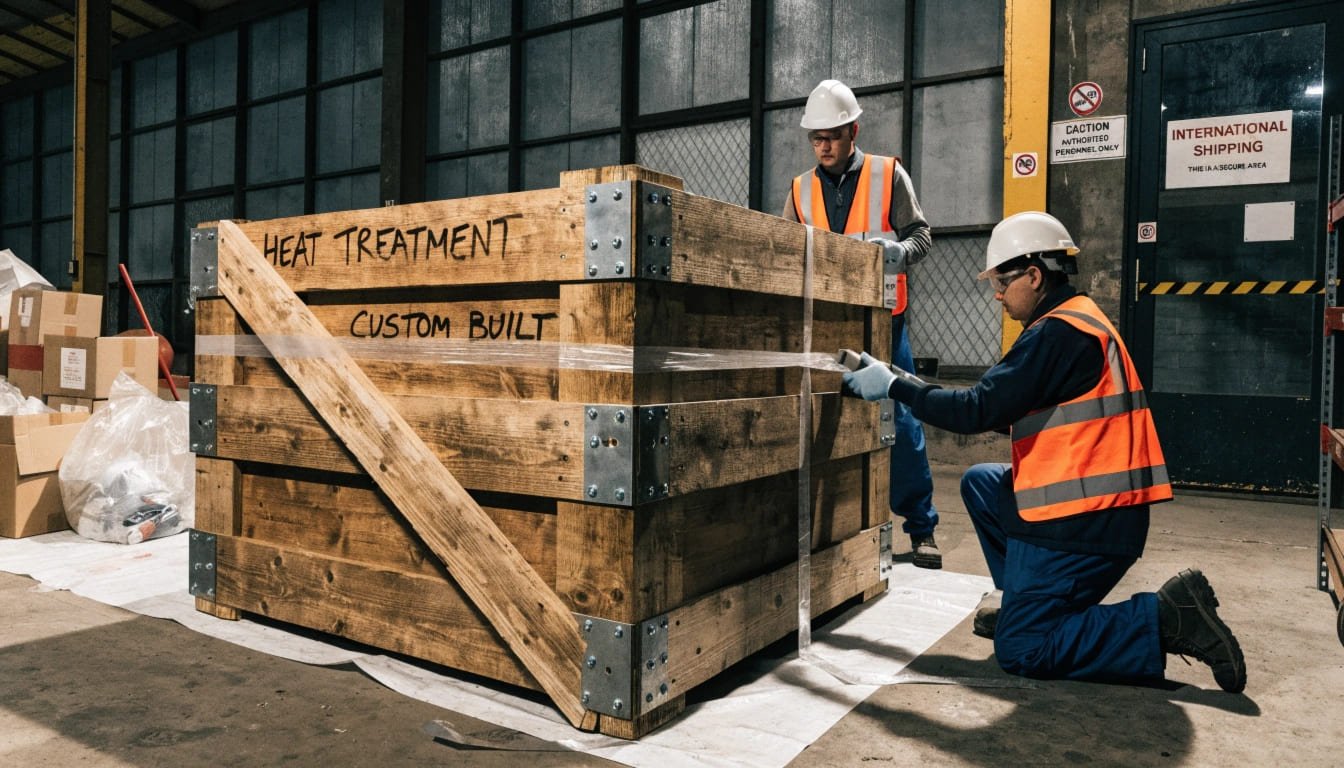
Too many factories breathe a sigh of relief once an order is shipped. For us, that’s when one of the most critical phases begins. We learned early on that you can’t leave international logistics to chance. We developed a quality tracking system that monitors every stage, from raw material inspection to the final container loading. But the real key is our crating process. Long-distance shipping, especially by sea, exposes cargo to multiple handling points, humidity, and vibration. We build custom crates from heat-treated, ISPM 15-compliant wood, which is mandatory for most international ports. Inside, we use reinforced bracing, shock-absorbent foam, and moisture-barrier linings to protect against impact and climate swings. Every crate is clearly labeled with handling instructions. This isn’t just a box; it’s an engineered system designed to ensure our meticulously crafted pieces arrive in perfect condition, ready for that LEGO-like installation, and precisely on schedule.
Lorem ipsum dolor sit amet, consectetur adipiscing elit. Ut elit tellus, luctus nec ullamcorper mattis, pulvinar dapibus leo.
Conclusion
Successful FF&E execution is not about sourcing; it’s about engineering. Partnering with a manufacturer who manages the technical details de-risks your project and ensures your design vision is delivered perfectly.