Introduction
Placing furniture feels like a puzzle with no solution. Your room looks messy, and moving through it is awkward. Learn the professional secrets to creating a perfect, functional layout.
To decide where furniture goes, first prioritize movement paths to ensure good flow. Next, establish a visual anchor like a large sofa. Then, use other furniture to define functional zones and direct sightlines toward views or light. This creates a balanced, intuitive, and beautiful room layout.
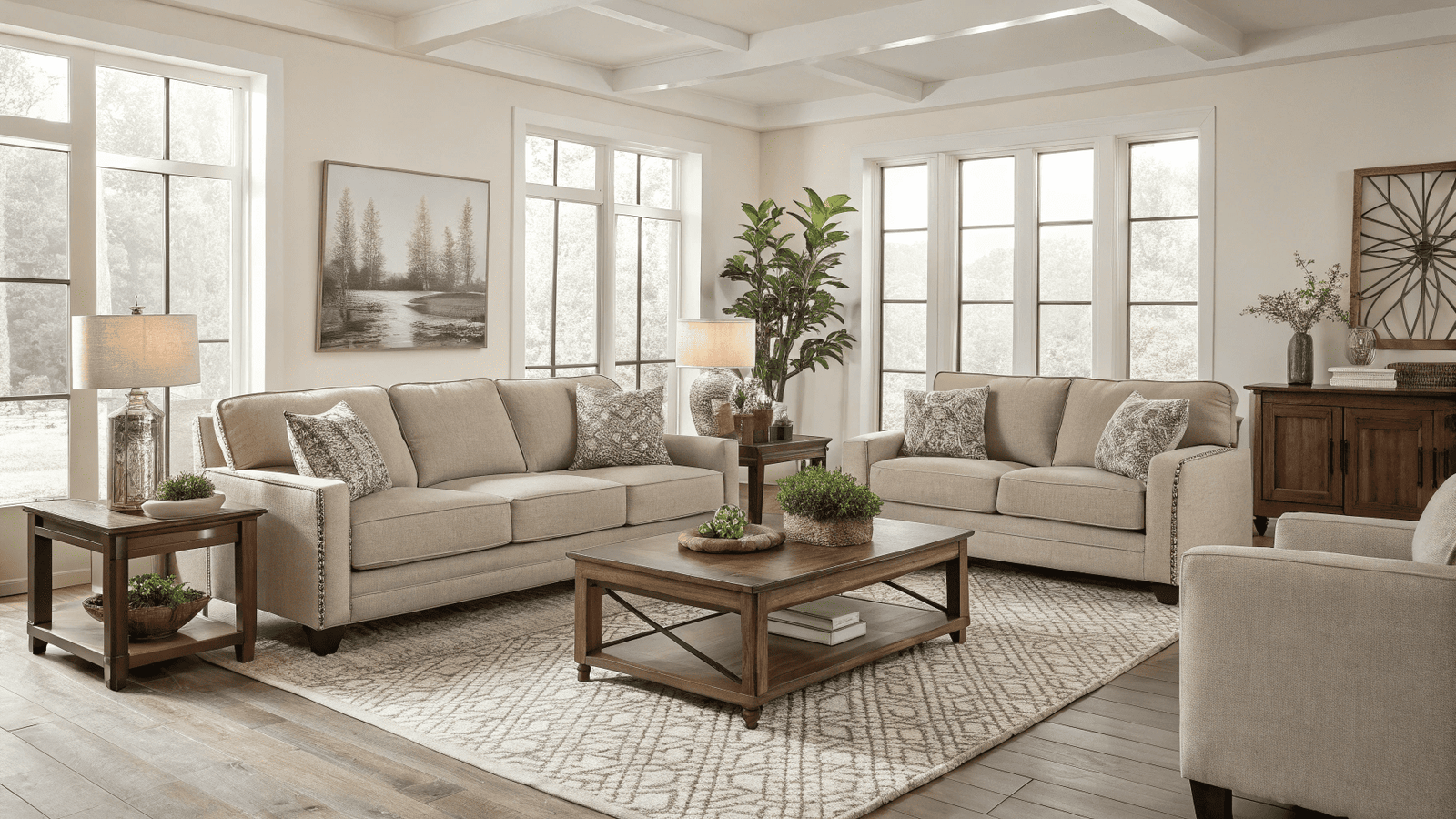
It sounds simple, but mastering this takes a specific mindset. It’s less about decoration and more about directing the human experience within a space. This is the core of what we do when turning a designer’s vision into a physical reality. Let’s break down the four principles we use at NEXTOP to arrange rooms with precision and purpose.
Should You Prioritize Movement Flow Before Placing Any Furniture?
Your layout looks great on paper but feels cramped in reality. People constantly bump into corners and edges. We solve this by creating “invisible corridors” that make spaces feel open and intuitive.
Yes, always prioritize flow. Before placing a single piece of furniture, map out the main “circulation paths.” As a rule, we ensure these key walkways are at least 60cm to 90cm wide. This simple step prevents your room from becoming a frustrating obstacle course.
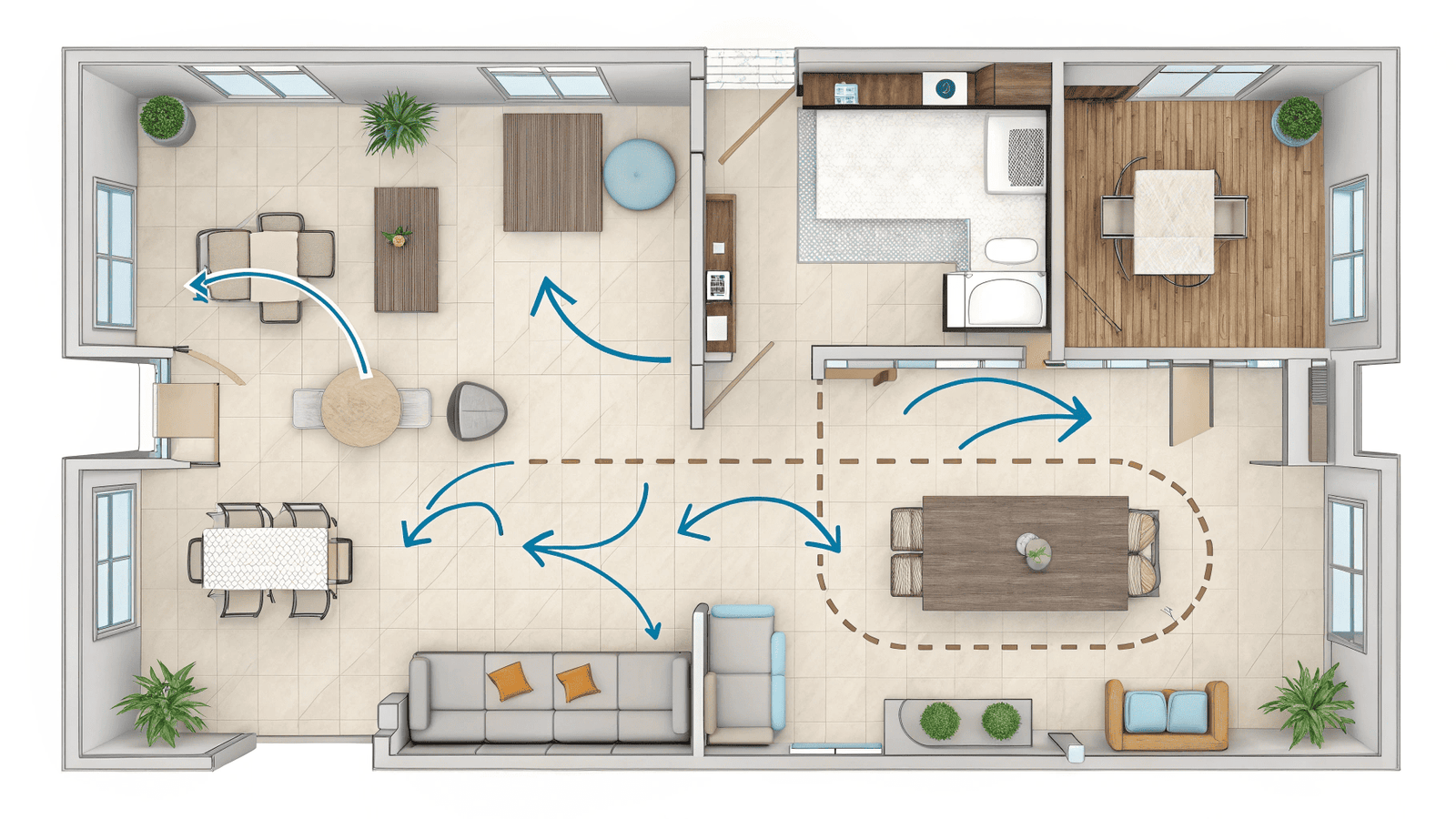
At our core, we believe the best part of a layout isn’t the furniture itself, but the empty space between the pieces. Senior designers always start a plan by establishing these circulation paths. Think of them as invisible hallways that guide you naturally through a room. A successful layout is one where you could almost walk with your eyes closed without the fear of bumping into something.
Defining Your Paths
We break down pathways into two main types: primary and secondary.
- Primary Paths:These are the main routes you take, like from the doorway to the sofa, or from the living room to the kitchen. These need the most space.
- Secondary Paths:These are smaller routes, like the space between a coffee table and the sofa.
To help you visualize this, here are the minimum clearances we work with when engineering layouts for hospitality or commercial projects:
Path Type | Minimum Width | Purpose |
Main Traffic Lane | 90 cm | For high-traffic areas connecting rooms. |
Path Around Seating | 75 cm | To walk comfortably around a sofa group. |
Path Around a Bed | 60 cm | To access a closet or move around the bed. |
This isn’t just about avoiding collisions. It’s about creating a psychological sense of ease. When we build custom furniture, we consider how it will shape the space around it. We are designing for movement first, and objects second.
Does Every Room Really Need a Focal Point?
Does your room feel scattered and unfocused? You might have beautiful furniture pieces, but they don’t seem to work together. Establishing a visual “center of gravity” is the key to bringing harmony and purpose to any space.
Absolutely. A room without a focal point, which we call an “anchor piece,” can feel unsettling and chaotic. This is typically the largest or most dramatic item, like a sofa in a living room or a bed in a bedroom. Arranging other items around this anchor creates instant visual order.
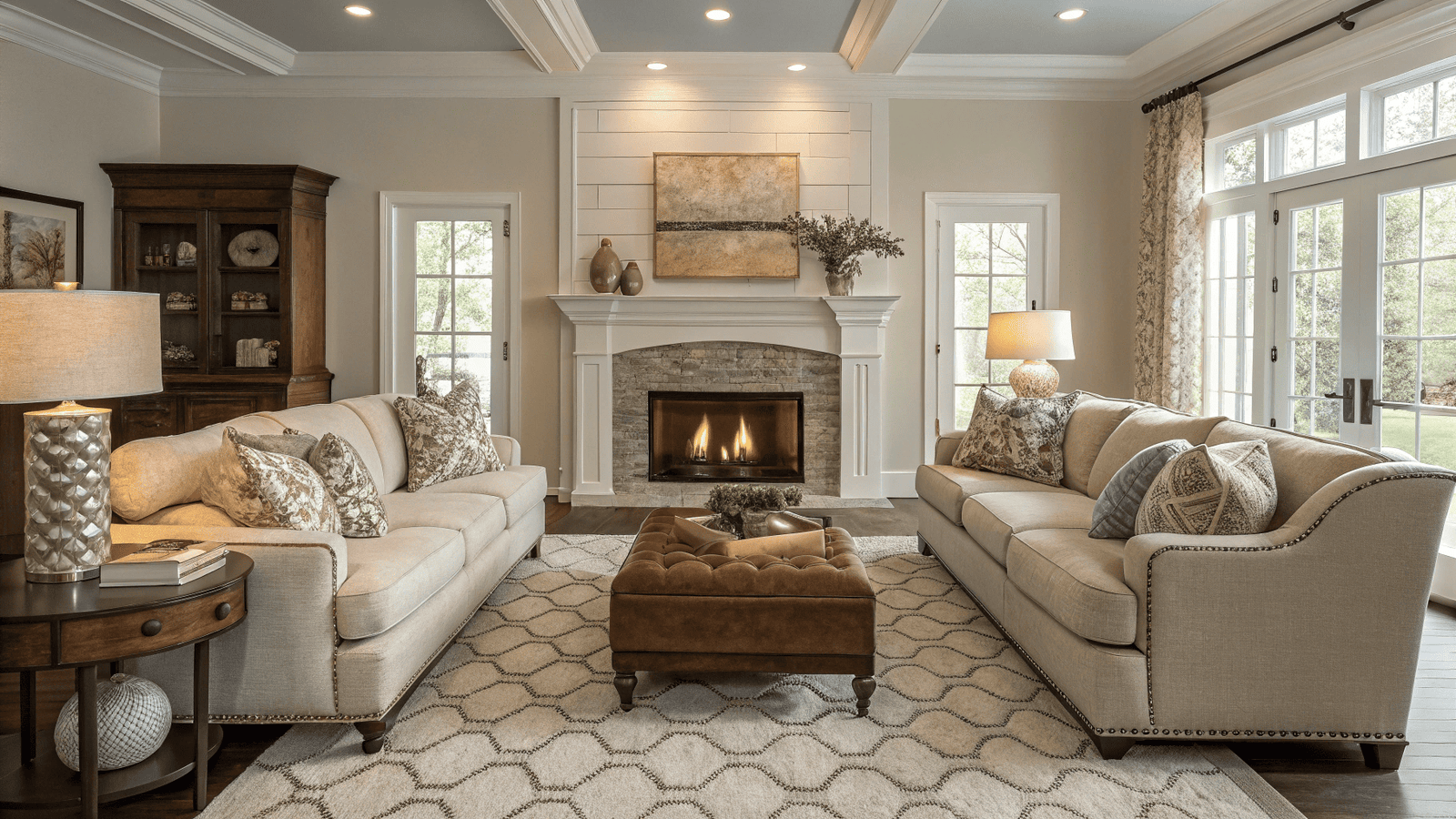
A room with no clear center of gravity makes the eye wander aimlessly, which can create a feeling of restlessness. The core of a good layout is establishing a visual hierarchy. We do this by identifying or creating an anchor for the space. In a living room, this is often the sofa or a fireplace. In a bedroom, it is always the bed. We treat this large piece of furniture as a “gravitational source.”
Establishing the Anchor
Your anchor piece should be the first thing you place in the room after you’ve defined your circulation paths. It commands the most attention and sets the tone for the entire space. For a hotel lobby we are furnishing, this might be a large, sculptural reception desk. For a villa’s great room, it could be a massive, custom-built shelving unit.
Arranging the 'Orbiting' Pieces
Once the anchor is set, all other furniture pieces are arranged in “orbit” around it. Side chairs, coffee tables, lamps, and accessories should all relate back to the anchor. We achieve this by balancing the visual weight of the items. A tall, heavy bookcase on one side of the room can be balanced by a long, low-profile sofa on the other. It’s not about perfect symmetry, but about creating a sense of “dynamic equilibrium.” This careful balancing act eliminates visual clutter and makes the entire layout feel calm and intentional.
How Can You Create Separate Zones in an Open-Plan Space Without Walls?
Open-plan living is popular, but it often means your work life bleeds into your relaxation time. It can be hard to switch off when your desk is in your living room. You can solve this by using furniture to create invisible, wall-less boundaries.
Use your furniture as “soft partitions.” The back of a sofa can clearly separate a living area from a dining space. A tall, open-backed bookshelf can define a home office nook without blocking light. This creates clear psychological boundaries, making each zone feel distinct and purposeful.
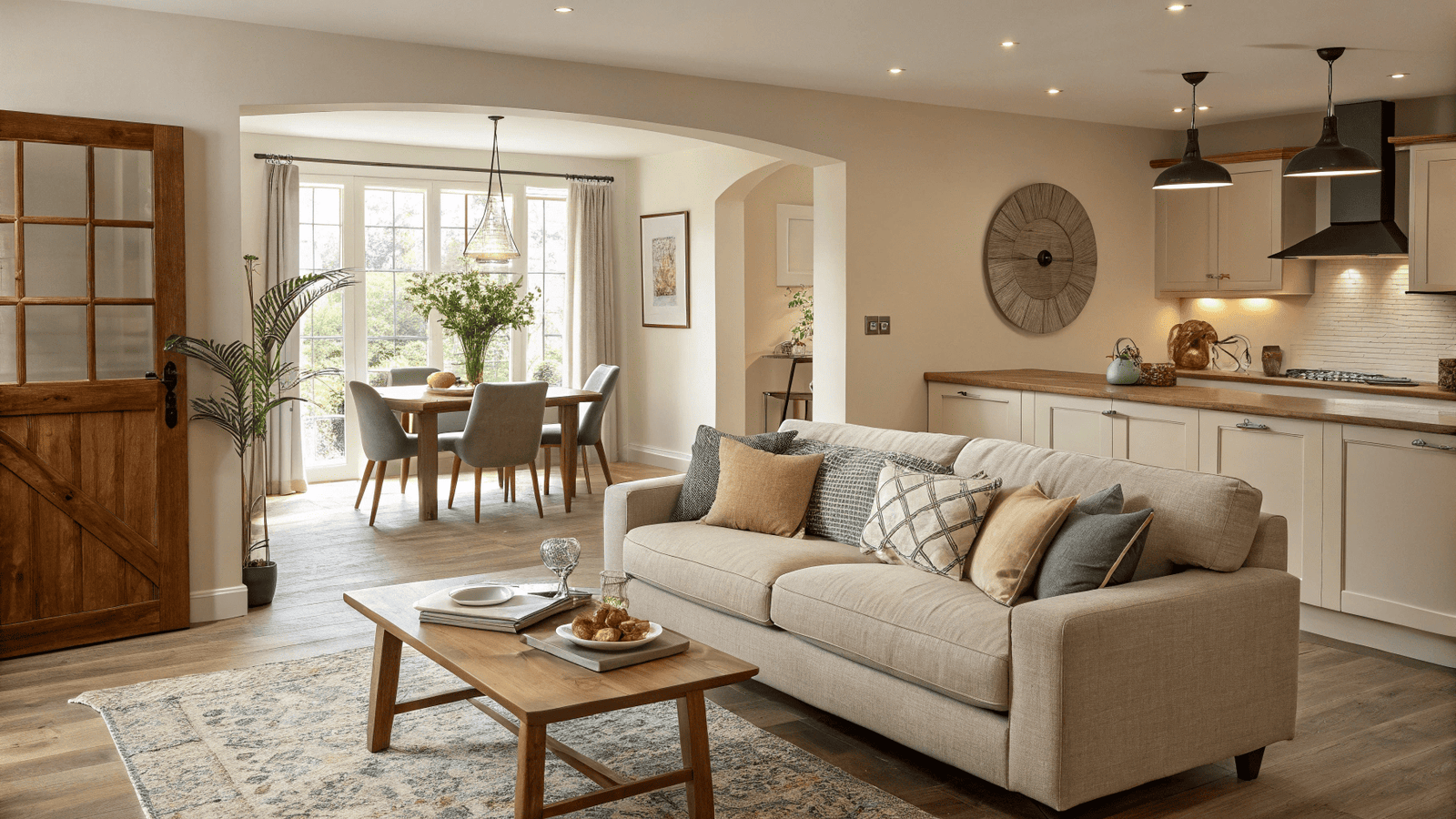
In today’s world of open-concept homes and multi-use commercial spaces, furniture is the best barrier you have. We call this “soft partition thinking.” Instead of building walls, we use the size, shape, and orientation of furniture to define different life scenes. This is crucial for maximizing the practical efficiency of a floor plan.
Using Sofas and Rugs
The easiest way to do this is with a sofa. By floating a sofa in the middle of a room instead of pushing it against a wall, its back creates a strong visual line. This can instantly separate a “social zone” for conversation from a “circulation zone” for walking through. Placing a console table behind the sofa reinforces this line even more. Similarly, a large area rug placed under a seating group anchors that area and visually fences it off from the rest of the room.
The Power of Shelving and Screens
For a more distinct separation, we often use shelving or screens. A waist-high credenza can suggest a boundary, while a tall, open-backed metal shelving unit—like the architectural metalwork we fabricate—can create a dedicated home office or reading nook. Because the shelf is see-through, it defines the space without killing the open-plan feeling or blocking light. This use of furniture to create psychological boundaries allows multiple functions to exist in one room without interfering with each other.
How Does Furniture Placement Affect a Room's Light and View?
You have a beautiful view, but your furniture ignores it. Or maybe you’re constantly fighting glare on your laptop screen. Your layout should not be random; it should direct your gaze and work with, not against, natural light.
Furniture placement completely controls what you see and how you feel in a room. A thoughtful layout considers natural light angles and “visual landing points.” You should position desks to avoid glare and arrange seating to capture the best views, dramatically improving the room’s daily experience.
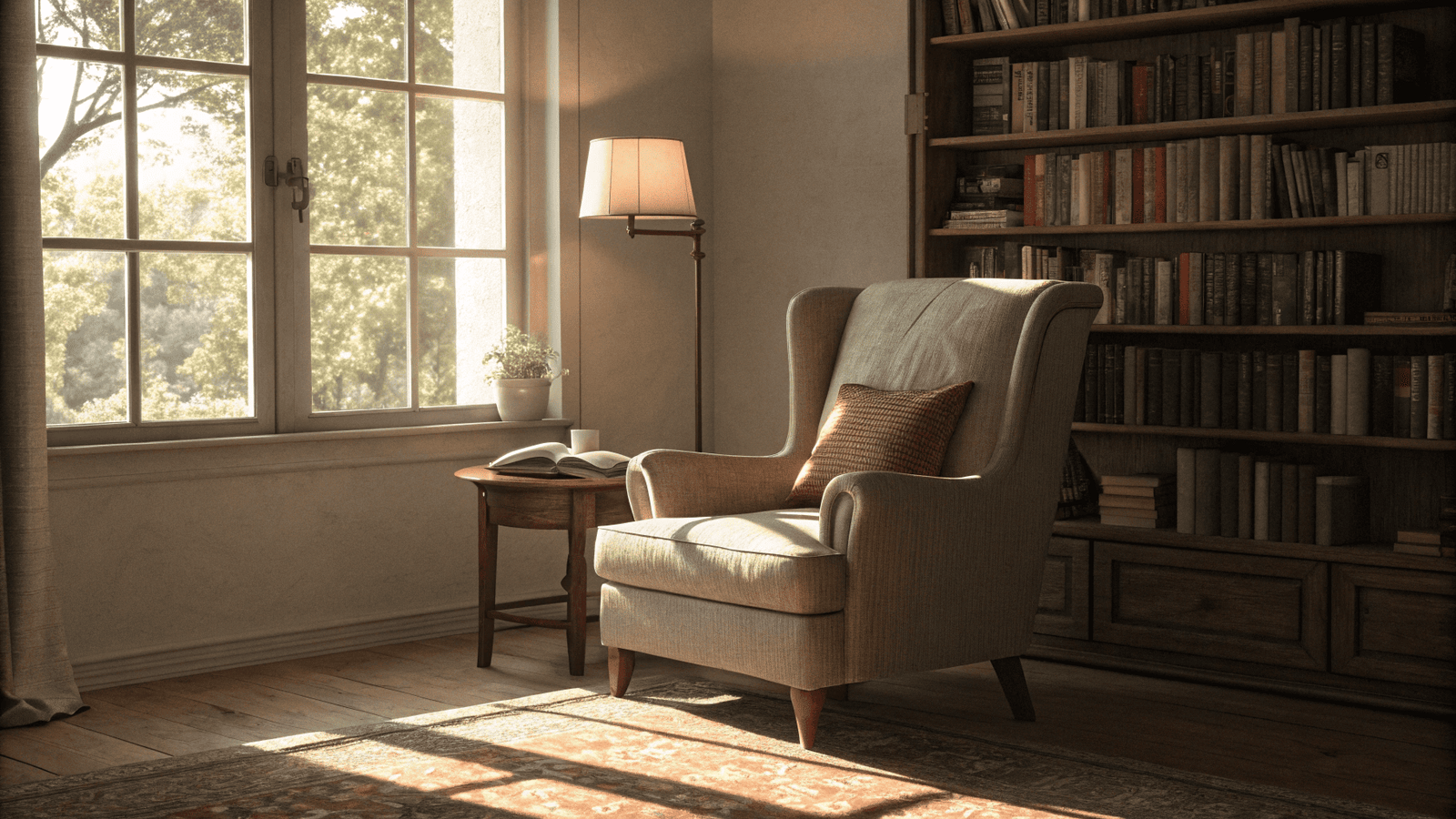
Think of yourself as a director. The furniture arrangement directs the “camera”—the eyes of the person living in the space. Where you place a chair determines what that person will look at every day. This is why we always analyze the “visual landing points” in a room.
Working with Natural Light
First, we consider the practical impact of sunlight. A layout must be designed around the way natural light enters the room throughout the day.
- Desks: Never place a desk with the user facing a window, as the screen will be unreadable. The best position is often perpendicular to the window, providing light on the work surface without glare.
- TVs: Avoid placing a television directly opposite a bright window, as this will cause reflections.
- Reading Chairs: Place a comfortable armchair where it will catch soft, indirect morning or afternoon light.
Borrowing Scenery to Enhance Experience
An even more advanced technique is what designers call “borrowing scenery.” This is the art of using furniture to frame a view. By slightly adjusting the angle of a lounge chair or a side table, you can guide the eye toward a beautiful tree outside the window, a piece of artwork on the wall, or a striking architectural feature. When we receive project drawings, we look for these opportunities. This precise control of sightlines is the invisible secret that elevates a space from simply functional to truly sophisticated and high-end.
Conclusion
Ultimately, a great layout is invisible. It guides your movement, focuses your attention, and makes a room feel right. Follow these principles to arrange your space with confidence and purpose.