Introduction
You love the idea of building your own furniture, but some projects carry hidden risks. For your safety and peace of mind, it is critical to know which ones to avoid.
You should never build furniture that bears dynamic loads, mixes materials with different properties, or requires high-precision hardware. This includes items like chairs, complex shelving, and large sliding doors. The structural engineering, material science, and manufacturing precision required are beyond the scope of a typical DIY setup.

It’s tempting to think that with enough skill, you can build anything. I used to believe that too. But after years in the professional furniture industry, I’ve learned that some things aren’t about skill. They’re about physics, chemistry, and industrial-scale engineering. The most dangerous mistakes aren’t the ones you can see; they are the invisible ones that can lead to catastrophic failure, wasted money, or even health issues. Let’s explore the specific types of furniture you should leave to the pros, and I’ll explain exactly why.
Why should you avoid DIY-ing chairs and lift systems?
A DIY chair looks like a simple weekend project. But what happens if it suddenly breaks while someone is sitting on it? The secret is understanding the danger of dynamic stress.
You should avoid DIY-ing chairs because they endure constant dynamic stress, not just static weight. Professional manufacturers use fatigue testing to prevent sudden structural failure, a safety measure impossible to replicate at home. This process ensures long-term stability and prevents serious accidents.
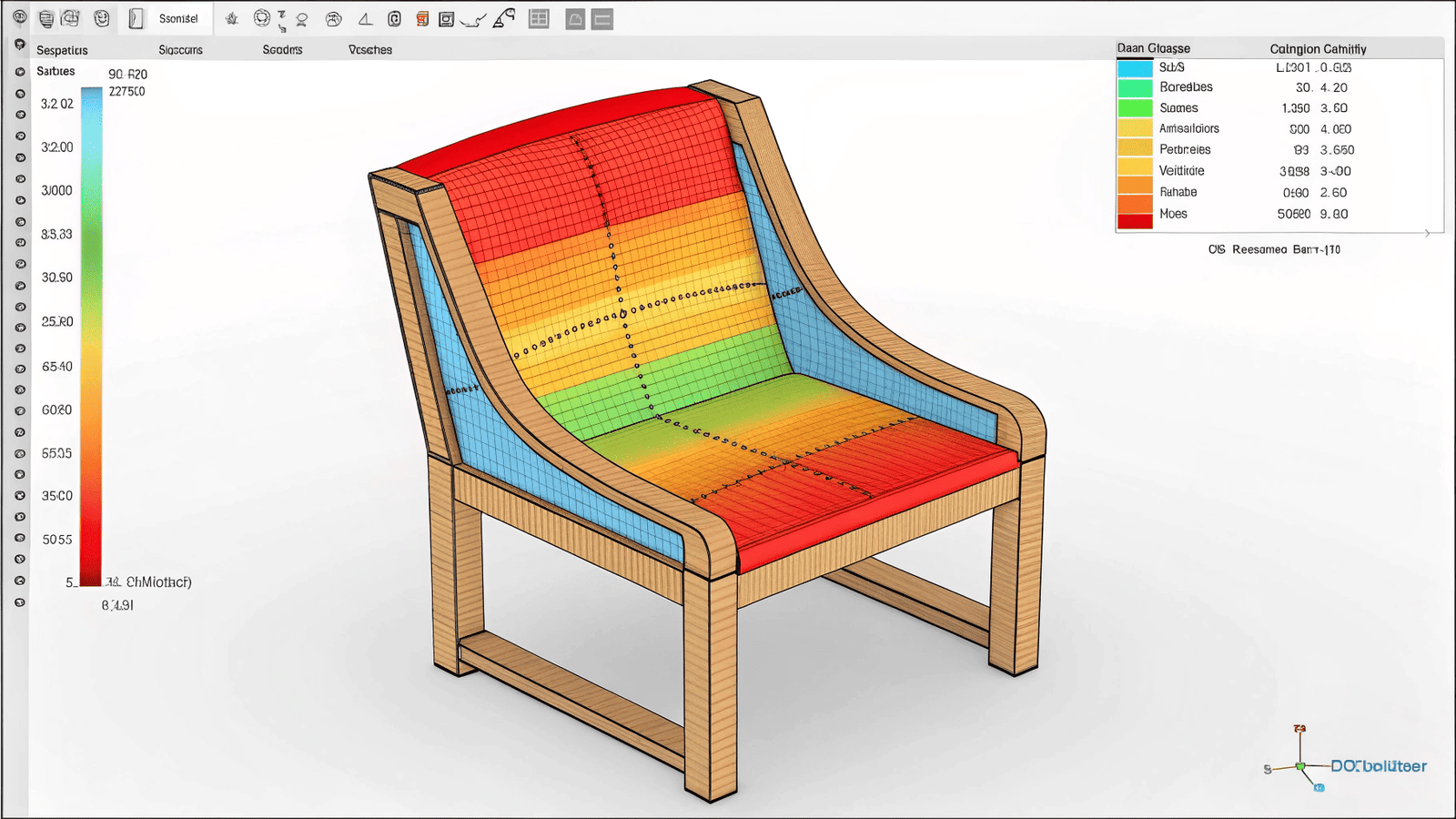
When you build a chair, you might test it by standing on it. It holds your weight, so you think it’s strong. That’s a test for *static load*. But in reality, a chair experiences *dynamic load*. People don’t just sit still; they shift, lean back, and plop down. Each of these small movements is a tiny impact, a cycle of stress. Over thousands of cycles, this can cause “material fatigue,” leading to a sudden, complete break without any warning. I once saw a beautiful, handmade bar stool at a friend’s house. It looked solid, but one day it just snapped at the leg joint when someone sat down. Luckily, they weren’t hurt badly. The maker only planned for static weight, not the hundreds of daily impacts it would face. At NEXTOP, we don’t guess. We test. Our designs go through machines that simulate years of use in just a few days, applying and releasing pressure over and over to find the true fatigue limit.
DIY vs. Professional Structural Safety
Feature | DIY Approach | Professional Manufacturing (like NEXTOP) |
Load Testing | Static (e.g., “I stood on it once.”) | Dynamic (millions of stress cycles tested) |
Material Choice | Based on aesthetics or availability | Based on structural engineering data and performance |
Joinery | Standard woodworking joints | Engineered to distribute dynamic stress effectively |
Safety Factor | Unknown or based on guesswork | Precisely calculated and verified through testing |
Is mixing wood, metal, and stone a DIY nightmare?
Combining the warmth of wood with the sleekness of metal looks incredible. But these materials can fight each other behind the scenes, eventually tearing your beautiful creation apart.
Mixing materials like wood, metal, and stone is a challenge because they expand and contract differently with temperature and humidity. Without professional engineering to manage this movement, the furniture can crack, warp, or break apart. Professionals use specific techniques to control these forces.
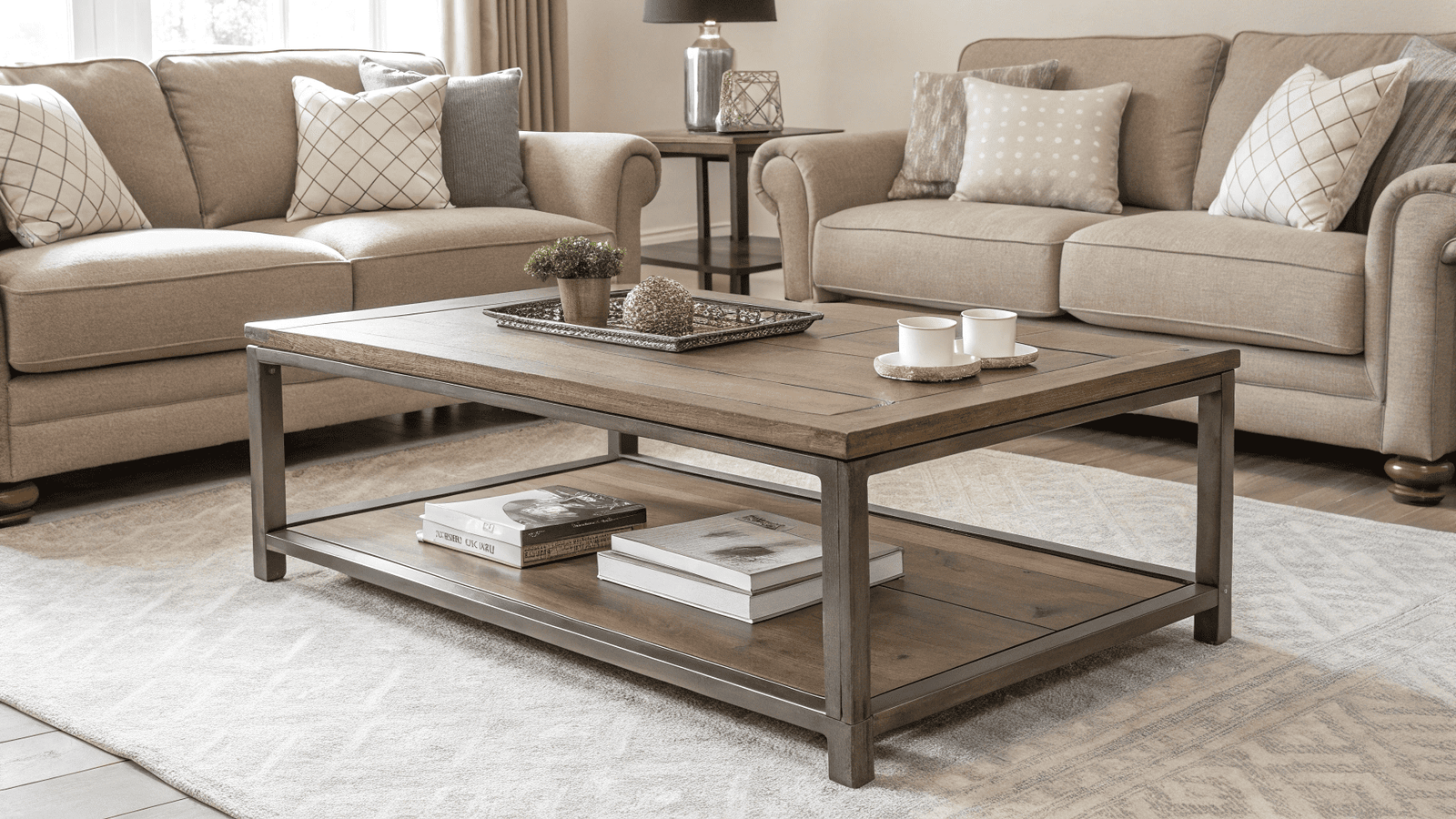
Every material has a different “thermal expansion coefficient.” It’s a fancy term for a simple idea: things get bigger when hot and smaller when cold. Wood also expands and contracts with humidity. The problem is, wood, metal, and stone all react differently. Imagine you build a large dining table with a solid wood top and a steel frame bolted directly to it. When summer comes, the air gets humid and the wood tries to expand. But the steel frame holds it in place. Immense pressure builds up inside the wood until it has nowhere to go. Then, one day, you hear a loud pop. A huge crack has just appeared in your beautiful tabletop. We see this often in our repair work. A designer asked us to fix a reception desk where a marble top was glued directly onto a solid wood base. The first change of seasons caused the wood to shift, and the rigid marble couldn’t flex with it, resulting in a long, ugly fracture. Professional manufacturing prevents this by designing for movement, using flexible connectors, and leaving tiny, invisible gaps that allow each material to breathe.
Are your DIY finishes secretly harming your health?
You carefully selected a non-toxic, “eco-friendly” paint for your project. But what if I told you that harmful chemicals could still be trapped inside the finish, slowly leaking into your home?
Even “safe” paints can be hazardous if not cured properly. Professional factories use controlled environments and industrial curing methods to ensure toxic compounds fully evaporate. DIY projects in a home garage often trap these chemicals, leading to long-term off-gassing and health risks.
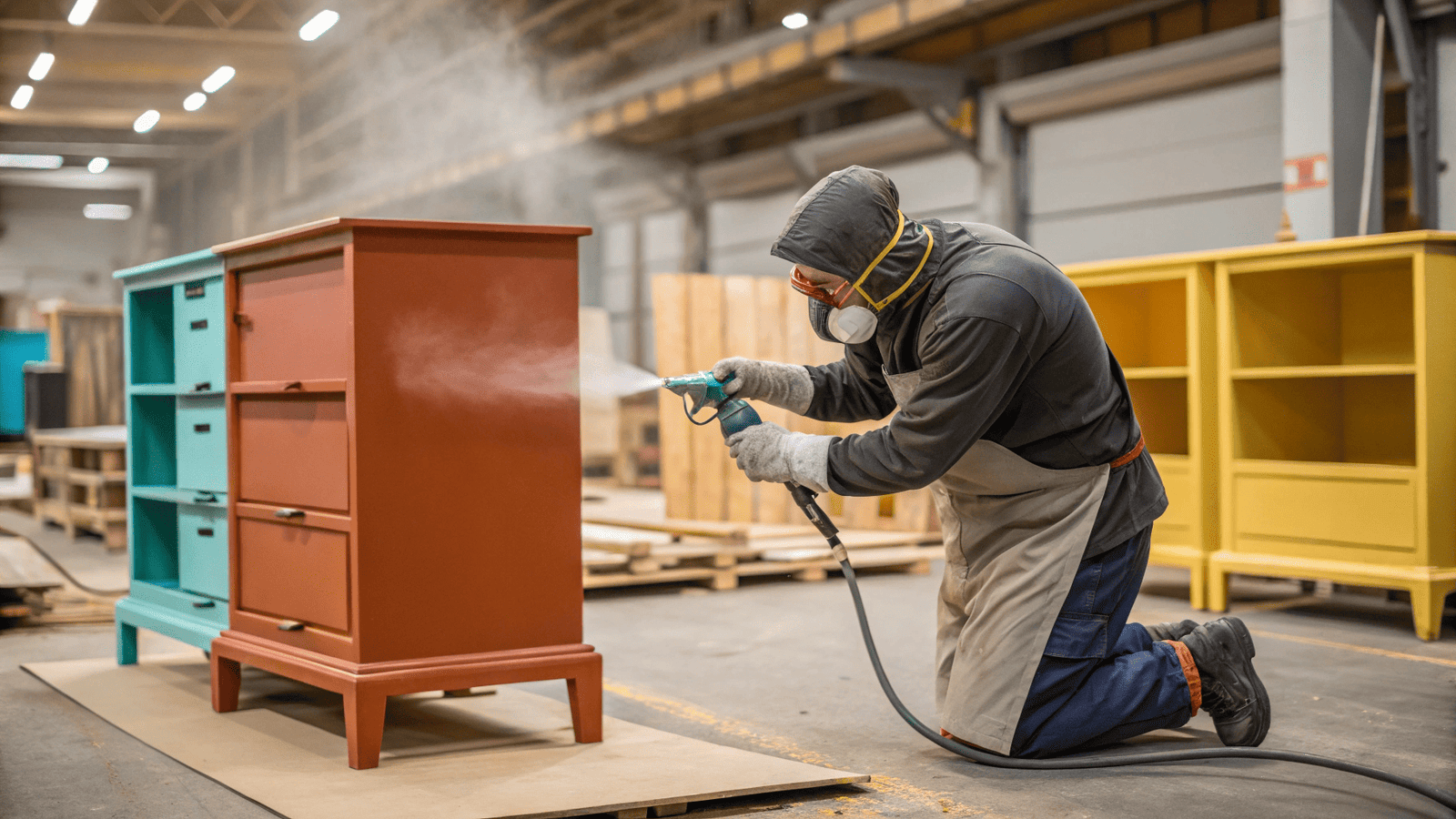
Paint drying isn’t a simple process; it’s a chemical reaction called curing. For a finish to become hard, durable, and chemically stable, this reaction needs to complete perfectly. This requires a very specific environment: controlled temperature, controlled humidity, and zero dust. Your garage or basement is the exact opposite of this. When you paint a baby crib or a cabinet in these conditions, the finish may feel dry to the touch, but the chemical curing is incomplete. Volatile Organic Compounds (VOCs) get trapped within the paint layer. For months or even years, these invisible toxins slowly release into your air. This is especially dangerous for furniture that is in constant contact with you or stored in enclosed spaces. A few years ago, a client was worried about a strange smell from their new custom-built wardrobe. The local carpenter who built it had used a good lacquer, but he painted it in their home. The lack of proper ventilation meant the finish never cured, and the family was breathing in fumes. At NEXTOP, our finishing happens in sealed, dust-free spray booths with industrial-grade ventilation. We then use UV lights or heated ovens to cure the finish instantly, ensuring it’s 100% inert and safe before it ever leaves our factory.
DIY vs. Professional Finishing Safety
Aspect | DIY Finishing | Professional Finishing |
Environment | Uncontrolled (dust, variable humidity) | Controlled, clean, dust-free booths |
Curing Method | Simple air drying (often incomplete) | Industrial UV, heat, or catalyst curing |
VOC Release | Potential for long-term off-gassing | Fully vented and contained before delivery |
Final Quality | Softer finish, less durable, potential health risk | Hard, durable, chemically inert, and safe |
Can you install high-end hardware without professional tools?
You invested in expensive, top-of-the-line hardware for your project. But the drawers don’t glide smoothly, and the doors feel clunky. The problem isn’t the hardware; it’s the installation.
High-end hardware, like soft-close systems or heavy-duty sliding doors, demands installation accuracy within fractions of a millimeter. DIY methods can’t achieve this precision. Small errors get magnified over time, causing premature failure of expensive components and ruining the entire user experience.
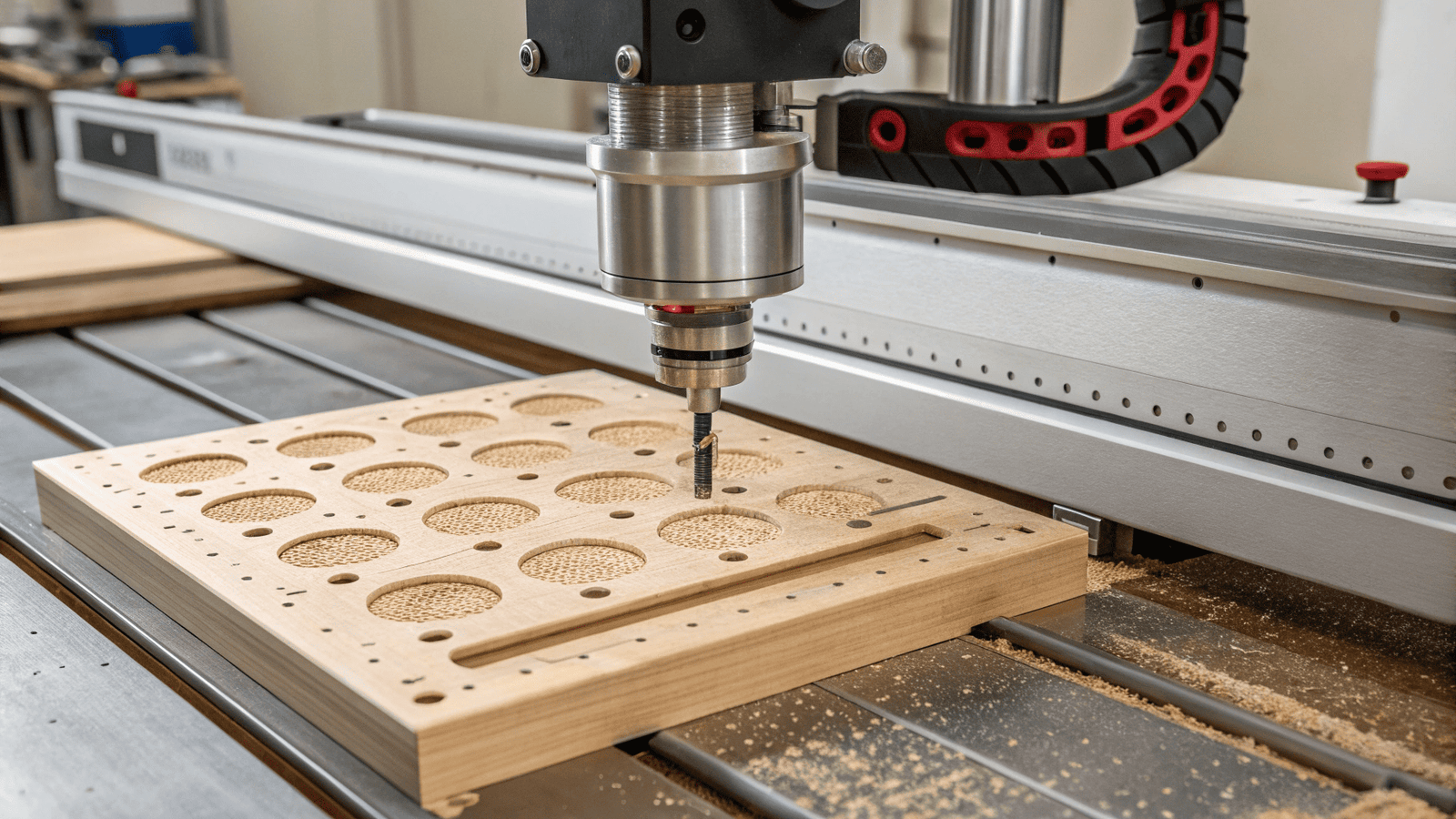
Modern furniture quality is often defined by its hardware. That smooth, silent glide of a drawer is pure luxury. But that luxury depends on absolute precision. Top-tier hardware from brands like Blum or Salice requires tolerances of 0.5mm or less. That’s about the thickness of five human hairs. If you drill the holes for a drawer slide by hand, even a tiny bit off-center, the whole system is compromised. The drawer will be slightly crooked. You might not notice it at first, but the physics of leverage will amplify that small error into huge stress on the bearings. The expensive slide will wear out quickly, becoming noisy and stiff. I’ve seen countless projects where clients spent thousands on the best hardware, only to have it feel cheap because the cabinets weren’t built with perfect accuracy. For large, heavy sliding doors on a wardrobe, the precision is even more critical. A small misalignment can cause the door to jam or even fall off the track. In our factory, we don’t use measuring tapes and hand drills for this. We use computer-cont rolled (CNC) machines that drill every hole to the exact programmed coordinate, every single time. This manufacturing precision is the only way to guarantee the long-lasting, smooth function that high-end hardware is designed to deliver.
Conclusion
Some furniture is best left to professionals. For pieces where safety, durability, and precision are critical, expert engineering ensures your vision becomes a safe and long-lasting reality.