Introduction
You’ve found the perfect Italian furniture piece in an image, but what arrives is a disaster. The elegant design you approved falls apart during factory production. As a furniture manufacturing partner, I’ve seen the frustration of designers and project managers firsthand.
The truth is, choosing between Modern, Contemporary, or Classic Italian furniture isn’t about style. It’s about selecting a manufacturer with the heavy industrial capability to flawlessly execute that style. The difference between a beautiful render and a lasting product is engineering certainty—the precise, calculated process that ensures your vision becomes a reality, built to last for decades.
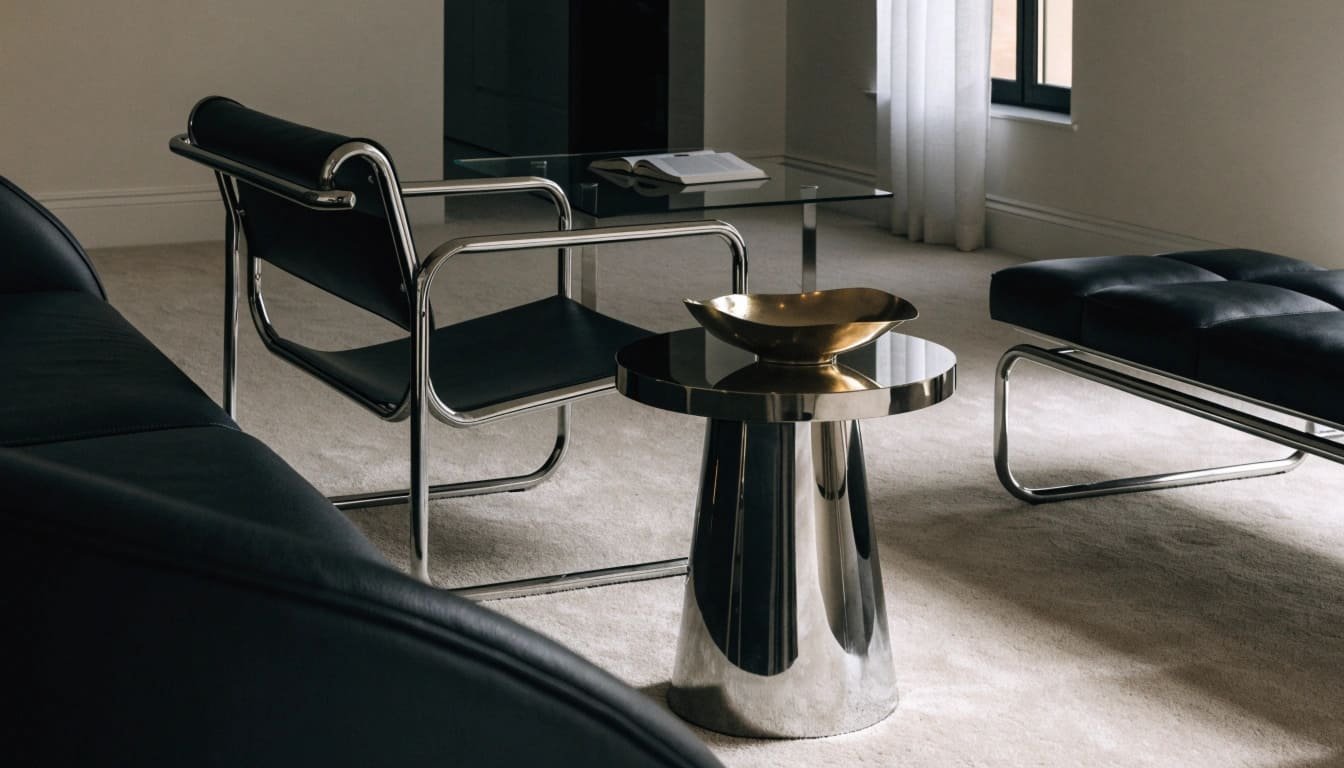
I’ve walked countless factory floors and spoken with many designers. A recurring nightmare is the “execution disaster.” You specify a stunning piece—maybe it has the minimalist lines of Italian Modern, the bold curves of Contemporary, or the ornate details of Classic. But the sample, or worse, the final delivery, is a mess. The metal and leather joints are wrinkled, the polished metal surfaces are covered in smudges that won’t come off, and within months, they begin to oxidize. That beautiful, cantilevered stone dining table? It starts to sag or even crack. This isn’t a design failure; it’s a manufacturing failure. It’s a sign that the factory you chose couldn’t handle the complex interplay of materials. This is why I always say that the elegance of Italian furniture is born from inspiration, but its longevity comes from engineering.
How Does Precision Engineering Deliver Different Italian Styles?
You’re struggling to bring the clean lines and seamless material transitions of Italian furniture to life. Your designs look amazing on paper, but production samples have misaligned joints and material gaps that ruin the aesthetic.
At its core, authentic Italian design is a masterclass in material engineering. It’s about forcing metal, stone, leather, and glass to meet and join perfectly. This level of execution demands a factory with a deep understanding of heavy industrial processes, not just woodworking.
To truly appreciate Italian furniture, you have to look beyond the style label and see the engineering that makes it possible. Each style—Modern, Contemporary, and Classic—presents unique manufacturing challenges. Overcoming them requires a specific set of technical skills and industrial capabilities. It’s this hidden engineering that separates a cheap knock-off from a piece that will look stunning for years to come. Let’s break down how heavy industrial precision makes each of these iconic styles achievable and what you should be looking for in a manufacturing partner.
1. Italian Modern: The ±0.15mm Tolerance Challenge
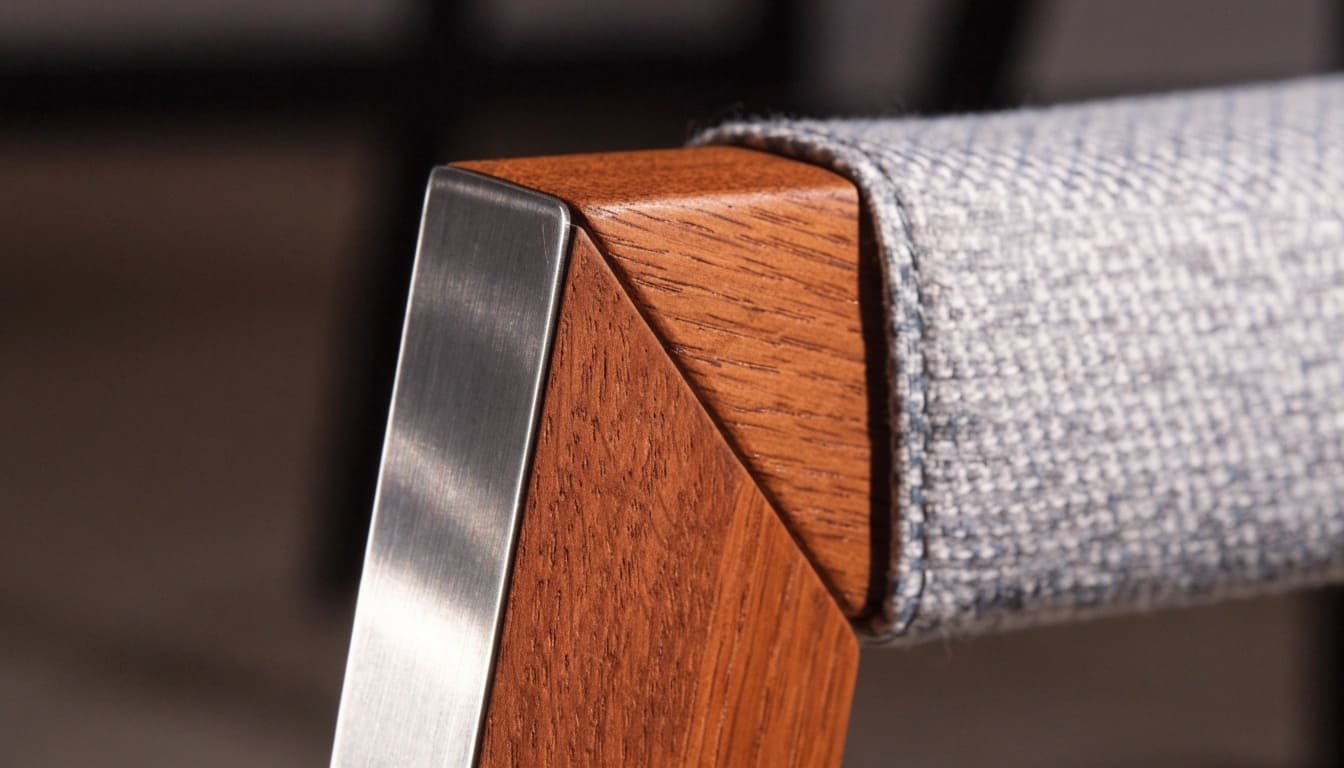
The defining feature of Italian Modern is its extreme minimalism. The clean, uninterrupted lines mean there are no decorative moldings or trims to hide imperfections. Every joint, every seam where different materials meet, is completely exposed. This is where many factories fail. They can’t achieve the flawless finish required, leaving you with visible gaps, misaligned surfaces, and sloppy connections between metal frames, glass panels, and leather upholstery. The fundamental challenge of combining materials is that they behave differently; wood expands and contracts with humidity, while metal is dimensionally stable. A manufacturer must account for this.
A true engineering-focused factory solves this by starting with meticulous shop drawings that detail every component down to the micron level. We enforce a strict tolerance of ±0.15mm for all mixed-material seams. This is a level of precision more common in aerospace engineering than in typical furniture making. We also engineer hidden expansion joints that allow materials like wood and leather to breathe without creating stress points or visible gaps. This ensures that every surface remains perfectly flush and the minimalist aesthetic is preserved, not just on day one, but for the life of the piece.
2. Italian Contemporary: The Hidden Structural Skeleton
Italian Contemporary design often features dramatic, gravity-defying forms like large cantilevered stone dining tables and fluid, sculptural metal coffee tables. The design challenge here is immense: how do you support a massive, heavy piece of stone that extends far beyond its base without it sagging, deflecting, or cracking under its own weight? Many manufacturers simply don’t have the engineering knowledge to solve this. They might use an inadequate frame or fail to calculate the load and stress forces, leading to structural failure over time. A beautiful table that starts to droop is not just an aesthetic problem; it’s a safety hazard.
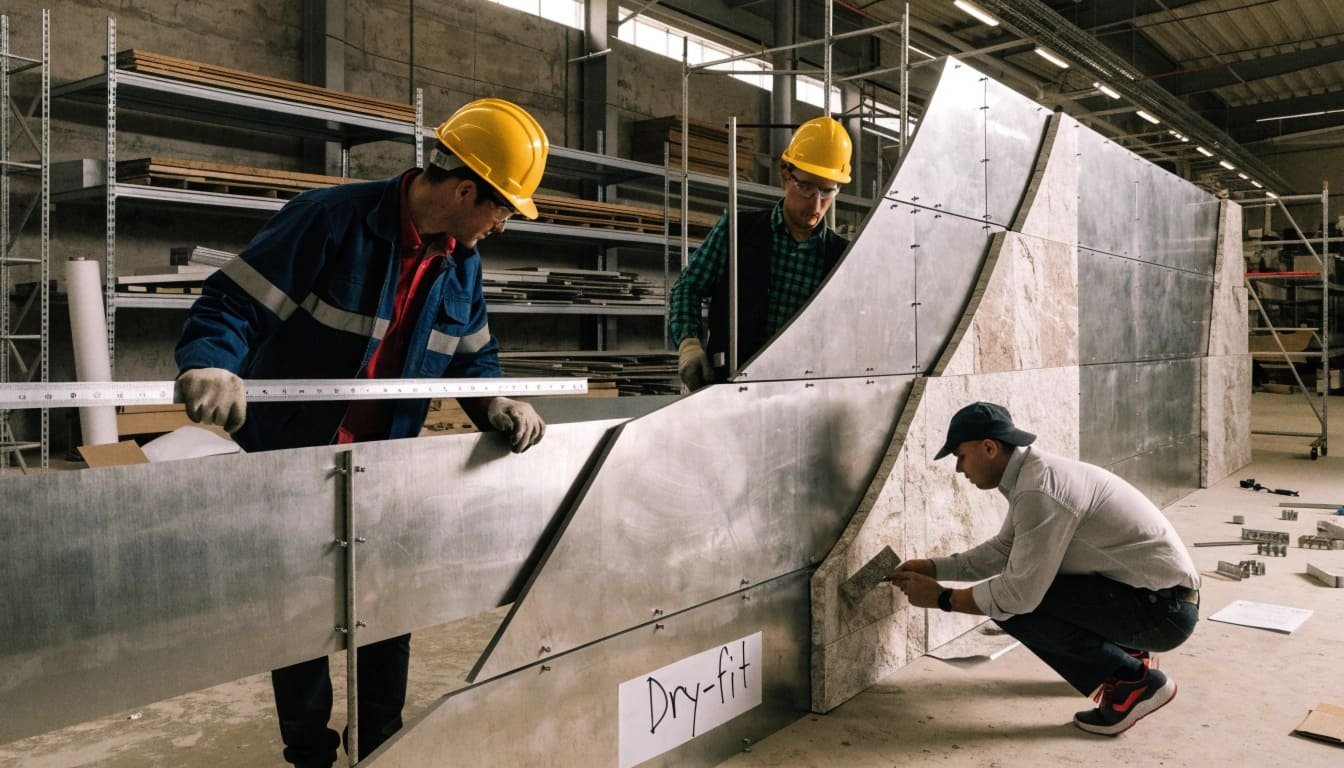
The solution lies in a hidden internal framework. We embed a reinforced skeleton made from 304 or 316L stainless steel deep within the furniture. Before production even begins, our engineers use 3D modeling and stress analysis to optimize this internal structure, ensuring it can handle the load without any risk of metal fatigue. Crucially, we perform a full-scale, 1:1 dry-fit mockup in the factory before shipping. This means we assemble the entire piece—stone top, base, and hidden frame—to guarantee a perfect fit and confirm that the structure is as solid as a rock. This pre-assembly process eliminates any guesswork and ensures the final installation is seamless and secure.
3. Italian Classic: Contract-Grade Durability for Timeless Finishes
Italian Classic furniture often incorporates beautiful brass and high-polish metal finishes. In a high-traffic commercial space like a hotel lobby or restaurant, these surfaces are constantly being touched. The problem is that traditional metal finishes, like basic electroplating, are prone to tarnishing and oxidizing, and they are magnets for fingerprints. Within a few months, that brilliant, luxurious shine can become a dull, smudged mess that’s impossible to keep clean. This is a common complaint I hear from hotel procurement managers who are trying to maintain a high-end look in a demanding environment.
To solve this, we’ve moved beyond traditional methods. Instead of simple electroplating, which is often less durable, we use a process called Physical Vapor Deposition (PVD). PVD applies a thin layer of titanium to the metal surface in a vacuum chamber, creating a finish that is incredibly resistant to scratches, corrosion, and fading. We then add a molecular-level Anti-Fingerprint (AF) coating. This nano-coating creates a surface that repels oils and water, so fingerprints and smudges can be wiped away with a simple damp cloth. The result is a contract-grade finish that has been tested to withstand harsh conditions and maintains its museum-quality luster for years, even in the busiest commercial settings.
Why Do Cheap Copies Fail? A Side-by-Side Look
You’re tempted by a lower quote from a smaller workshop, but you’re worried about the risks. How can you be sure that you’re not sacrificing quality and reliability for a better price?
The difference between a cheap copy and an engineered piece isn’t always obvious at first glance. But over time, the shortcuts taken by smaller, less-equipped factories become major problems, leading to costly repairs, project delays, and a damaged reputation.
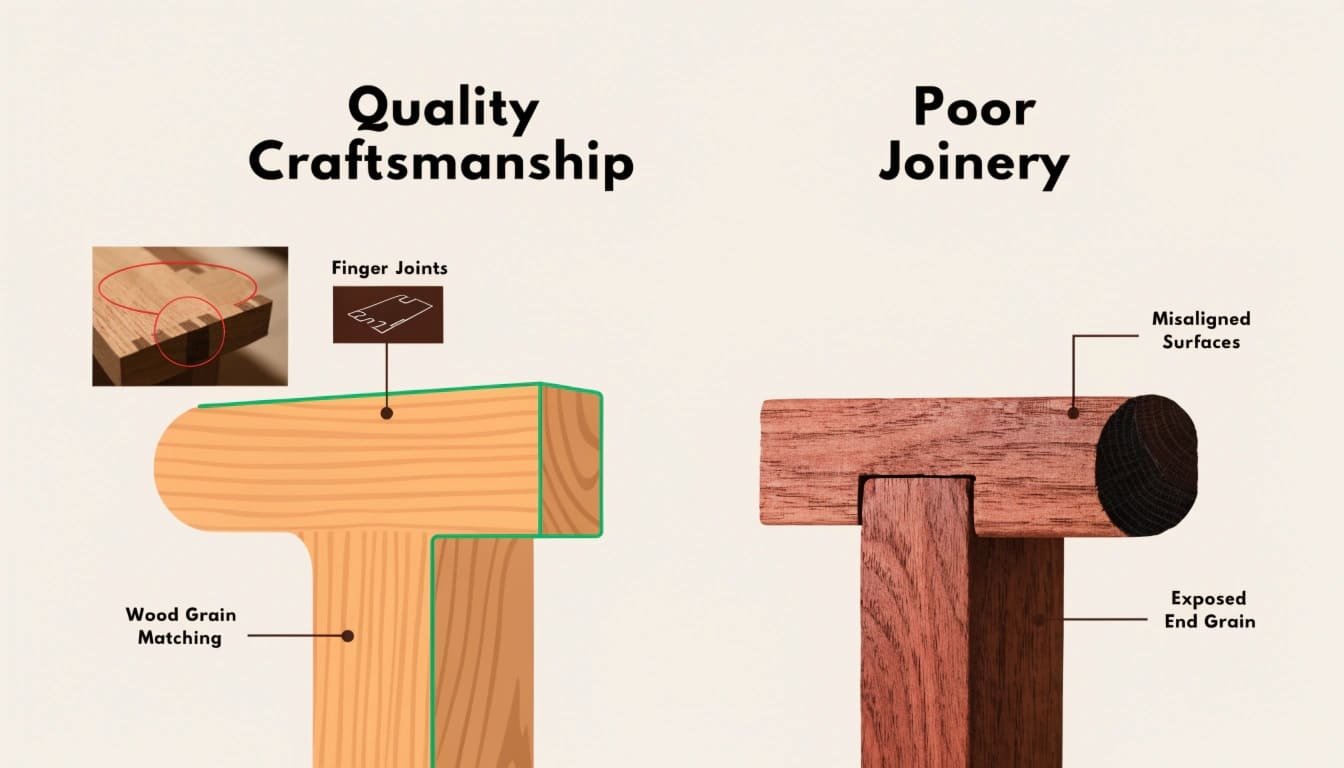
I’ve seen too many projects derailed by choosing the wrong manufacturing partner. A lower upfront cost can quickly turn into a financial nightmare when you factor in replacements, repairs, and the frustration of dealing with a product that doesn’t last. The key is to understand what you’re paying for. An engineering-grade factory invests in technology, processes, and expertise that a small workshop simply can’t match. Here’s a clear breakdown of what separates a reliable engineering partner from a risky, low-cost alternative.
Feature | Cheap Copycat / General Workshop | Engineering-Grade Manufacturing Partner |
Mixed-Material Joints | No micron-level drawings. Gaps between metal, stone, and leather can be several millimeters wide. Upholstery is often wrinkled or puckered at the seams. | Shop drawings are detailed to a 1:1 scale. Tolerances are strictly controlled to ±0.15mm. Hidden stress-relief joints are engineered to ensure a seamless fit. |
Metal Surface Durability | Uses standard electroplating or spray paint. In high-humidity or high-touch areas, the finish will oxidize and tarnish within a year, covered in permanent fingerprints. | Employs PVD titanium coating and a molecular AF anti-fingerprint layer. Passes rigorous salt spray tests, ensuring the finish stays brilliant and easy to clean with a simple wipe. |
Structural Integrity | No stress or load calculations are performed. Cantilevered or floating elements will warp, sag, or crack at connection points after a short period of use. | An internal, reinforced stainless steel skeleton is pre-engineered. A full 1:1 dry-fit mockup is conducted in the factory to guarantee zero risk of structural failure. |
Packaging & Logistics | Simple, inadequate packaging results in a high damage rate during international shipping. Delays from having to remake and reship items can derail your entire project timeline. | Uses custom-built, shock-absorbent, fumigated wooden crates with moisture-wicking and vapor-barrier packaging. Quality control is monitored at every stage to ensure zero damage and on-time delivery. |
Conclusion
Ultimately, the choice between Italian furniture styles is secondary. The real decision is selecting a manufacturing partner whose engineering capabilities can guarantee that your design vision is executed flawlessly and built to last.