Introduction
Are you tired of modular furniture that looks cheap and feels unstable? This common problem can undermine the design of a luxury space, making it feel temporary and poorly planned. High-end modular is the answer.
At its core, high-end modular furniture is about precision engineering that flawlessly combines diverse materials like metal, stone, and fabric. This creates durable, adaptable, and beautiful pieces that look and feel entirely custom-made, making them the perfect solution for premium hospitality and commercial projects.
It’s easy to dismiss “modular” as a term for temporary or low-quality solutions. However, in the world of custom-specified furniture, it represents a completely different philosophy. It’s about creating intelligent, adaptable systems that deliver uncompromising quality and aesthetic value. Let’s explore the key principles that elevate modular furniture into an essential asset for any high-end project.
How can modular furniture eliminate that cheap, wobbly feel?
Do you worry about modular pieces with uneven gaps and a shaky structure? This common flaw can ruin the sophisticated look of a high-end interior. I’ve seen it happen in otherwise beautiful spaces, and it’s always a disappointment.
The solution lies in a principle we call “dynamic tolerance control.” By using advanced CNC machinery, we can manage the connections between different materials with microscopic precision. This ensures every joint is solid, stable, and perfectly seamless, delivering the robust quality of a single bespoke unit.
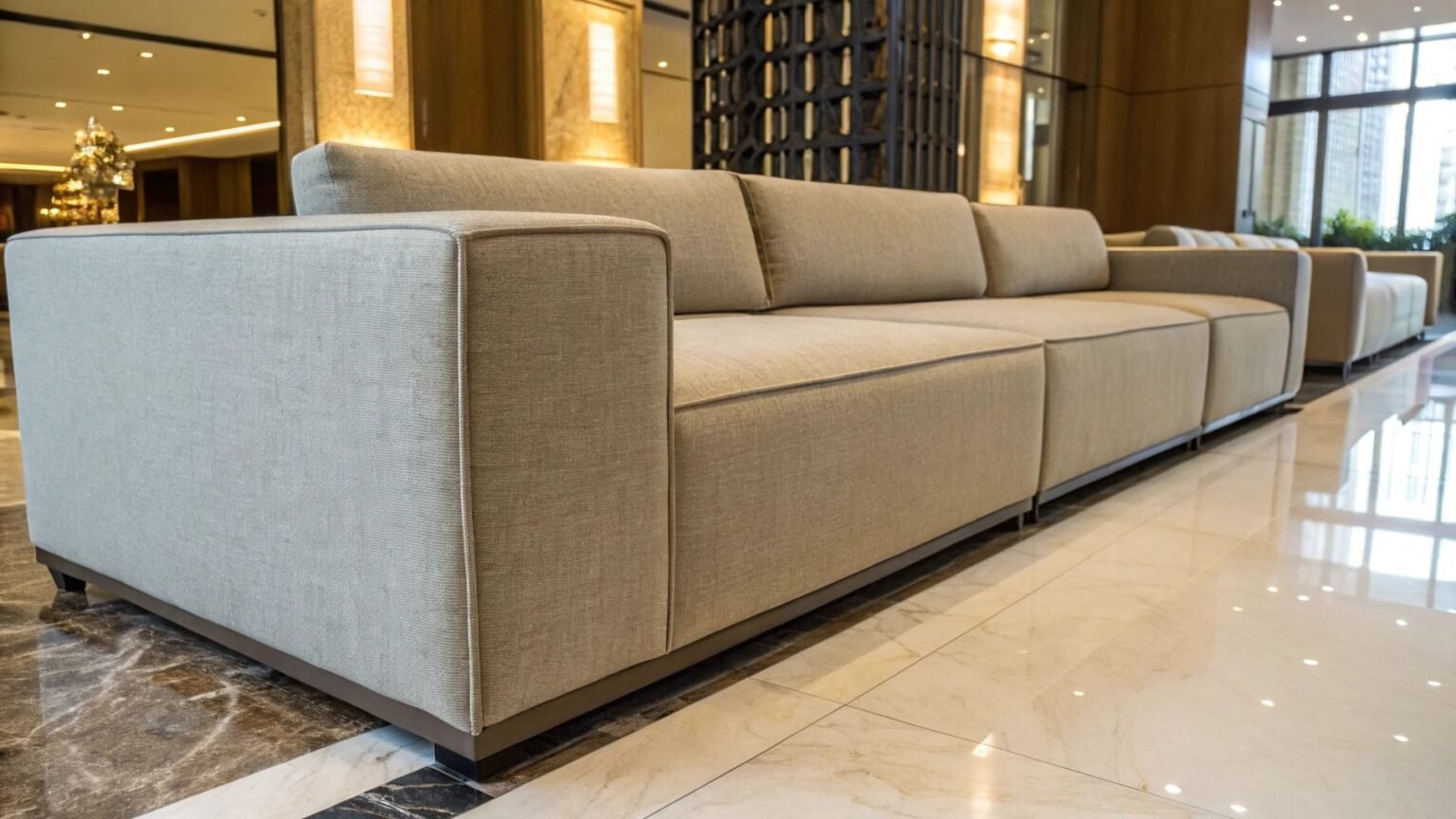
The biggest complaint I hear about standard modular furniture is its lack of a premium feel. You see inconsistent gaps, feel a slight wobble under pressure, and notice a limited palette of materials. This instantly signals “off-the-shelf,” not “high-design.” High-end modular solves this by treating manufacturing as a science. We focus on “micrometer-level dynamic tolerance,” especially when combining materials with different properties.
For instance, when an anodized stainless steel frame meets a panel of high-gloss marble, their rates of thermal expansion and contraction are completely different. To prevent gaps or stress, the tolerance at the joint must be locked within an incredibly narrow range, often as tight as ±0.15mm. I achieve this by using 5-axis CNC machines to calibrate the rigid framework. Before assembly, each component is a work of art on its own. After assembly, they form a cohesive whole with the seamless, hard-edged aesthetic of a truly bespoke piece. It’s industrial precision used to create architectural beauty.
Comparing Material Integration
Material | Key Challenge in Modular Design | Our Precision Solution |
Anodized Steel | Different thermal expansion rate | CNC-calibrated frame to maintain consistent tolerance |
Natural Stone/Marble | Brittleness and weight | Reinforced supports and precision-cut joints |
High-Performance Fabric | Tension and seam alignment | Pre-stretched upholstery and concealed fastening systems |
Hardwood Veneers | Response to humidity | Engineered substrates and climate-controlled assembly |
How does modular furniture improve the full lifecycle ROI of your space?
Commercial real estate is in constant flux, with teams reorganizing and leases changing. Traditional, fixed furniture often becomes waste during these transitions, representing a significant financial loss. There’s a much smarter way to manage these physical assets.
Modern modular furniture transforms a one-time expense into a flexible, long-term asset. Pieces can be easily reconfigured to meet new demands with virtually no loss, a concept known as “zero-loss reconfiguration.” This adaptability future-proofs your space and dramatically lowers its total cost of ownership (TCO).
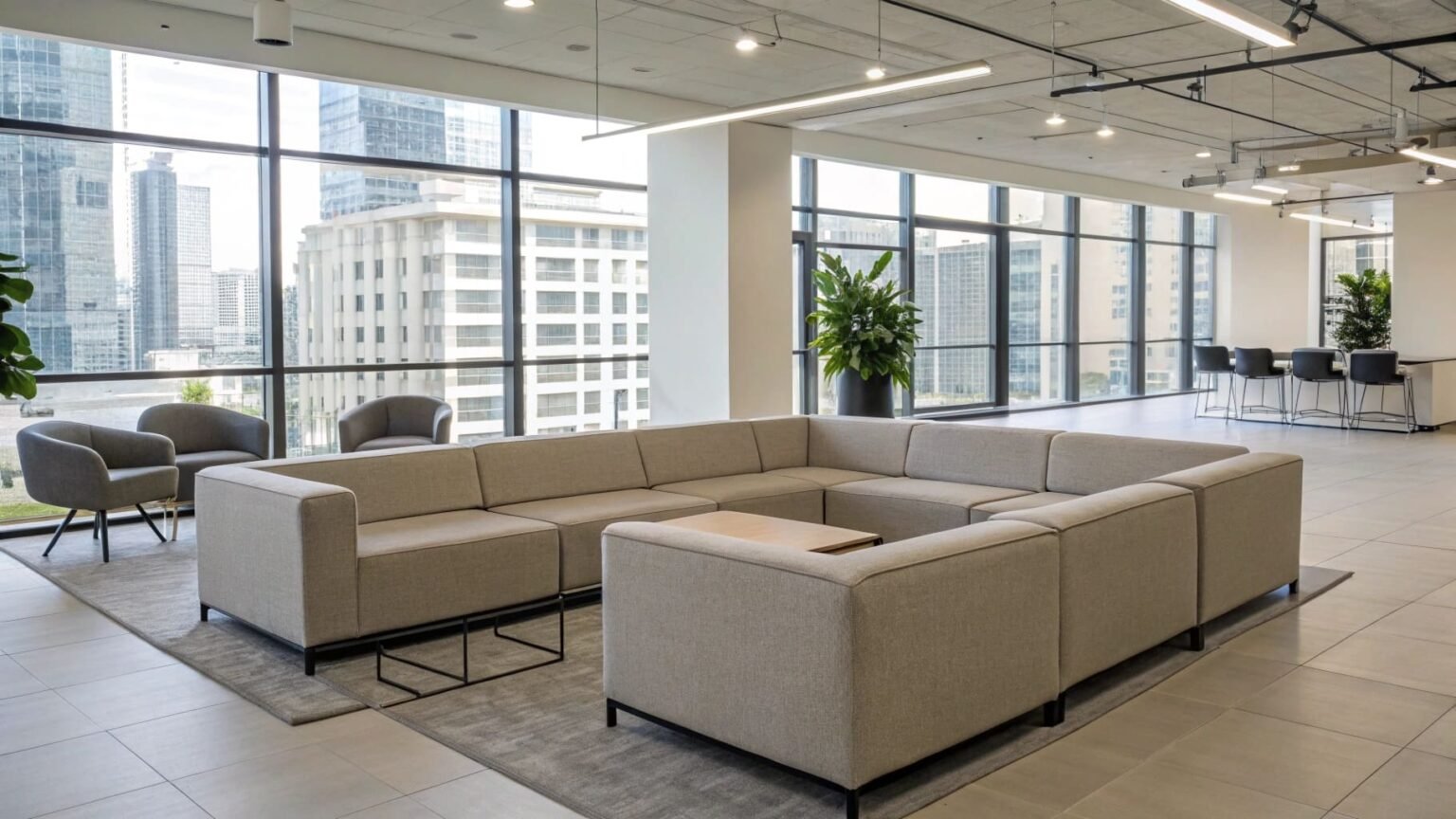
In commercial properties across the globe, frequent organizational shifts mean that fixed, built-in furnishings have a shockingly high failure rate. Some reports indicate that demolition activities, often part of renovations, account for over 90% of construction and demolition debris. Much of this is scrapped long before its functional life is over. I see modular furniture as a “future-proofing agile asset.” It turns a sunk cost into fluid capital.
For example, a set of acoustic pods for private meetings can be a crucial asset one year. The next, the company may pivot to a more collaborative model. Instead of demolition, our modular systems can be non-destructively disassembled and reconfigured. Those same components can become a large, open multimedia island for team projects. This capability for “zero-loss reconfiguration” fundamentally changes the financial equation. The furniture is no longer a depreciating item destined for a landfill. It becomes a reusable capital asset that adapts with the business, significantly reducing the long-term Total Cost of Ownership (TCO) and maximizing your return on investment.
TCO: Traditional vs. Modular Furniture (10-Year Projection)
Cost Factor | Traditional Fixed Furniture | NEXTOP Modular Furniture | Financial Impact |
Initial Purchase | High | High | Comparable initial investment. |
Reconfiguration Cost | 90-100% (New Purchase) | 5-10% (Labor Only) | Massive savings with modular during any layout change. |
Asset Depreciation | Rapid (written off) | Slow (retains value) | Modular pieces are treated as long-term assets. [13, 26] |
End-of-Life Cost | High (Disposal Fees) | Low (Reusable/Recyclable) | Reduces waste and associated disposal costs. [19] |
How does high-end modular furniture hide all the messy cables and tech?
A clean, minimalist aesthetic is essential in modern design. But that beauty is easily ruined by a mess of cables for power, data, and lighting. Clutter is the enemy of sophisticated space.
The solution is “integrated infrastructure.” We design modules from the ground up with internal channels and connection points for all necessary systems. During on-site assembly, these pre-wired electrical and data systems simply click together. This creates a true “plug-and-play” experience where all the technology is fully functional but completely invisible.
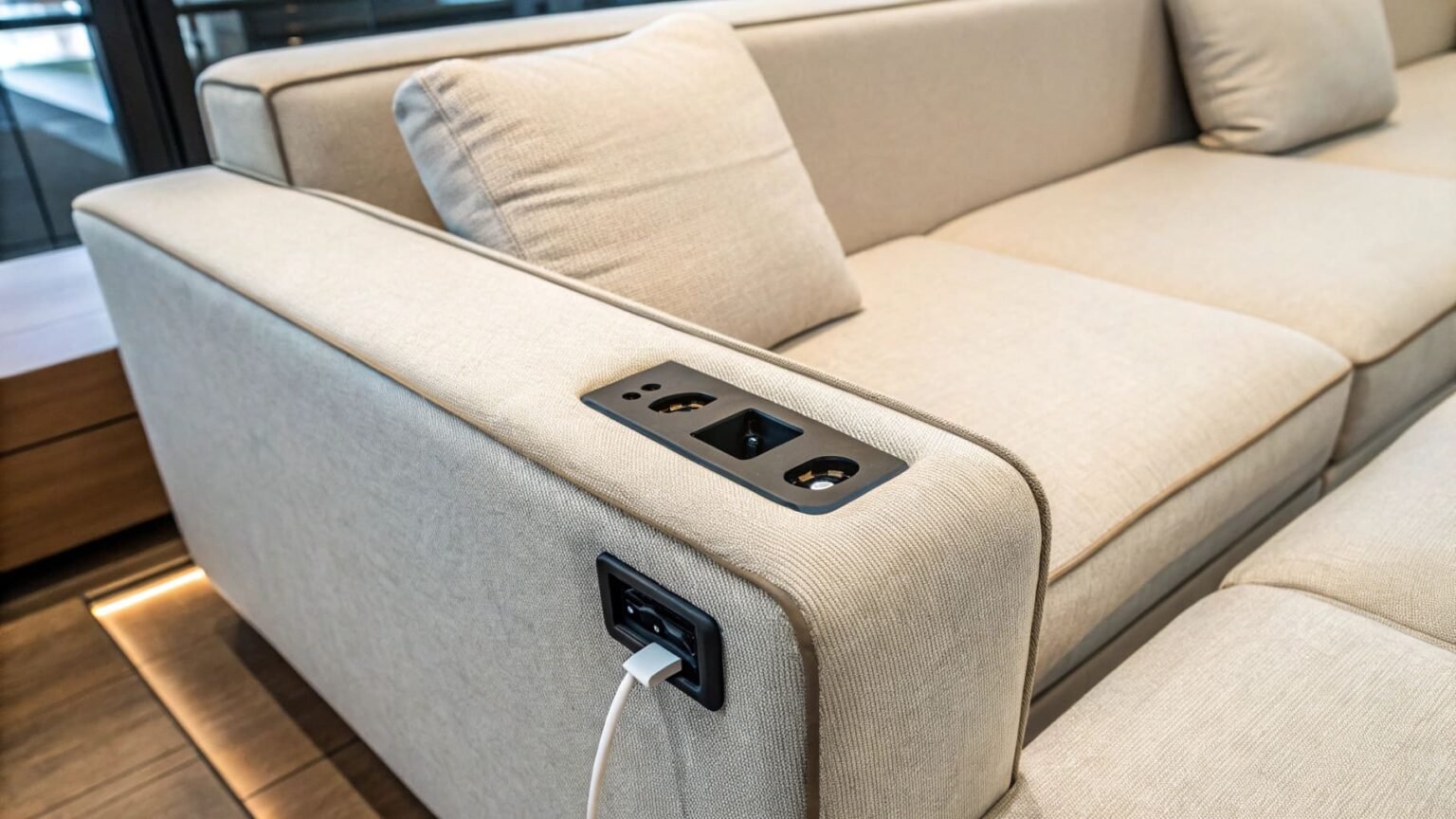
Truly advanced modular furniture is defined by what you don’t see. On the surface, it’s an ultra-clean, minimalist form. Behind that facade, it’s a micro-hub of functionality. We achieve this through “system integration within the module.” This process begins during the shop drawing phase, long before manufacturing starts. We meticulously plan the pathways for all essential services.
This includes dedicated channels for cable management, positions for hidden induction lighting, integrated wireless charging pads, and even custom-built acoustic systems for sound absorption. These components are perfectly embedded within the metal cabinetry or suspended modules in our factory. When the modules arrive on-site, the installation is seamless. As they are mechanically joined, the electrical and data systems connect simultaneously in a “plug-and-play” fashion. This approach, which hides powerful functionality beneath an elegant aesthetic, is the ultimate solution for modern urban spaces where technology and design must coexist perfectly.
From Blueprint to "Plug-and-Play"
Our process ensures that technology is an integral part of the furniture, not an afterthought.
- Shop Drawing Phase: We map all electrical, data, and lighting requirements directly into the furniture design.
- Factory Integration:All wiring, ports, and systems are pre-installed and tested within each module.
- On-Site Assembly:Modules are connected with simple, secure mechanical and electrical couplers.
- Final Result: A fully powered and connected space with no visible wires or clutter.
How does modular furniture reduce on-site costs and delays?
On-site construction, especially for large international projects, is notoriously expensive and unpredictable. High labor costs, coordination issues between different trades, and the risk of damage can cause major budget overruns and delays.
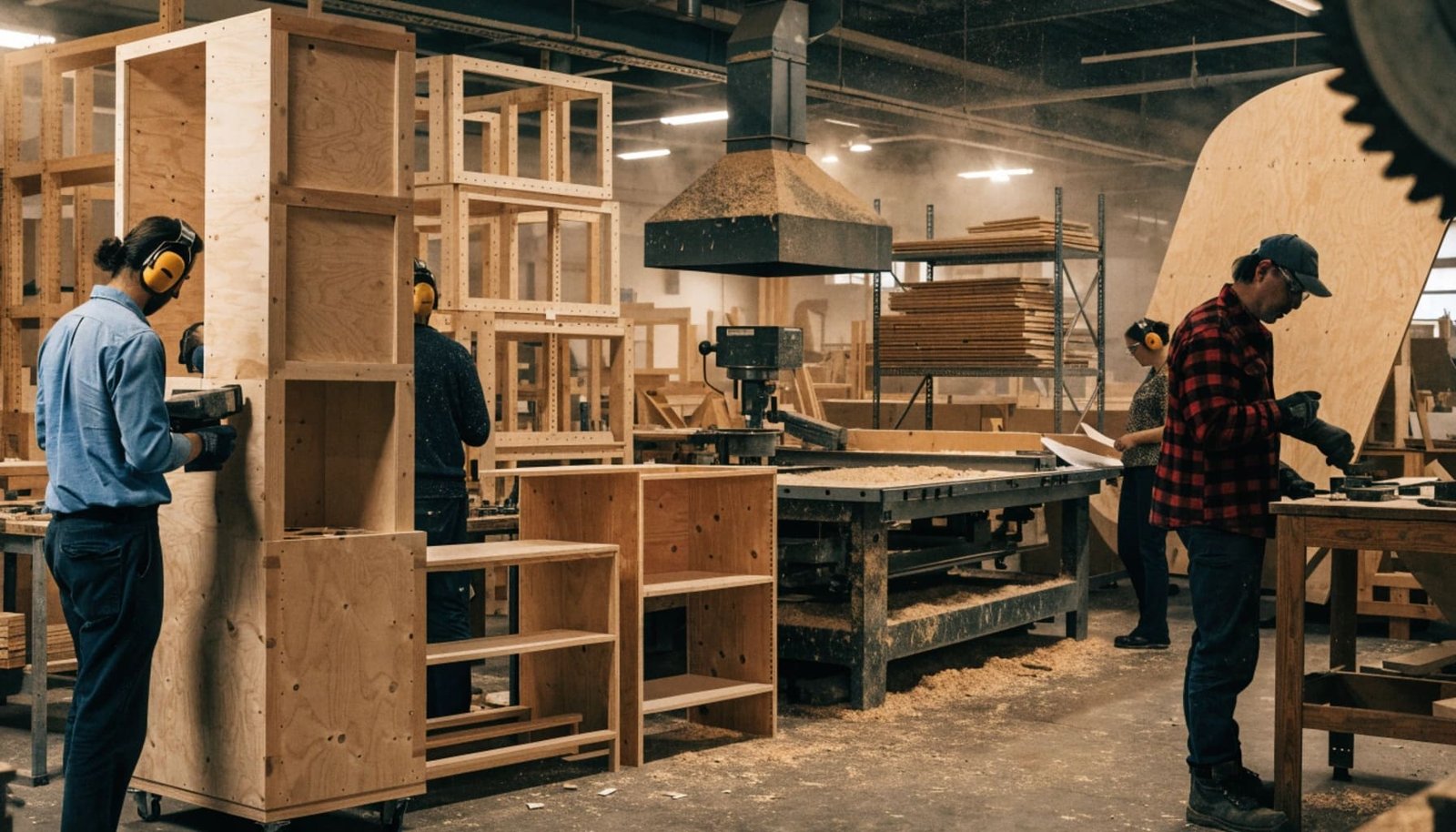
The ultimate advantage of modular furniture is its ability to shift nearly all work from the construction site to a controlled factory environment. Every module is fully pre-assembled, inspected, and tested for performance before it ever ships. The on-site process is reduced to a clean, quiet, and dust-free assembly of finished components. This gives project managers absolute control over schedules and can shorten project timelines by weeks.
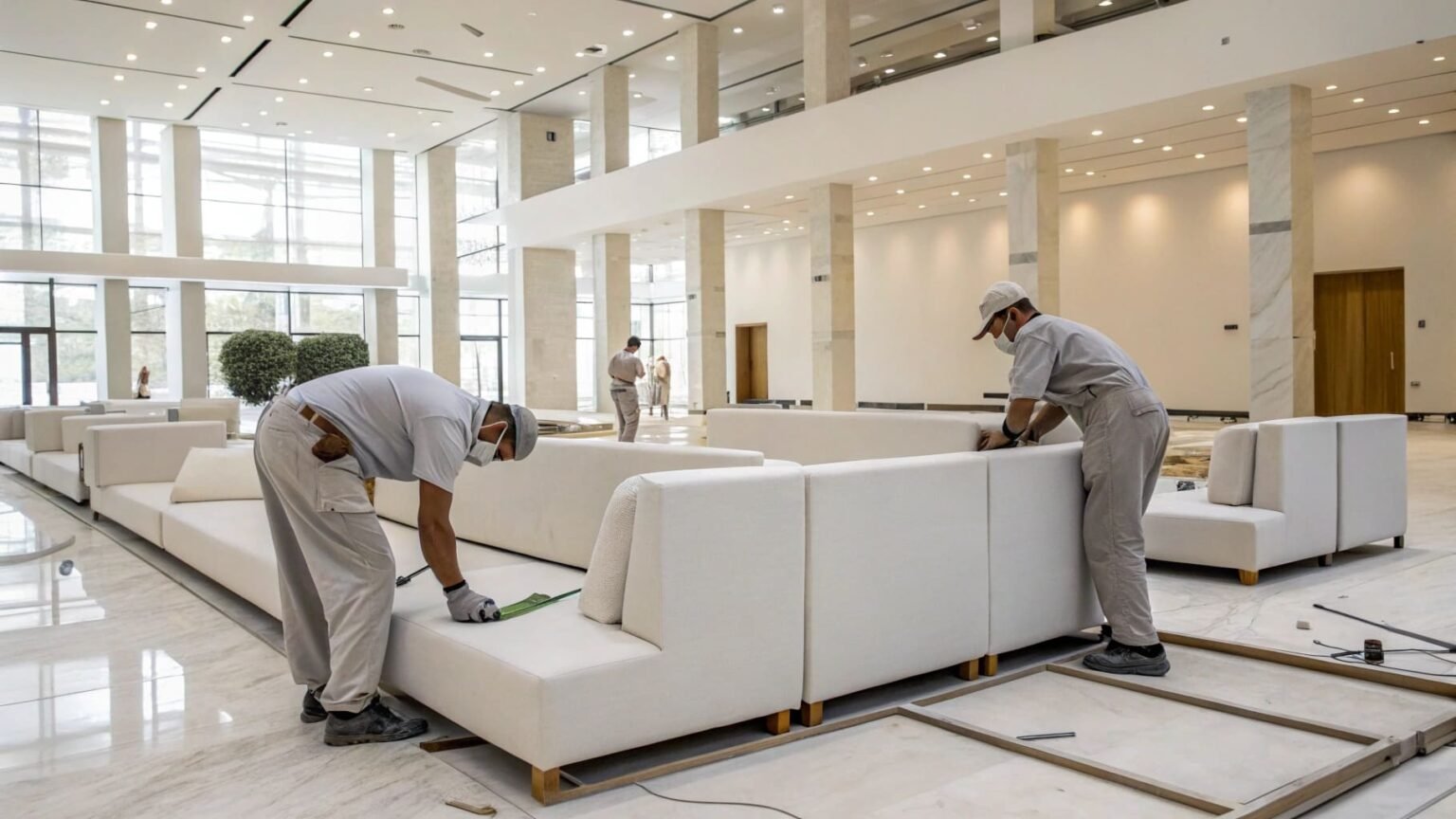
The biggest commercial weapon in the modular arsenal is its power to transform “site-work” into “factory-work.” On large-scale commercial projects, like a luxury resort in the Middle East or a Class-A office building in the U.S., on-site labor is incredibly expensive. The environment is often chaotic, with different teams working over each other, leading to accidental damage and missed deadlines. Prefabrication can cut project timelines by 20% to 50%.
Our approach moves 100% of the complex fabrication to our factory. Every module undergoes a full mock-up review and rigorous mechanical testing before being approved for shipping. Once on-site, the process becomes one of “dry assembly.” There is no cutting, no sanding, no painting—just the quiet, clean assembly of precision-made components. This dramatically reduces the need for expensive on-site skilled labor. For developers and project managers, this provides something priceless: certainty. It gives them absolute control over the timeline, often allowing a hotel or office to open weeks ahead of schedule and start generating revenue sooner.
Factory-Work vs. Site-Work
Factor | Factory-Work (Our Modular Process) | Traditional Site-Work | Advantage |
Environment | Climate-controlled, clean, organized | Exposed to weather, dust, and chaos | Consistent quality and no weather delays. |
Quality Control | Centralized and rigorous testing | Inconsistent, depends on site conditions | Every piece is perfect before it leaves the factory. |
Labor | Specialized, highly efficient team | Multiple trades, high coordination costs | Reduced on-site labor costs by up to 70%. |
Timeline | Predictable and accelerated | Prone to delays and scheduling conflicts | Faster project completion and ROI. |
Waste | Minimal, with recycling protocols | High, with significant disposal costs | Better for the environment and the budget. |
Conclusion
High-end modular furniture is not just about flexibility. It is a system built on precision, long-term value, integrated technology, and intelligent construction that turns your ambitious design vision into a dependable reality.