Introduction
Choosing the wrong material for a public sculpture can lead to rapid decay and high maintenance costs. Your client’s investment is at risk. Selecting time-tested materials ensures longevity and preserves the artistic vision[^1].
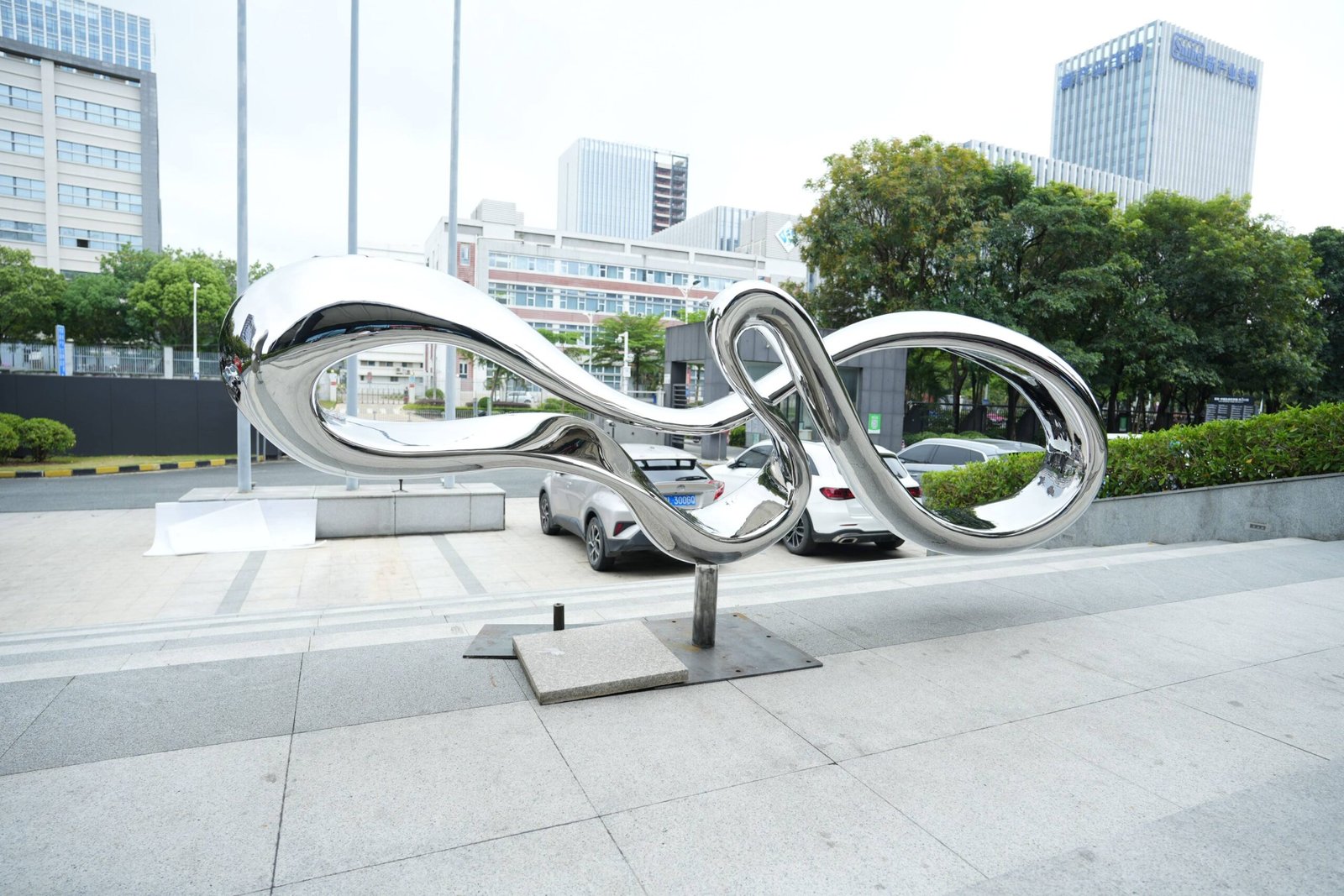
The most durable materials for sculptures are stainless steel[^2], bronze[^3], Corten steel[^4], and high-density stone[^5]. These are industry standards because they withstand weather and time with minimal maintenance. Their structural integrity[^6] and resistance to corrosion make them ideal for long-term public art[^7] projects.
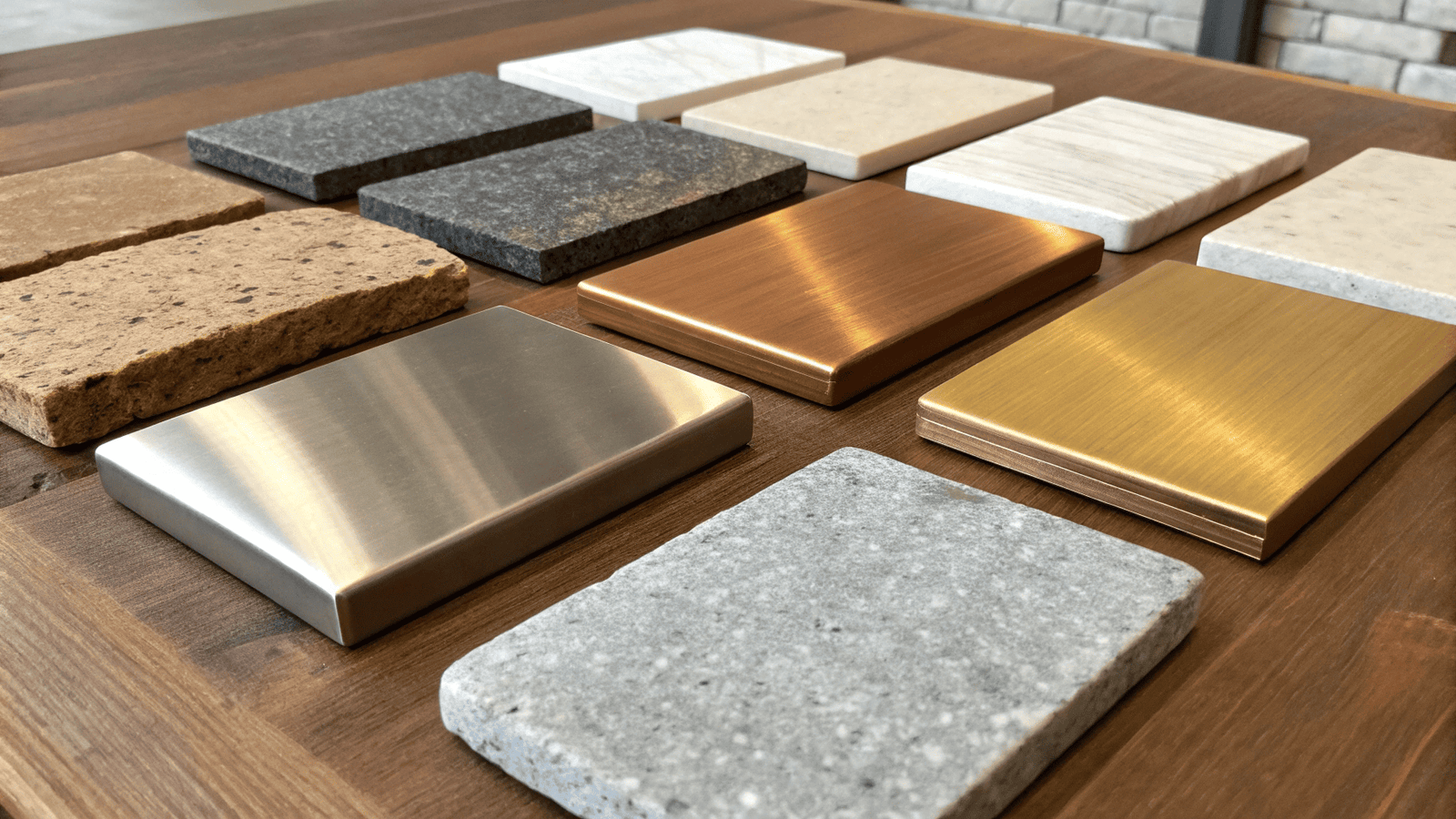
Choosing the right material is a big decision for any art project. It is the foundation for a piece that will last for decades, not just a few years. In my experience, the material has to do more than just look good on day one. It has to perform year after year, through rain, sun, and changing temperatures. A successful sculpture depends on the smart combination of material choice, solid engineering[^8], and the right surface treatment[^9]. Let’s look at each of these materials more closely to see which one fits your project best.
Why is stainless steel a top choice for outdoor sculptures?
Outdoor art faces harsh weather every day. Corrosion can ruin a metal sculpture very quickly. Stainless steel resists rust and physical damage, making it a reliable choice for any environment.
Stainless steel is a top choice because of its excellent corrosion resistance[^10], especially grades like 316. It maintains its modern, clean look with minimal upkeep. This makes it perfect for coastal areas with salt spray and busy public spaces where durability is essential.
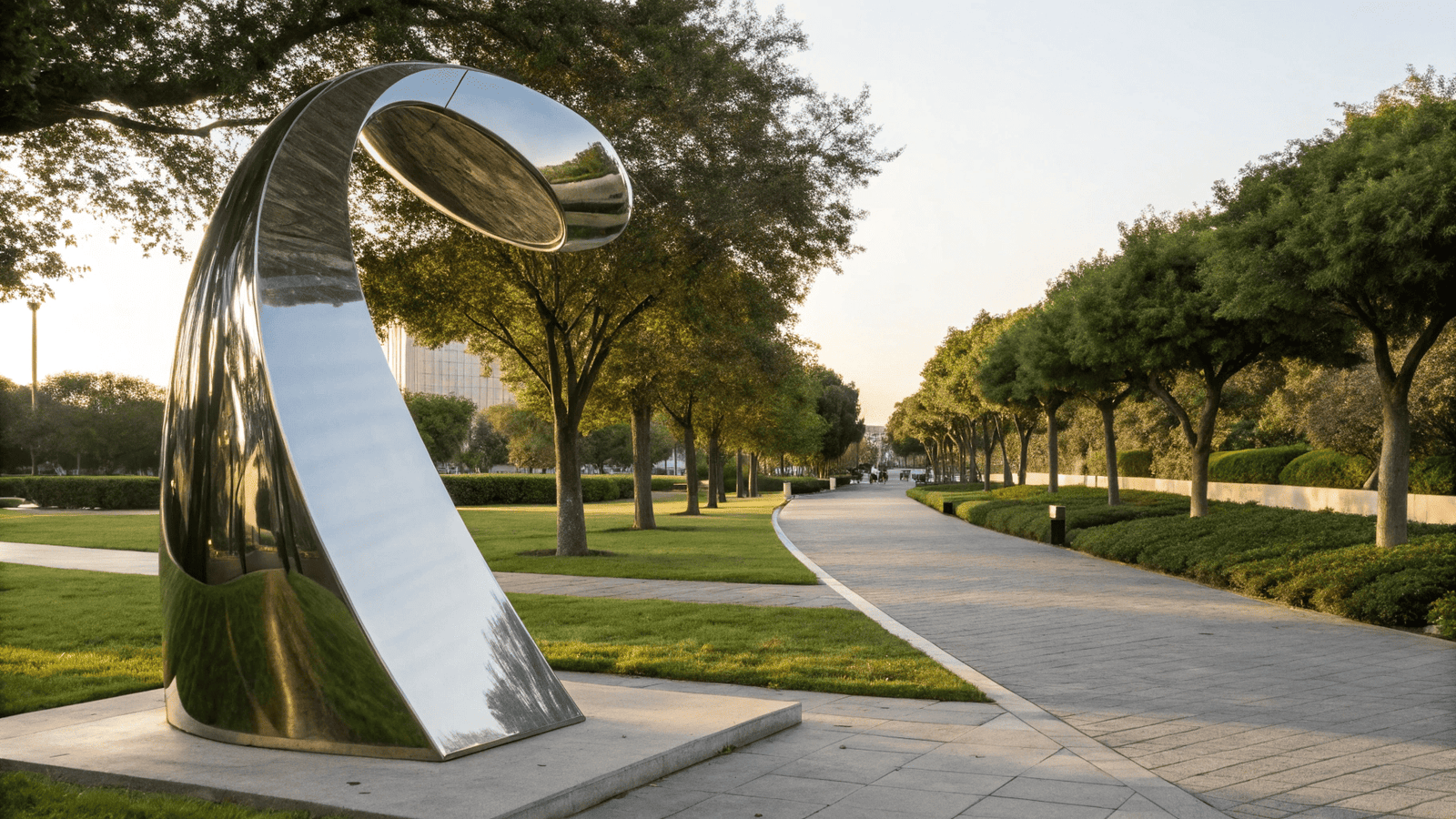
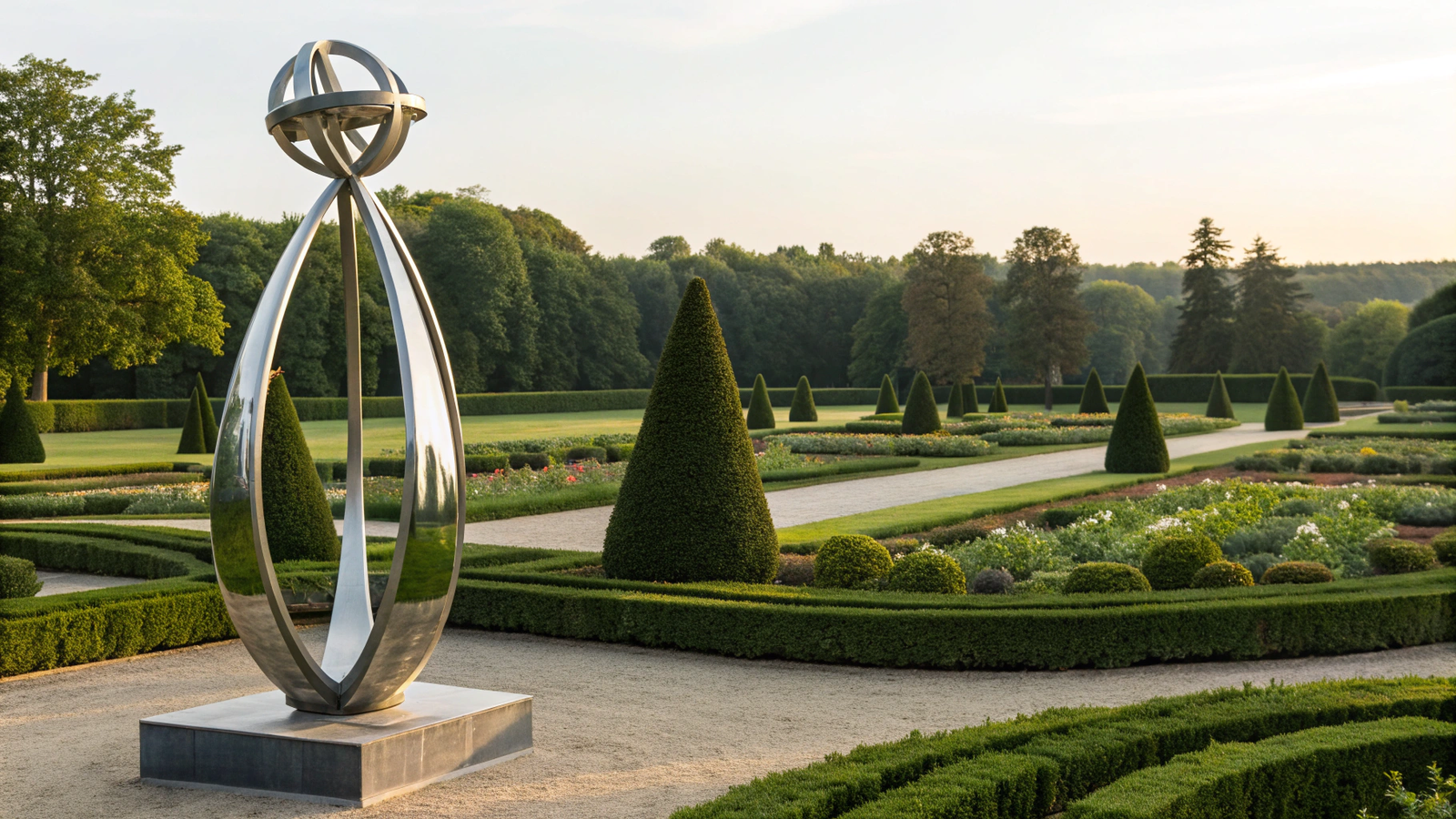
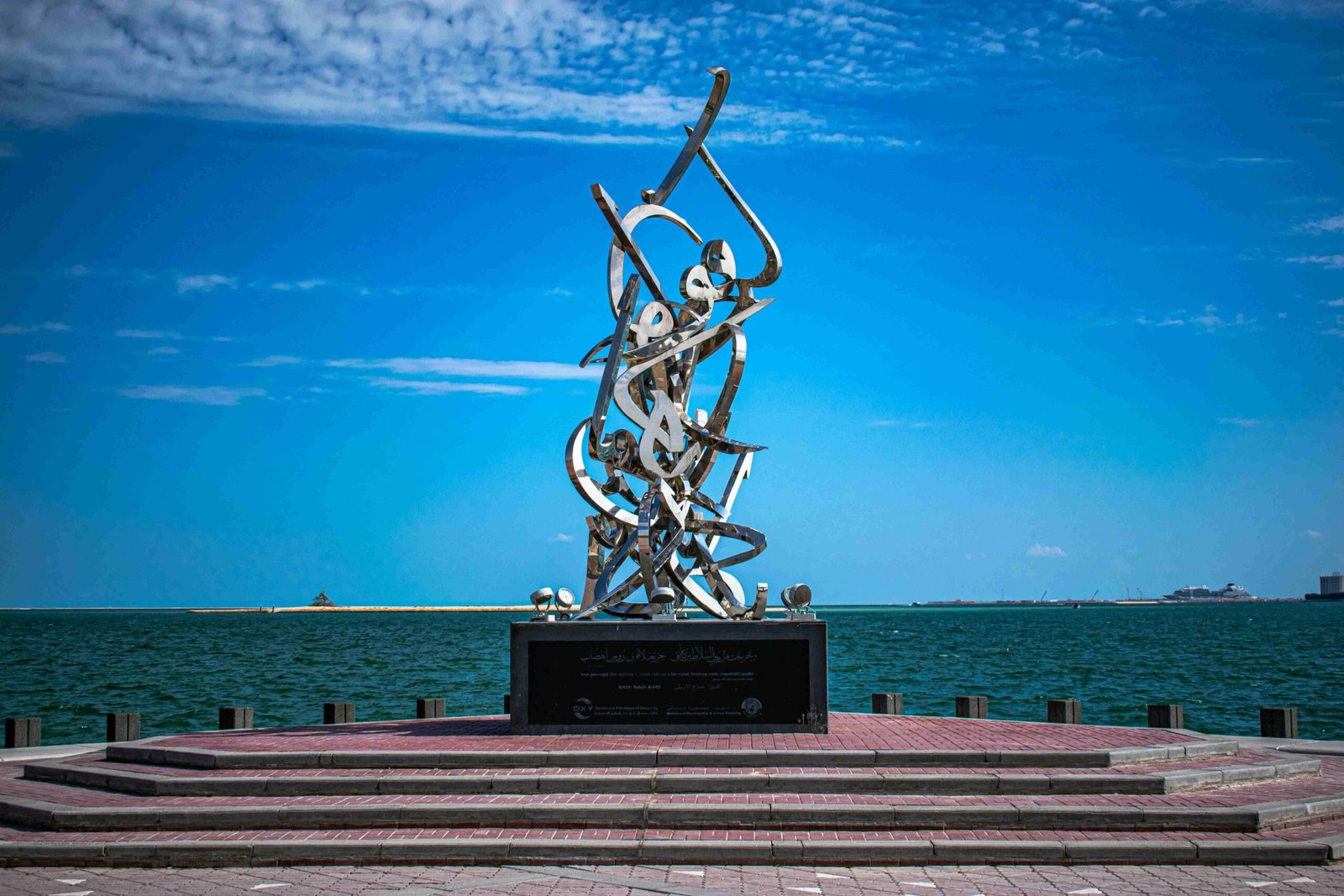
When we talk about stainless steel[^2], it’s not just one material. The specific grade you choose makes a huge difference. For most projects, we start by considering two main types: 304 and 316. Grade 304 is a great all-around choice for many environments. But if the sculpture will be near the coast or in a place with heavy pollution, I always recommend upgrading to 316 stainless steel[^2]. It contains molybdenum, an element that significantly boosts its resistance to salt and other corrosive agents. I remember a project for a luxury hotel in a coastal city. The architect was worried about salt spray ruining the finish. We specified mirror-polished 316L stainless steel[^2] for the main entrance sculpture. Five years later, I visited the site, and the piece looked exactly as it did the day we installed it. The client only had to wash it down with fresh water occasionally.
Surface Finish and Structural Design
The finish also plays a key role. A mirror polish[^11] is sleek and reflective, but a brushed or satin finish can hide minor scratches and reduces glare. A bead-blasted finish gives a soft, matte look that is very popular in contemporary designs. Beyond the finish, the structural engineering[^8] is critical. Because we fabricate both furniture and architectural metalwork at NEXTOP, we understand how to design sculptures that are not only beautiful but also structurally sound and safe for public spaces.
Feature | Grade 304 Stainless Steel | Grade 316 Stainless Steel |
Corrosion Resistance | Good | Excellent, especially against chlorides |
Best Environment | General outdoor, inland | Coastal, industrial, high-pollution areas |
Cost | More affordable | Higher cost |
Common Use | Indoor art, non-coastal outdoor | Public art, marine hardware, coastal projects |
Does bronze really get better with age?
You want a sculpture with character that evolves over time. Many materials just degrade and look worn out. Bronze develops a beautiful patina[^12], adding depth and a sense of history to the artwork.
Yes, bronze[^3] appears to get better with age by developing a patina[^12]. This iconic greenish-blue layer is not decay. It is a stable protective coating that shields the metal from further corrosion. This natural aging process enhances the sculpture’s artistic value over decades.
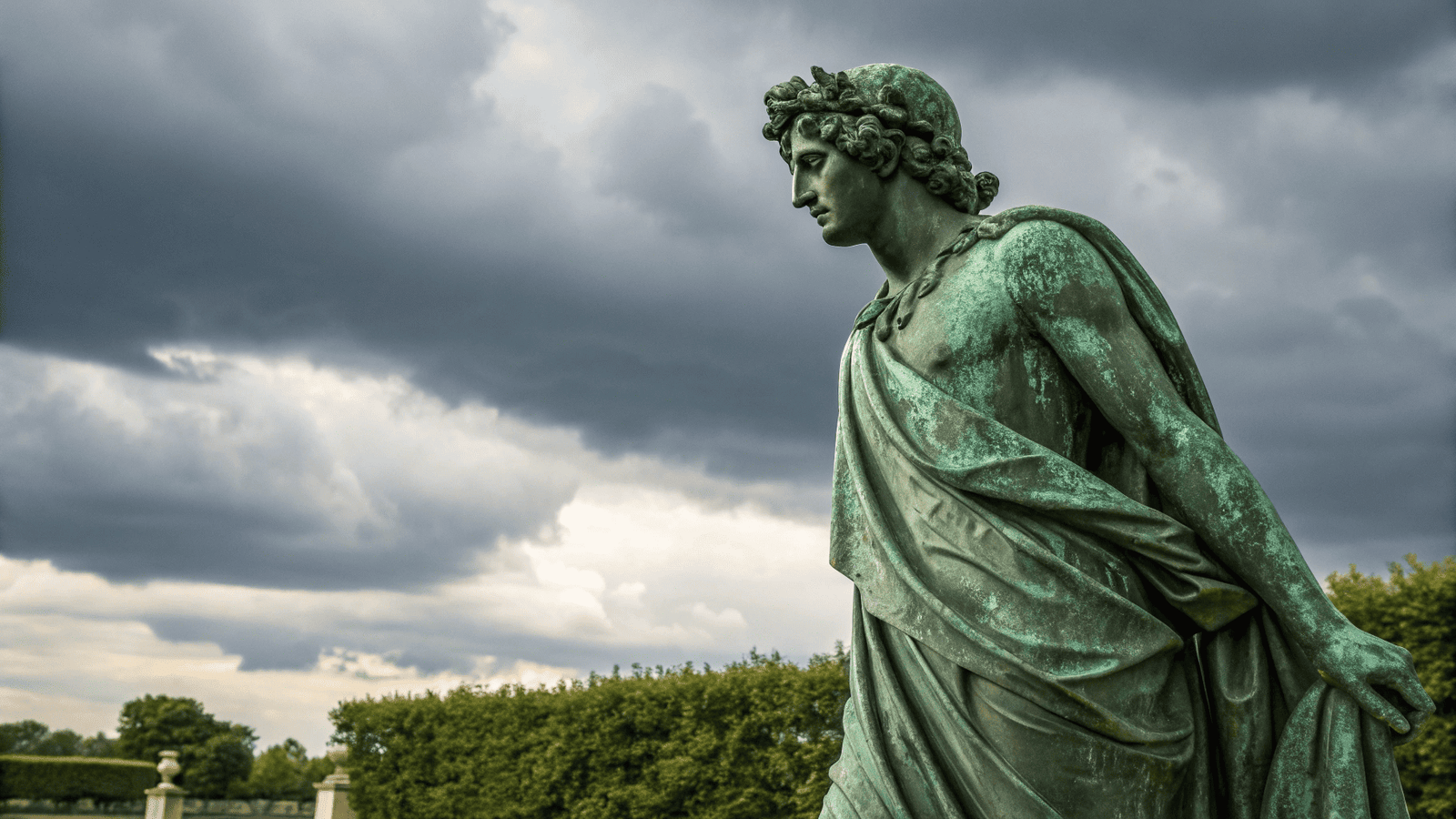
The magic of bronze[^3] is in its transformation. The patina[^12] that forms on its surface is a slow, natural process of oxidation. This layer is technically a form of corrosion, but it’s one that protects the metal underneath. It’s what gives ancient bronze[^3] statues their timeless beauty and character. As a fabricator, I find this process fascinating because we can influence it. We can apply chemicals to accelerate the aging and create a specific color, a technique called a “forced patina[^12].” This gives designers and artists incredible control over the final look, whether they want a classic green, a deep brown, or even a black finish. This control allows the piece to have an immediate sense of history.
Bronze in Modern and Classic Design
Bronze has been used for centuries, so it carries a weight of history and prestige. It immediately communicates quality and permanence. We worked on a memorial sculpture for a university campus, and the client wanted a feeling of gravity and timelessness. We chose cast bronze[^3]. Over the first few years, we watched as the natural patina[^12] slowly developed, deepening the texture and details. That slow change created a connection with the passage of time that no other material could replicate. Whether it’s cast into a complex form or fabricated from sheets, bronze[^3] offers a warmth and richness that makes it a powerful choice for pieces that are meant to tell a story.
Is Corten steel just rusty metal?
The look of rust often signals decay and weakness. You might worry that a sculpture made of it will fall apart. But Corten steel[^4] uses rust to its advantage, creating a strong, stable surface.
Corten steel[^4] is not just rusty metal. It is a special steel alloy designed to form a dense, stable layer of rust on its surface. This “rust” acts as a protective barrier, preventing deeper corrosion and eliminating the need for painting or maintenance.
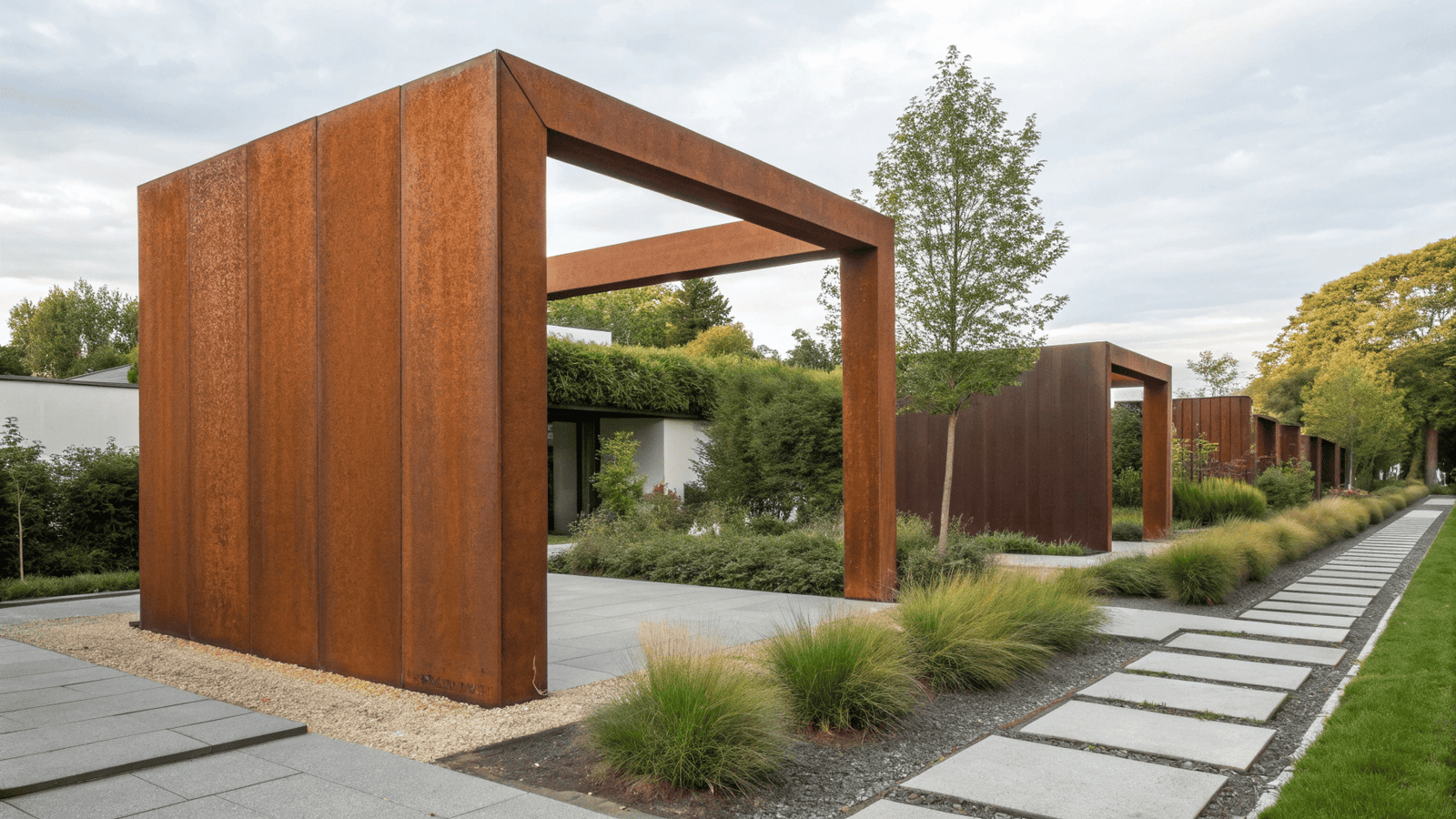
Corten, or weathering steel[^13], is a brilliant piece of material science. It’s an alloy that includes copper, chromium, and nickel. When exposed to the weather, it develops an initial layer of rust just like regular steel. But over time, this rust layer transforms. It becomes a dense, tightly-adhering patina[^12] that seals the surface and dramatically slows down the rate of future corrosion. The process takes about 6 months to a few years, depending on the environment. The color evolves from a bright orange to a deep, dark reddish-brown. This earthy, industrial aesthetic has become very popular in landscape architecture[^14] and contemporary art.
Practical Considerations for Corten
One thing I always tell my clients about Corten is to plan for rust runoff[^15]. During the initial weathering phase, rainwater running off the steel will be tinged with rust and can stain adjacent surfaces like light-colored concrete or stone. We can manage this with good design, such as including gravel beds or dedicated drainage paths at the base of the sculpture. I worked on a large-scale park project where we used Corten steel[^4] for a series of sculptural retaining walls. The client was hesitant about the “rusty” look at first. But after the first year, the deep, earthy tones settled in and blended perfectly with the natural environment, looking as if they had always been there.
Pros of Corten Steel | Cons of Corten Steel |
Unique, evolving aesthetic | Potential for rust staining on nearby surfaces |
No need for painting or coating | Initial weathering period can look uneven |
High-strength and durable | Not ideal for salt-heavy coastal air |
Low maintenance over its lifespan | Higher initial material cost than mild steel |
When should you choose stone for a modern sculpture ?
You need a material with a sense of permanence and gravity. Metal can sometimes feel too industrial. High-density stone offers a natural, timeless quality that connects the artwork to the earth.
Choose stone for a modern sculpture[^16] when you need unmatched durability and a monumental, timeless feel. Materials like granite[^17] or basalt resist weather and vandalism. They provide a powerful, organic presence that complements both natural landscapes and minimalist architectural designs.
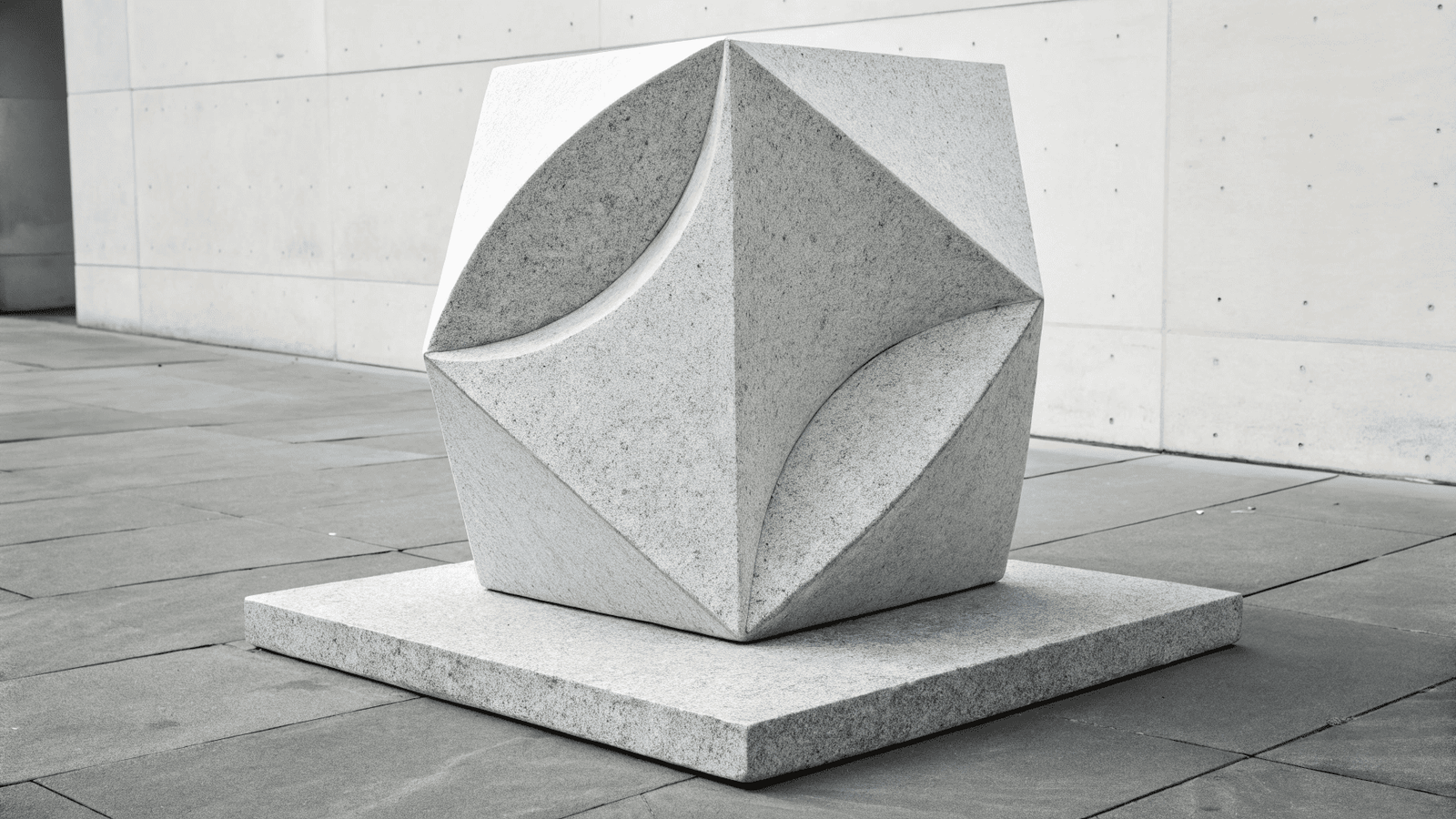
Stone is the original sculpture material. Its sense of permanence is unmatched. For modern projects, we typically look at high-density stone[^5]s like granite[^17], basalt, or certain types of limestone. These materials are incredibly resistant to compression, weathering, and even vandalism. They laugh at harsh weather. A sculpture carved from a solid block of granite[^17] has a weight and presence that feels eternal. In my work, I’ve found that stone is often most powerful when used in simple, bold forms that highlight its natural texture and color. It creates a beautiful contrast when paired with more refined materials like polished metal or glass.
Engineering and Installation
The biggest challenge with stone is its weight. Every project involving large stone elements requires careful planning and engineering[^8], from transportation to installation. We once integrated a massive, multi-ton granite[^17] element into a corporate lobby’s water feature. The logistics were complex, and we had to reinforce the floor structure. But the final result was breathtaking. The solid, unyielding nature of the stone perfectly conveyed the company’s message of strength and stability. While marble is beautiful, I generally advise clients to use it for indoor or protected outdoor areas, as it is softer and more susceptible to acid rain[^18] than granite[^17]. For a public art[^7] piece that needs to last a century, a high-density, low-porosity stone is always a safe and powerful bet.
Conclusion
Choosing a durable material like stainless steel[^2], bronze[^3], Corten, or stone is the first step. Proper engineering[^8] and finishing ensure your artistic vision[^1] endures for generations to come.
[^1]: Discover how selecting the right materials can enhance and preserve an artist’s creative vision.
[^2]: Explore the advantages of stainless steel, including its corrosion resistance and modern aesthetic, perfect for public art.
[^3]: Learn about the natural aging process of bronze and how it enhances the character and value of sculptures.
[^4]: Discover how Corten steel’s unique properties create a protective rust layer, making it ideal for outdoor sculptures.
[^5]: Find out which high-density stones offer unmatched durability and timeless beauty for modern sculptures.
[^6]: Explore the role of structural integrity in creating safe and lasting public art pieces.
[^7]: Explore the essential elements that contribute to the success and longevity of public art installations.
[^8]: Understand the engineering challenges and solutions for safely installing large sculptures.
[^9]: Learn about various surface treatments that enhance the durability and appearance of sculptures.
[^10]: Understand the significance of corrosion resistance in ensuring the longevity of outdoor sculptures.
[^11]: Explore the aesthetic benefits of a mirror polish finish for stainless steel sculptures.
[^12]: Discover how patina adds depth and character to bronze sculptures over time.
[^13]: Find out how weathering steel, like Corten, creates a unique aesthetic while providing durability.
[^14]: Learn about the integration of sculptures in landscape design and their impact on the environment.
[^15]: Discover design strategies to prevent rust runoff from staining surrounding surfaces.
[^16]: Discover the characteristics of modern sculptures and the materials that enhance their appeal.
[^17]: Learn about granite’s durability and timeless quality, making it ideal for public art.
[^18]: Learn about the impact of acid rain on various materials and how to choose resistant options.