Introduction
Finding art that is both beautiful and strong for your project is a real challenge. You need something that makes a statement but also lasts, without creating constant maintenance headaches.
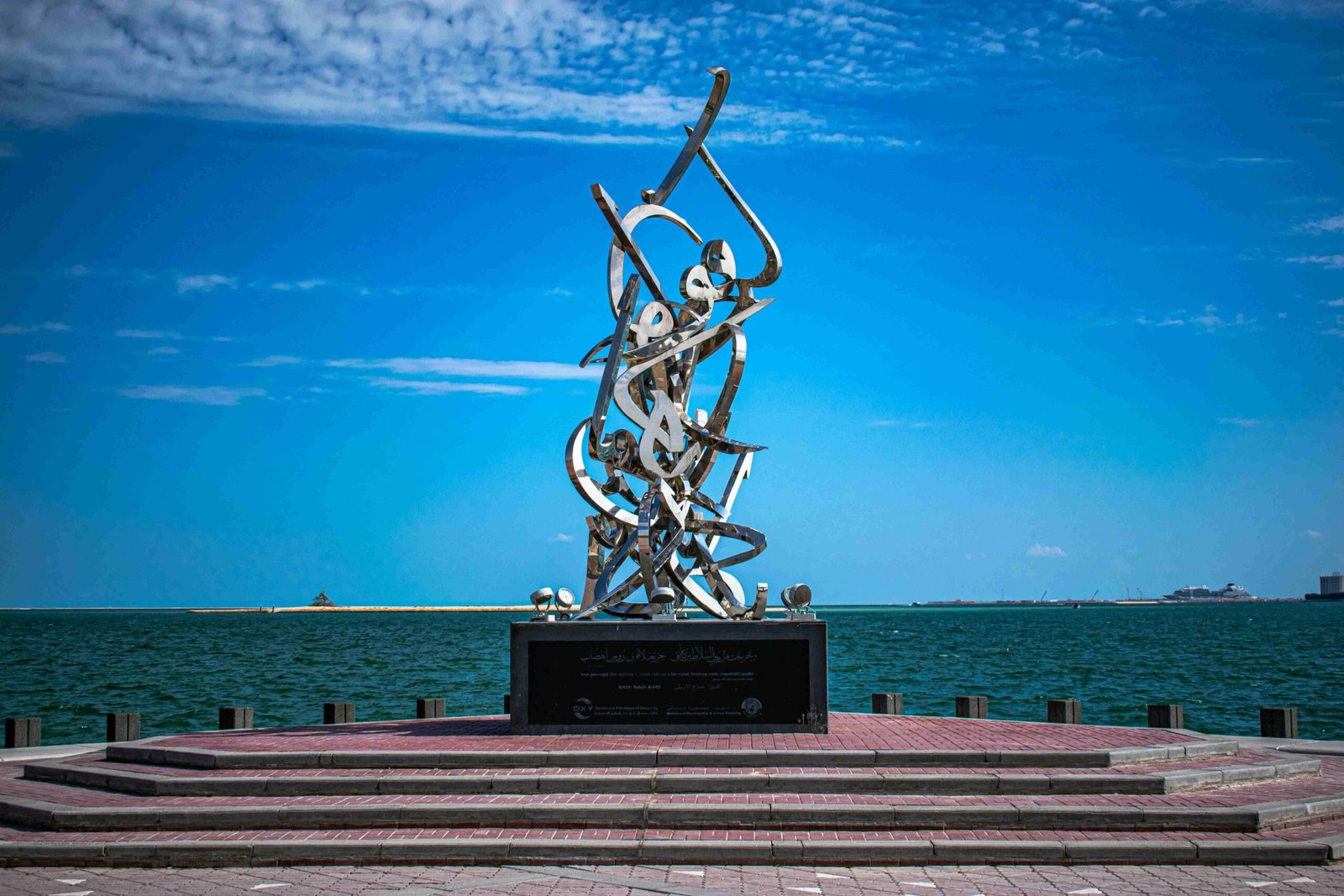
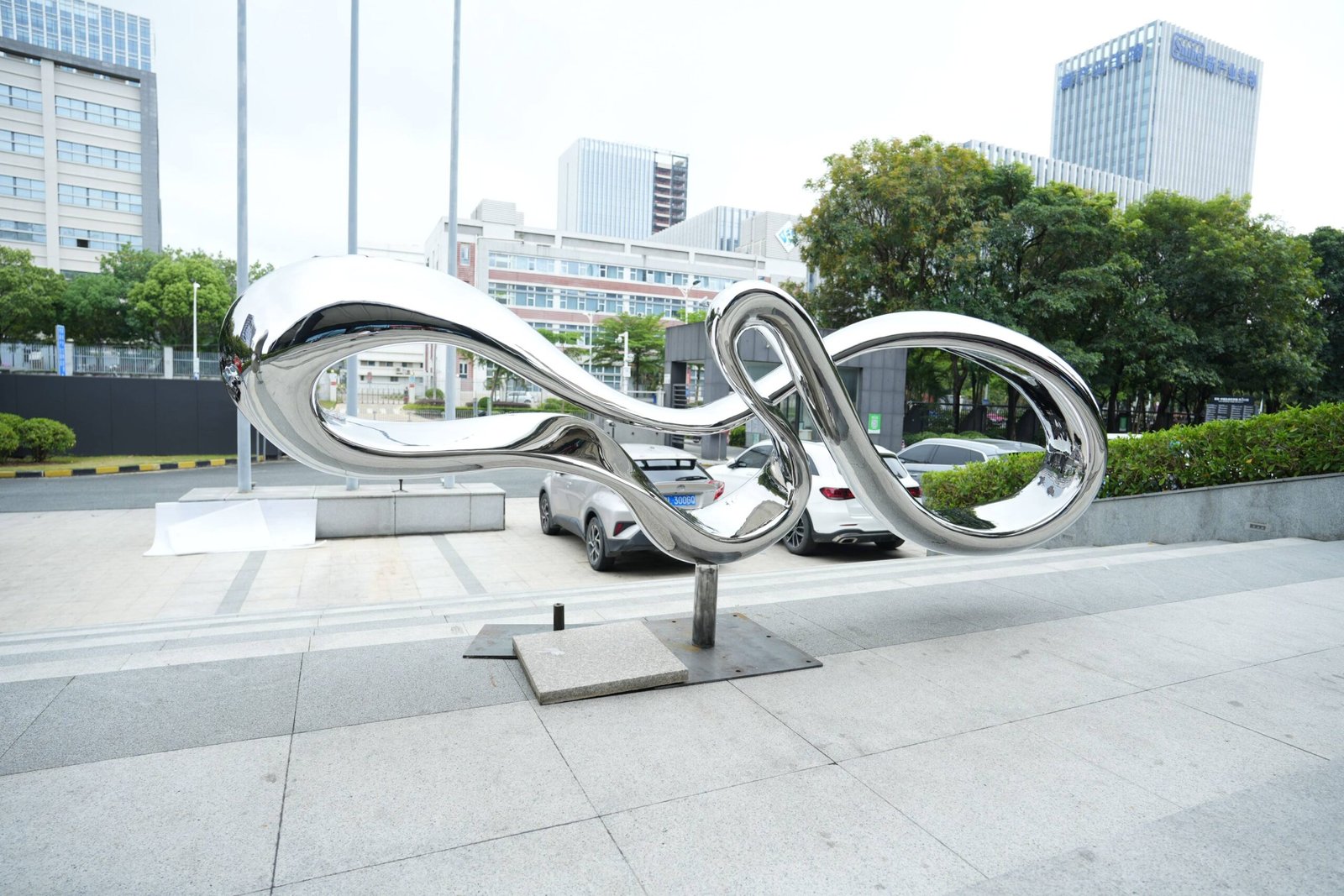
The best metal artwork[^1] combines powerful visual design with precise, controllable engineering. Materials like stainless steel[^2], bronze, and Corten steel[^3] can be crafted into dramatic shapes. They remain structurally safe and stable, making them ideal for large-scale public, commercial, and hospitality projects.
I’ve been in this business for a long time, and I’ve seen firsthand how a well-executed metal piece can completely define a space. It’s more than just decoration; it’s a permanent feature that blends art with architecture. But what makes it the right choice for your specific needs? Let’s explore why so many top-tier designers and developers are choosing metal for their signature installations. It really comes down to a few key factors that make a huge difference in the long run.
What materials are best for metal art installations?
Choosing the right metal can feel overwhelming. Each option has a different look, cost, and set of properties, and you don’t want to make a mistake.
The best material depends on your project. Stainless steel offers a sleek, modern look. Corten steel[^3] provides a rustic, evolving patina. Brass and bronze add warmth and luxury. Aluminum is lightweight, corrosion-resistant, and perfect for complex shapes. Each has unique aesthetic and technical strengths.
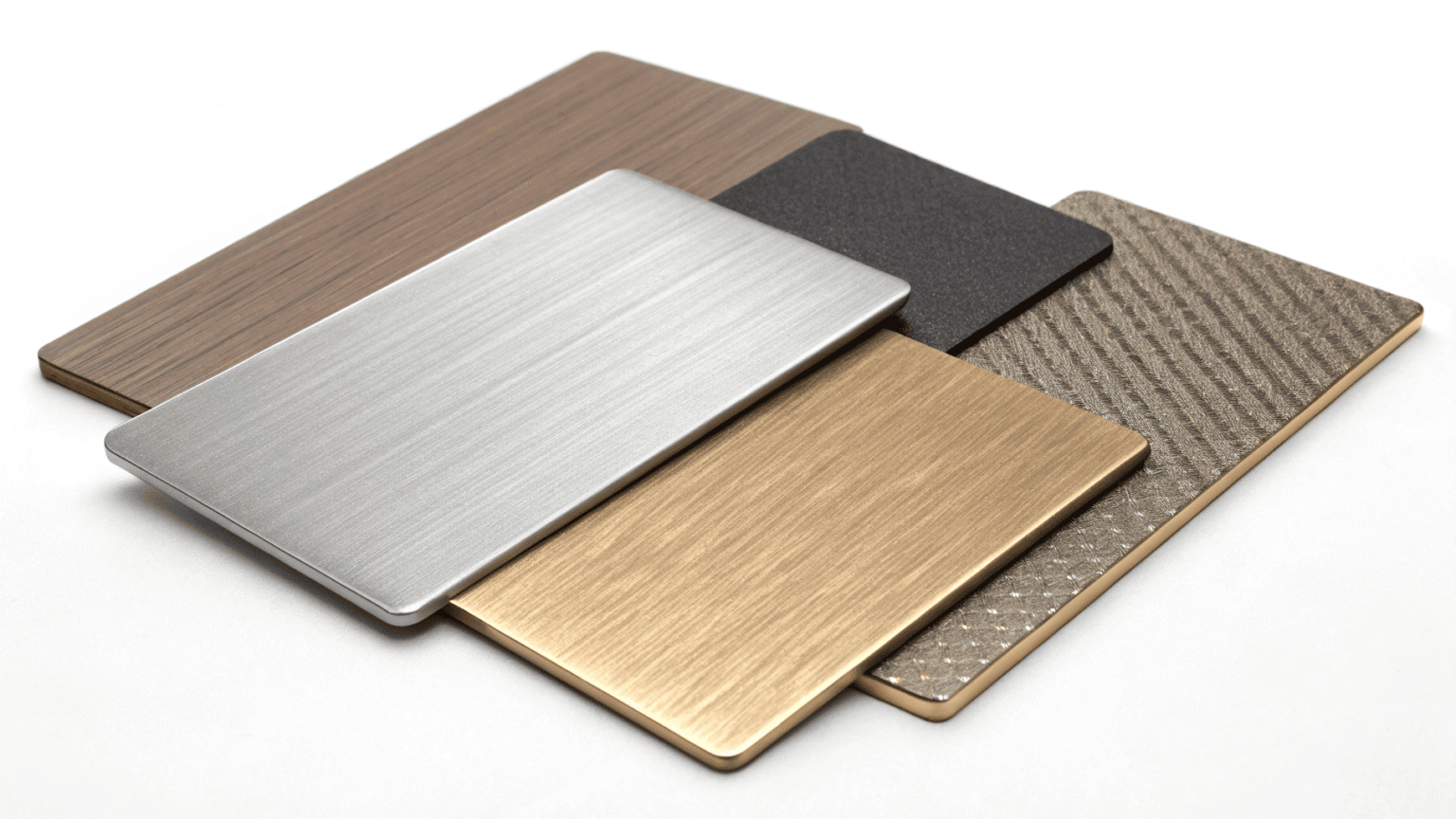
When we work with clients, the first conversation is always about location and intent. An outdoor sculpture by the sea has very different needs than an indoor feature wall. Understanding the core materials is the key to making a confident decision that aligns with your design vision and budget. It’s about matching the metal’s personality to your project’s soul.
Stainless Steel: The Modern Standard
Stainless steel is incredibly popular for a reason. It’s strong, clean, and resists corrosion. For interior projects, we often use Grade 304, which provides a brilliant finish for lobbies and feature walls[^4]. For outdoor or coastal projects, we always recommend Grade 316. It has added molybdenum, which gives it superior protection against salt and environmental pollutants. The finish can range from a highly reflective mirror polish, which we achieve through a multi-stage sanding and buffing process, to a softer brushed or satin texture. It’s the perfect canvas for minimalist and contemporary designs.
Corten (Weathering) Steel: The Living Finish
Corten steel[^3] is fascinating. When exposed to the elements, it develops a stable, rust-like outer layer. This isn’t decay; it’s a protective patina that prevents deeper corrosion. This natural, evolving finish provides a warm, earthy, and textured look that complements natural landscapes and raw architectural materials like concrete. I love working with it because each piece ages uniquely depending on its environment. It tells a story over time. It’s a bold choice that makes a powerful statement in public parks[^5] and building facades.
Brass and Bronze: The Touch of Luxury
For a feeling of timeless elegance and warmth, nothing beats brass or bronze. These copper alloys have been used in art for centuries. They can be finished to a high polish, a soft satin, or treated with chemicals to create a range of beautiful patinas, from deep browns and blacks to the classic green verdigris. We often use these materials for high-end hotel interiors, luxury retail fixtures, and monumental statues. They add a sense of history and sophistication that other materials can’t replicate.
Material | Best For | Key Feature | Common Finishes |
Stainless Steel | Modern, sleek designs (indoor/outdoor) | High durability, corrosion resistance | Mirror, brushed, satin |
Corten Steel | Rustic, industrial looks (outdoor) | Develops a stable, protective rust patina | Natural weathered |
Brass & Bronze | Luxury, classic, and warm aesthetics | Rich color, elegant aging | Polished, satin, forced patina |
Aluminum | Lightweight, complex shapes, colorful art | Excellent strength-to-weight ratio | Powder-coated, anodized, brushed |
How is large-scale metal artwork actually made?
You have a grand vision for a metal sculpture, but the process of turning that idea into a massive, physical object seems incredibly complex and filled with risk.
The process is a careful fusion of art and engineering. It begins with detailed 3D modeling[^8] and shop drawings. Then, metal is precision-cut, shaped, and welded. Finally, it undergoes meticulous surface finishing and is carefully installed on-site, ensuring the final piece is perfect.
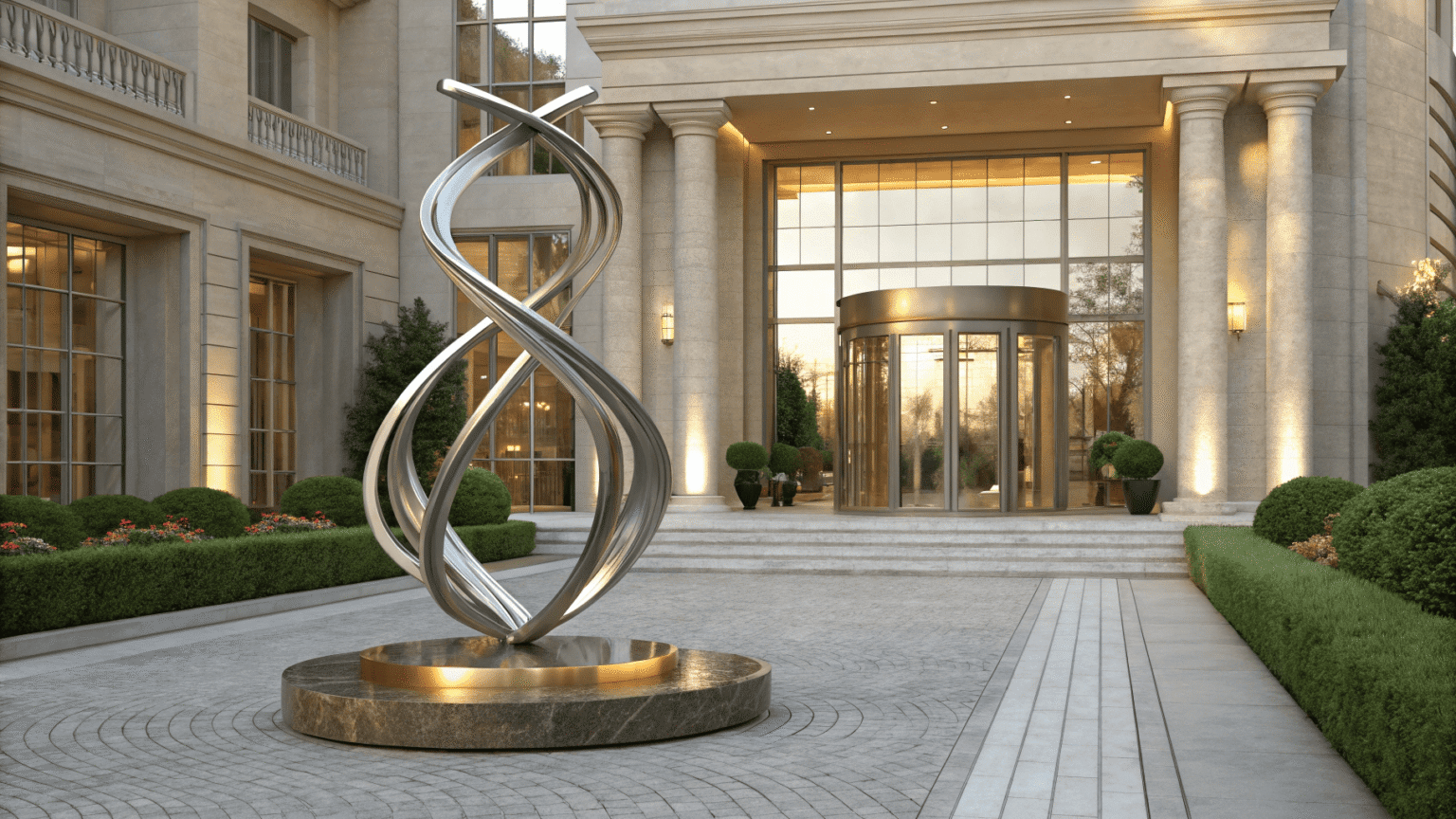
The magic happens when creativity is supported by a rock-solid manufacturing process. I’ve seen amazing concepts fall apart because of poor planning. A successful project isn’t about just making something look good; it’s about building it to last, safely and precisely. We break this down into clear, manageable stages.
Step 1: Design and Engineering
This is the most critical phase. It all starts with the designer’s or architect’s concept. Our job is to translate that vision into a buildable reality. We create detailed 3D models and shop drawings that define every curve, joint, and connection. For large outdoor pieces, we even run structural analysis, like Finite Element Analysis (FEA), to simulate how the artwork will stand up to wind, snow, and other environmental loads[^9]. This digital blueprinting stage is where we solve problems before they happen, ensuring the artist’s intent is preserved while guaranteeing structural integrity. It’s a true collaboration between the creative and the technical.
Step 2: Fabrication and Assembly
Once the drawings are approved, our craftsmen take over. The process is a mix of high-tech machinery and traditional skill. Large sheets of metal are cut with incredible precision using CNC laser cutters[^10] or water jets. Then, those flat pieces are shaped. Depending on the design, this might involve rolling machines for large curves, press brakes for sharp angles, or even hand-forging for organic forms. Our welders then join the pieces together. For a clean, invisible look on stainless steel[^2], we use TIG welding. For stronger, faster joins on internal structures, we might use MIG welding. The entire piece is assembled in our workshop, piece by piece, like a giant puzzle.
Step 3: Finishing and Patination
The surface finish is what brings the artwork to life. This is as much an art as it is a science. A mirror polish on stainless steel[^2], for example, requires hours of sanding with progressively finer grits followed by high-speed buffing. A brushed finish requires a steady hand to create a uniform grain. For brass or Corten, we might apply specific chemical solutions and control the temperature and humidity to create a specific patina, accelerating a process that would naturally take years. Powder coating is another option, especially for aluminum, allowing us to add vibrant, durable color to the artwork. We always produce samples for client approval to ensure the final look is exactly right.
Why is metal art a smart investment for commercial projects?
Project budgets are always tight. You need to justify every major expense, and you might wonder if a large piece of art is just a cost or if it adds real, measurable value.
Metal art is a smart investment because of its extreme durability[^6] and low maintenance[^11] needs. It boosts property value[^12] and creates a unique brand identity[^13], providing a strong, long-term return that far outweighs its initial cost. It is an asset, not an expense.
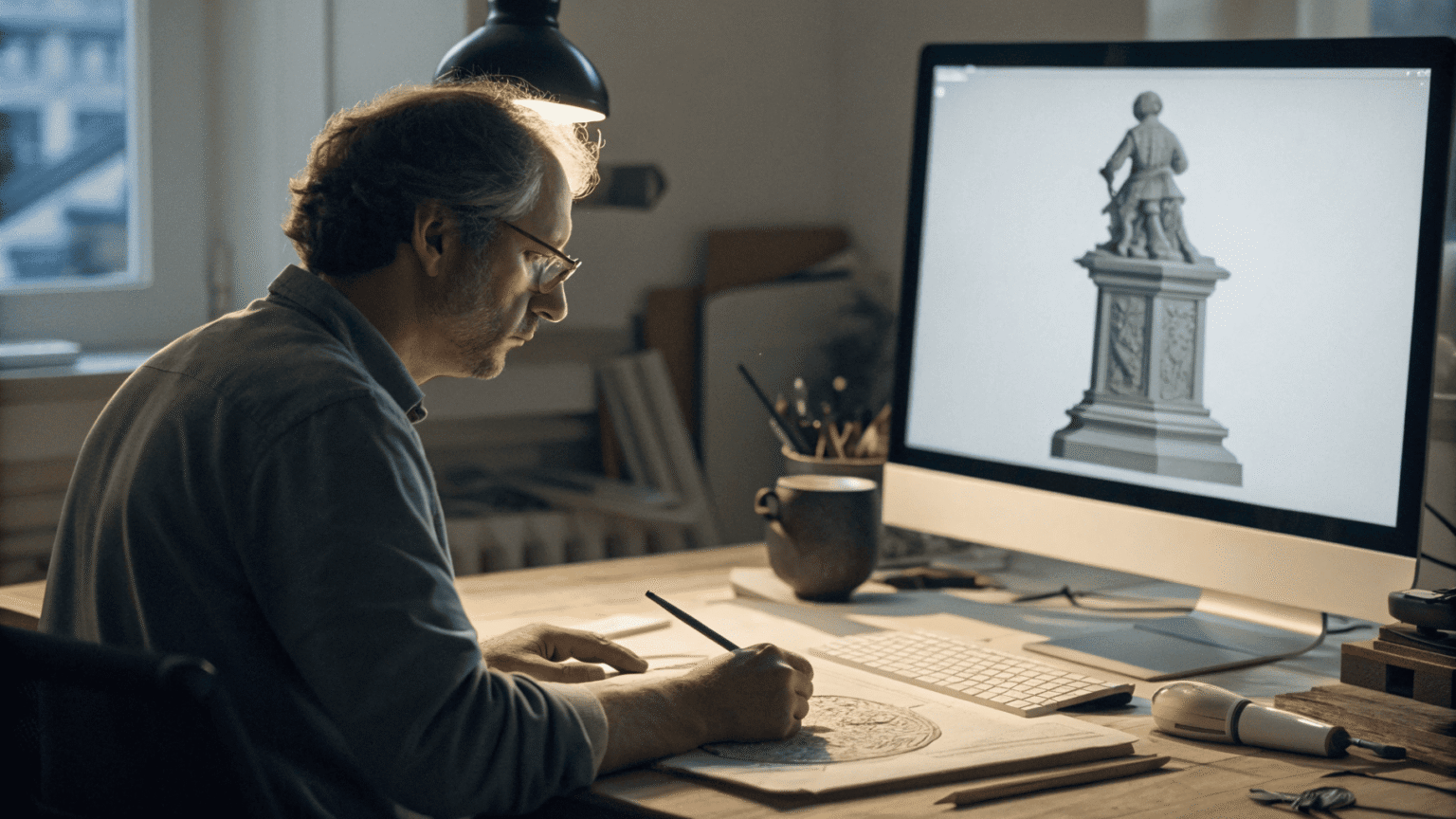
I always tell my clients to think about the total cost of ownership, not just the upfront price. A feature that looks great on day one but requires constant repairs becomes a liability. Metal artwork is the opposite. It’s a one-time investment that pays dividends for decades, both financially and in terms of brand perception. It’s about making a lasting impact.
Durability and Low Lifecycle Cost
One of the biggest advantages of metal is its strength. A well-made stainless steel[^2] or bronze sculpture can easily last for decades with minimal upkeep. Compare that to other materials used in high-traffic commercial spaces or outdoor environments. Wood requires regular sealing and can rot or warp. Painted surfaces can chip and fade, requiring frequent touch-ups. Metal, on the other hand, withstands weather, UV rays, and physical contact. The maintenance is often as simple as occasional cleaning. This low lifecycle cost makes it a very practical and financially sound choice for developers and property managers.
Feature | Metal Artwork | Other Materials (e.g., Wood, Plaster) |
Initial Cost | Medium-High | Low-Medium |
Weather Resistance | Excellent | Poor-Fair |
Maintenance Needs | Very Low (cleaning) | High (sealing, repairs, repainting) |
Lifespan | 50+ years | 5-15 years |
Long-Term Value | High | Low |
Enhancing Property Value and Brand Identity
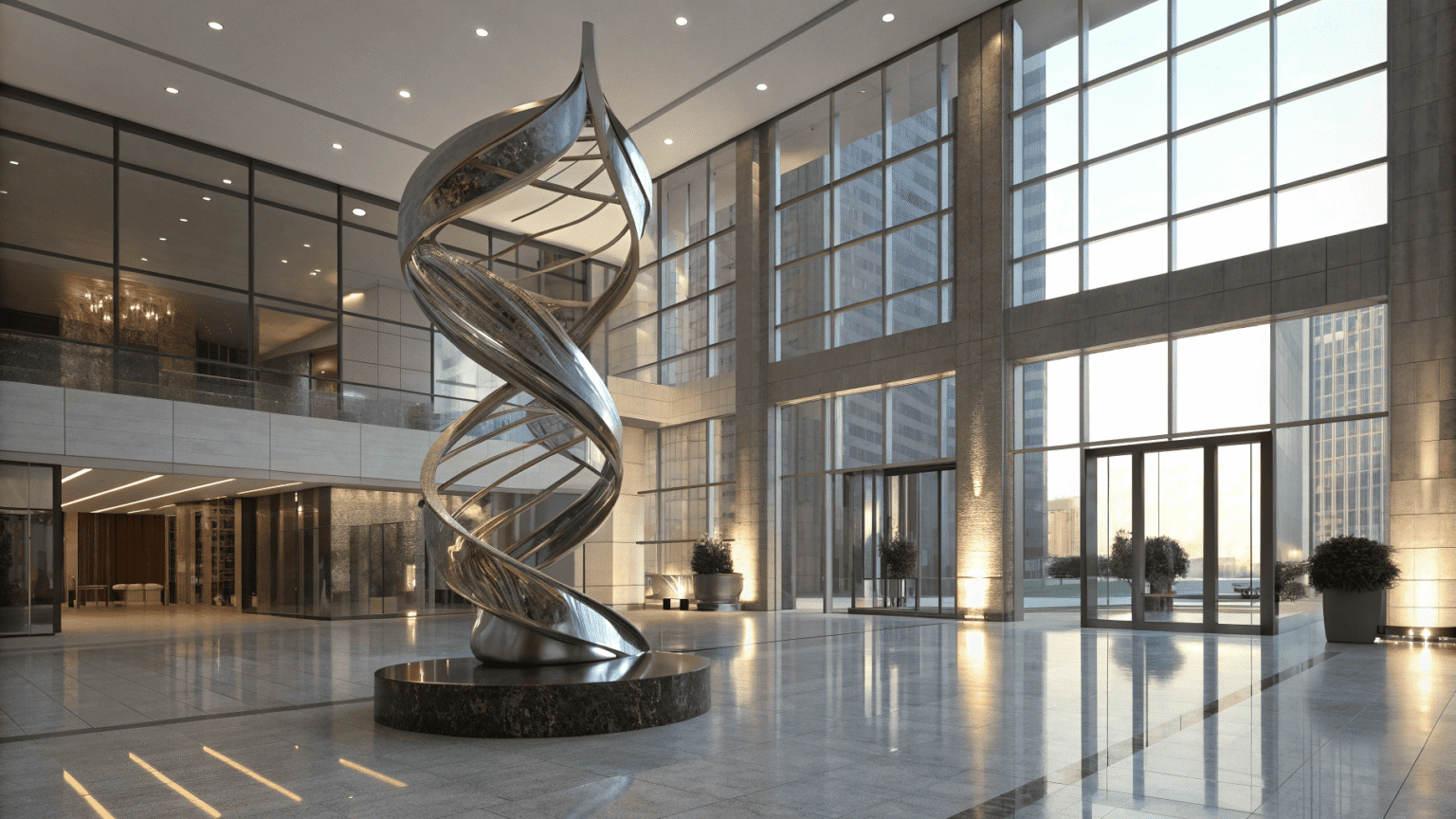
A unique piece of art does more than just fill a space; it creates a destination. I remember a project where we installed a 10-meter-tall twisting metal sculpture in the atrium of a new office building. It immediately became the building’s identity. People refer to it as “the building with the silver ribbon.” It became a landmark, a meeting point, and a popular spot for photos. For hotels, retail centers, and corporate headquarters, this kind of “placemaking” is invaluable. It elevates the perception of the property, helps attract high-end tenants or guests, and provides free marketing through social media. It transforms a generic space into a memorable place.
Seamless Integration with Architecture
Finally, metal art is a smart choice because it can be integrated directly into the architecture itself. It doesn’t have to be a standalone statue. We’ve created perforated metal facades that act as sunscreens, artistic balustrades for grand staircases, and intricate ceiling features that combine light and form. Because we work from architectural drawings, we can ensure that these artistic elements also meet all functional and safety requirements. This ability to fuse art with building components gives architects and designers incredible freedom. It’s a way to embed the brand’s story directly into the fabric of the building, creating a cohesive and powerful experience.
Conclusion
Metal artwork powerfully blends stunning visuals with robust engineering. It is a durable, low-maintenance, and valuable choice that turns any commercial or hospitality project into a true landmark.
[^1]: Explore how metal artwork enhances aesthetics and durability in commercial spaces.
[^2]: Learn about the advantages of stainless steel in art installations and its long-lasting appeal.
[^3]: Discover the unique properties of Corten steel and its aesthetic benefits in outdoor sculptures.
[^4]: Discover how metal art can transform feature walls into stunning focal points.
[^5]: Explore the role of metal art in enhancing public spaces and community engagement.
[^6]: Understand the importance of durability in selecting materials for long-lasting art pieces.
[^7]: Learn about the complexities and considerations in designing large metal sculptures.
[^8]: Discover how 3D modeling enhances precision and creativity in metal art projects.
[^9]: Understand how environmental factors influence the design and stability of metal sculptures.
[^10]: Explore the technology behind CNC laser cutting and its impact on precision in metal art.
[^11]: Explore the low maintenance needs of metal art and its cost-effectiveness over time.
[^12]: Explore how unique metal art installations can increase the value of commercial properties.
[^13]: Understand the role of metal art in creating a memorable brand presence in commercial spaces.